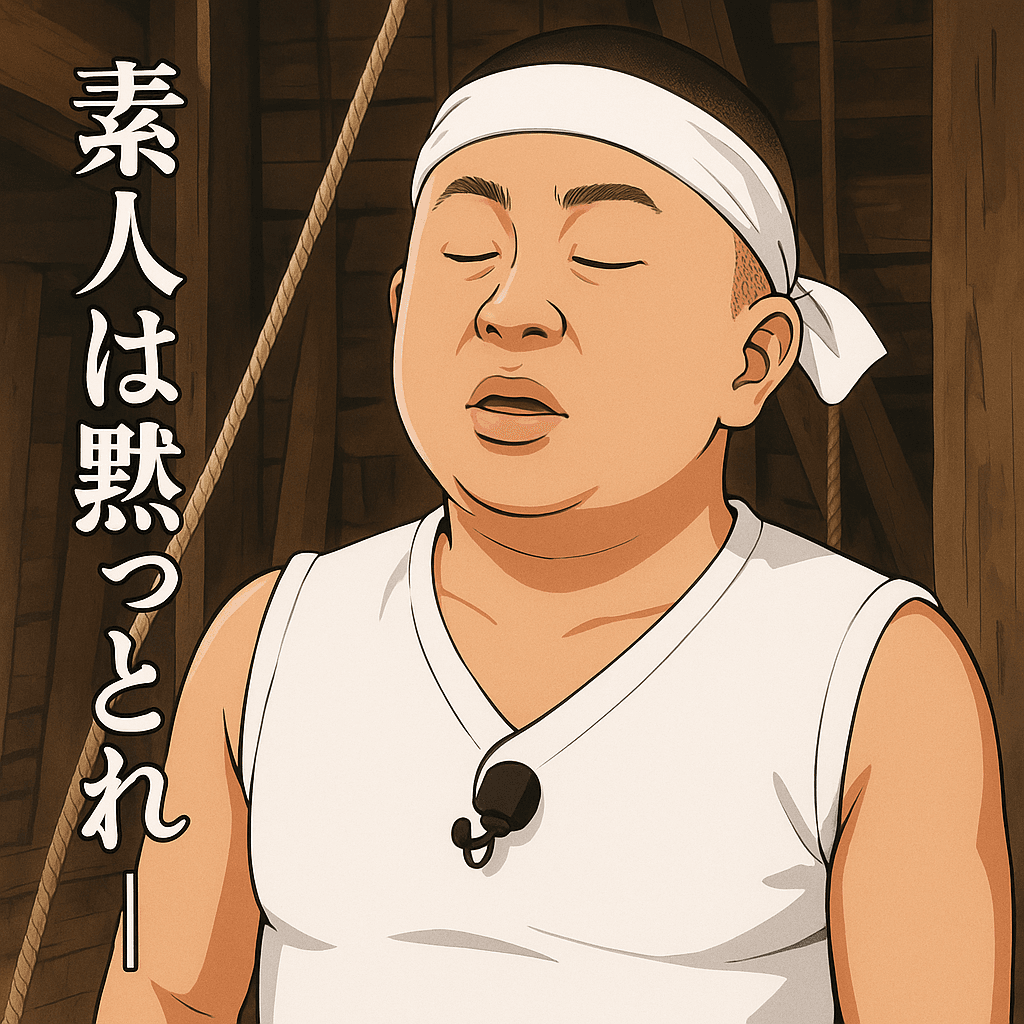
- 🧩 TL;DR: What does “Shirouto wa damattore” mean?
- 🤖 Meme Origins: Where did “Shirouto wa damattore” come from?
- 🎭 A Phrase that Changed Based on Who Uses It
- 🧠 Why Did the Same Phrase Get Opposite Reactions?
- 📱 Modern Japanese Internet Culture: A Meme Minefield
- 🧩 Final Analysis: The Meme is Not Neutral — It’s a Weapon or a Hug
- ✅ Key Takeaways
🧩 TL;DR: What does “Shirouto wa damattore” mean?
In Japanese, “素人は黙っとれ (shirouto wa damattore)” translates roughly to
→ “Amateurs, shut up.”
→ or more loosely: “If you’re not a pro, stay out of this.”
It sounds aggressive — and it is.
But oddly enough, this phrase has also become a meme in Japan.
Depending on who says it, how it’s said, and in what context, it can be:
- A joke among insiders
- A mock warning to overconfident people
- Or… a socially loaded insult that shuts down debate
So how can one phrase swing between meme and menace?
To understand that, we need to look deeper into how Japanese culture reads power, status, and tone.
🤖 Meme Origins: Where did “Shirouto wa damattore” come from?
This phrase has no single clear origin — but it became widely recognized in meme culture through:
- Television variety shows, where characters would jokingly bark the line at others
- A famous scene from “The Tetsuwan DASH!!” (a long-running variety show), where a caption — not the person — displayed the phrase on screen while the host (城島茂 / Shigeru Jojima) remained silent
- Online parodies and image macros, particularly using Jojima’s face with the quote
In this context, the phrase functions like a mock-authoritarian punchline, similar to English memes like:
- “Sit down, you don’t know what you’re talking about”
- “Let the adults talk”
- “You’re not that guy, pal”
🎭 A Phrase that Changed Based on Who Uses It
Case 1: Jojima Shigeru (城島茂) – “The Meme We Can Laugh At”
Jojima, a long-time TV personality and member of the group TOKIO, was seen in a relaxed moment on TV where a caption read:
→ 「素人は黙っとれ――」 (“Shirouto wa damattore—”)
- He wasn’t actually speaking
- It was a comedic caption, added by the producers
- The tone was gentle, part of a long-running character persona as a “hardworking everyman”
Result? It became a beloved meme, used playfully online.
Case 2: Chocolate Planet’s Matsuo – “The One Who Got Burned”
In 2025, comedian Matsuo (from the duo Chocolate Planet) made a comment online that echoed this same phrase, seemingly targeting online critics or commentators.
But this time, the reaction was sharply different.
- He was perceived as using the phrase to dismiss viewers or fans
- Many read it as shutting down dissent, especially from “non-experts” (the audience)
Result? He was criticized for being arrogant and tone-deaf — and the same words that were funny when Jojima was associated with them, became inflammatory from him.
🧠 Why Did the Same Phrase Get Opposite Reactions?
This is where Japanese cultural psychology comes in.
🪞 Key Concepts That Explain the Flip:
| Concept | Description |
|---|---|
| Tatemae vs. Honne | Japan separates “public face” (tatemae) from “true feelings” (honne). Direct speech, like “shut up,” violates tatemae unless it’s a joke. |
| Senpai–Kouhai hierarchy | Social rank and age affect who is allowed to be blunt or assertive. |
| Group harmony (wa 和) | Words that disrupt emotional balance or collective comfort are seen as socially dangerous. |
| Contextual reading | In Japan, how something is said matters more than what is said. Tone > words. |
So when is “Shirouto wa damattore” safe to say?
✅ Safe when:
- It’s clearly a joke
- It’s used in-group (“punching inwards”)
- The speaker is seen as humble or close to the listener
🚫 Risky when:
- It’s directed at real people in public
- It comes from someone seen as “above” or “privileged”
- It feels like it’s being used to end a discussion, not make a point
📱 Modern Japanese Internet Culture: A Meme Minefield
Japan’s internet is full of “polite aggression”, and memes like this one sit on a thin wire between humor and harm.
Other similar examples include:
- 「意識高い系うざい」 (“Try-hard types are annoying”)
- 「エアプ」 (“You’ve clearly never played this”)
- 「知ったかぶり」 (“You’re pretending to know”)
These memes aren’t just funny—they’re tools of social correction.
They serve to police boundaries, signal “you’re out of line,” or subtly shame people into silence.
In a culture where direct confrontation is rare, these memes act like sideways punches — indirect, but forceful.
🧩 Final Analysis: The Meme is Not Neutral — It’s a Weapon or a Hug
The phrase “Shirouto wa damattore” is funny — until it’s not.
Whether it lands as a joke or a slap depends entirely on:
- Who’s saying it
- To whom
- In what mood
- Within which social layer
Japanese culture trains people to read emotional subtext, not just language.
So even a meme as seemingly harmless as this can become dangerous when taken out of the “permission zone.”
✅ Key Takeaways
- “Shirouto wa damattore” is a popular Japanese meme meaning “Amateurs, be quiet.”
- It originated from variety show culture and meme captions, not actual dialogue
- Tone, status, and context determine whether it is read as a joke or verbal dominance
- It reflects deeper Japanese values: hierarchy, indirectness, and social harmony
- In Japan, language is often less about what you say, and more about when, where, and how you say it