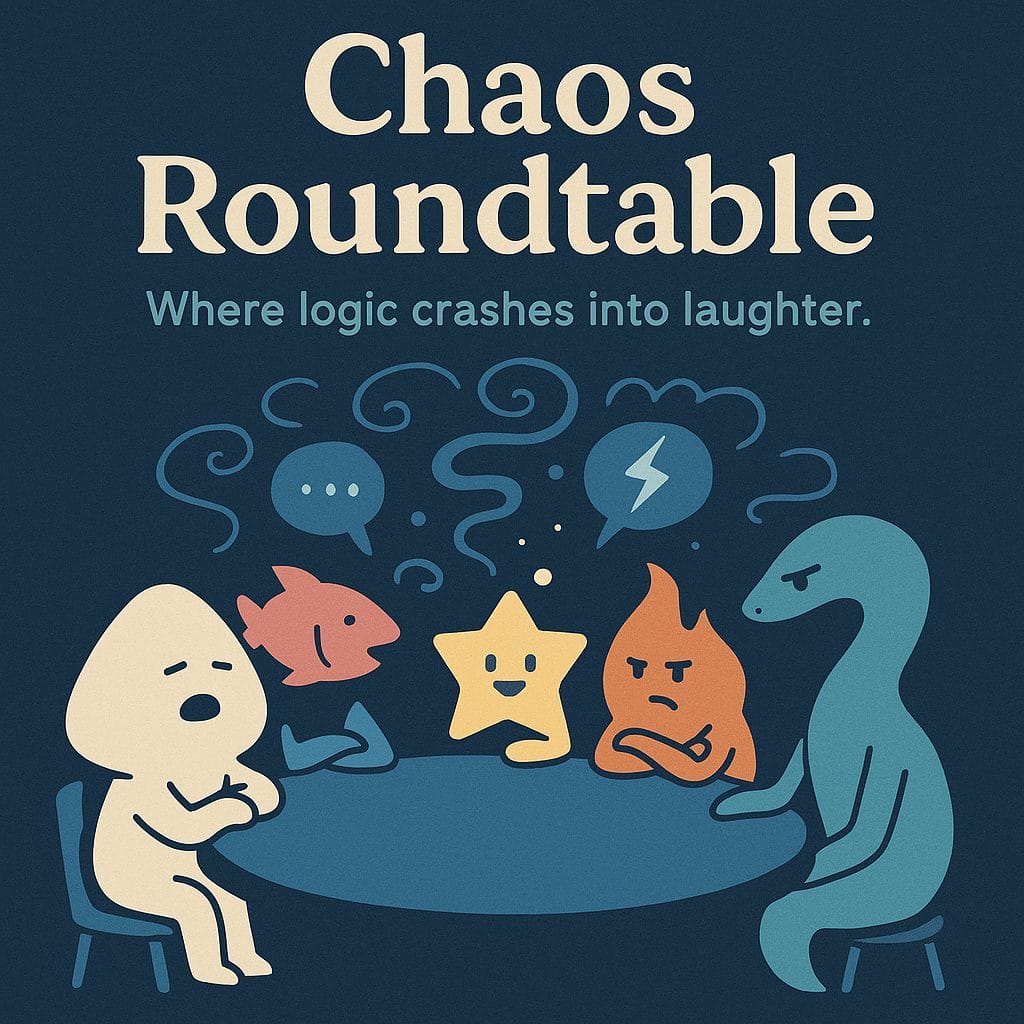
🎭 Characters in this Dialogue
🍙 Mochi: The spark of absurd ideas and chaotic charm.
🔥 Blaze: Realist entrepreneur who views everything through market logic.
💫 Milla: Emotionally intuitive, often moved by small details.
🐟 Shake: Methodical analyst who questions systems from within.
🌀 Eldon: Philosopher of structure and human contradictions.
🌸 Sakura: Earthy humorist who mocks the surreal with plain truth.
🟠 Section 1: Why regulate emotions while shopping?
🍙 Mochi:
“Okay but imagine walking into a grocery store, and the scanner goes: ‘You seem emotionally unstable today—please come back when calmer.’ Like… what!?”
🔥 Blaze:
“From a business standpoint? It’s emotional risk management. No more angry customers flipping carts over a dented tomato. Controlled mood = safer environment.”
💫 Milla:
“But sometimes I go shopping because I’m upset… It’s comforting. What happens if the scanner says I’m too sad to buy soup?”
🐟 Shake:
“They’ll argue it’s for ‘public emotional hygiene.’ Same logic as ‘no shoes, no service’—but for inner states.”
🌀 Eldon:
“Societies have long dictated external decorum. This is simply the next step: internal compliance. A sanitized collective mood.”
🌸 Sakura:
“So now, even your grumpiness needs a permit? What if I’m just hangry, not hostile?”
🟠 Section 2: How would emotional ID systems work?
🔥 Blaze:
“Facial recognition, biometric mood rings, voice tone detectors. You approach the self-checkout, and it flashes green or red based on your vibe.”
🐟 Shake:
“The risk, of course, is emotional misreads. Someone processing grief might be labeled a threat. Someone faking a smile might pass.”
🍙 Mochi:
“So like, if I show up crying in my pajamas, the system just goes ‘No rice for you today’? This feels dangerously close to retail gaslighting.”
💫 Milla:
“What if your face just… rests sad? I’d never be allowed to buy ice cream again.”
🌀 Eldon:
“This redefines commerce. No longer about what you need, but what state you’re in. Consumption becomes a performance of emotional eligibility.”
🌸 Sakura:
“And folks will start training their expressions. We’ll get smile coaches just to shop at Target.”
🟠 Section 3: What emotions are allowed at checkout?
🍙 Mochi:
“I bet there’s a chart somewhere: ‘Joy = full access, calm = limited items, rage = auto-lock cart.’”
🔥 Blaze:
“Honestly? Probably. There’d be ‘discount moods’ too. Smile at the lettuce, get 10% off.”
💫 Milla:
“But that means people would start faking happiness just to get groceries. Is that really healthy?”
🐟 Shake:
“It’s emotional gamification. Feel right, or at least fake it right, or you go hungry.”
🌀 Eldon:
“If you must perform to survive, authenticity becomes expensive. A luxury only the emotionally privileged can afford.”
🌸 Sakura:
“I swear, the day I get denied milk for being moody, I’m starting a black market for underground bread.”
🟠 Section 4: Can daily life survive emotional surveillance?
💫 Milla:
“I’d get so anxious just walking in. Like—what if they see something I didn’t even know I was feeling?”
🔥 Blaze:
“There’ll be mood loans, mood insurance, mood correction apps. Sad today? Pay extra or defer payment until you’re happier.”
🌀 Eldon:
“In such a world, private feeling collapses. Life becomes a permanent audition for basic access.”
🐟 Shake:
“And when neutrality is the safest mood, we become emotionally beige. Just… smooth, acceptable nothing.”
🍙 Mochi:
“You’re not shopping anymore. You’re passing an emotional customs check every time you crave cereal.”
🌸 Sakura:
“I just wanted eggs. Not a therapy session in aisle 4.”
🌀 Summary
This roundtable explores a disturbingly mundane dystopia: being denied groceries based on your mood. Through comedic hypotheticals and subtle unease, the discussion uncovers the emotional politics of daily life—where facial scans and biometric sensors dictate access to basic needs. The group dives into performative happiness, misread grief, and the weaponization of neutrality, ultimately questioning what happens to human authenticity when survival requires emotional compliance.