Across Japan, a single warm snack goes by many names—Imagawayaki, Obanyaki, Kaitenyaki, Jimanyaki.
They look the same, taste familiar, and yet feel different depending on where you are.
So what’s really in a name? And does it change what we’re biting into?
Let’s talk it through.
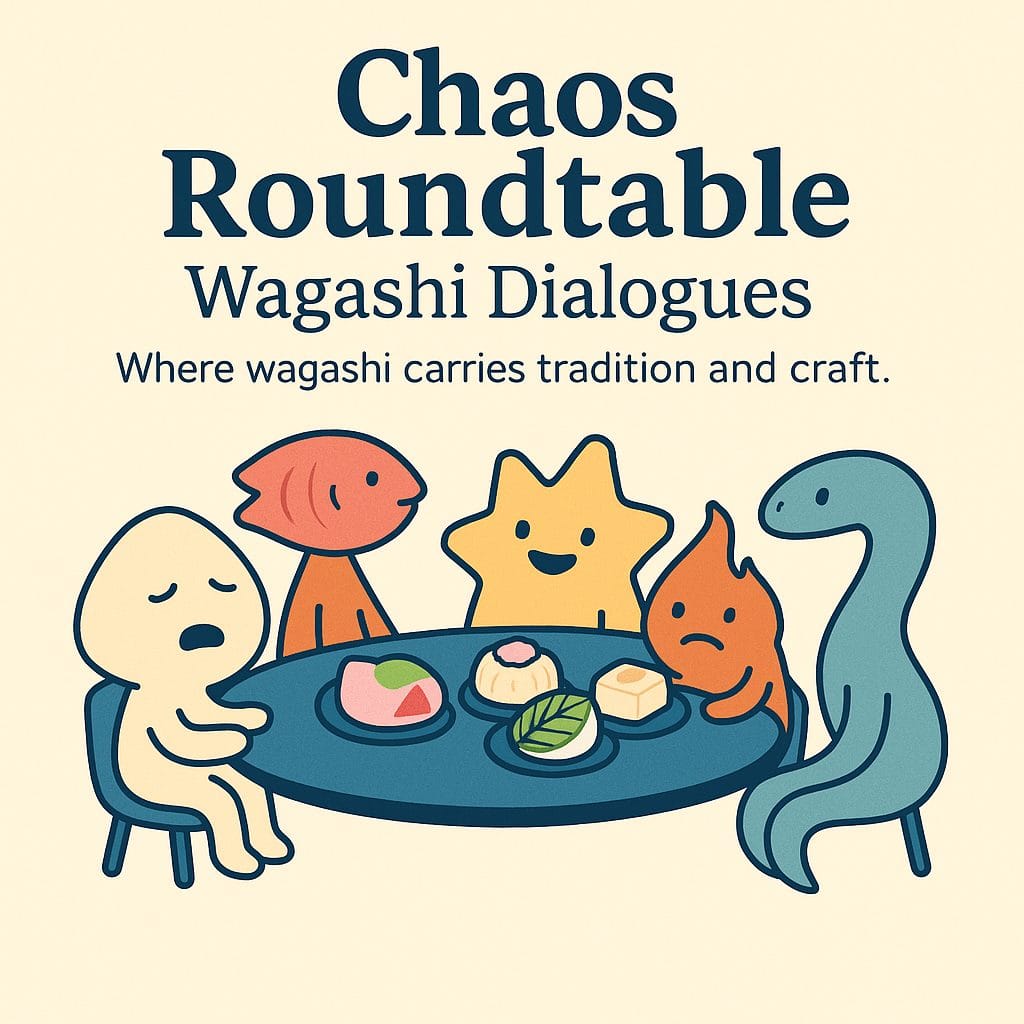
🍡 Characters in this Dialogue
🍙 Mochi — Free-spirited instigator. Twists conversations with playful questions.
🐟 Salmo — Logical realist. Brings structure, facts, and clarity.
🔥 Blaze — Strategic thinker. Focuses on systems, markets, and behavior.
💫 Milla — Emotional and intuitive. Leads with warmth and empathy.
🌸 Sakura — Gentle idealist. Balances emotion and reason quietly.
🐍 Thorne — Sharp and sarcastic. Cuts through sentiment with wit.
🌀 Eldon — Philosophical observer. Sees patterns and keeps the meta calm.
【1】When the same thing has different names
🍙 Mochi:
So here’s my question: why does one snack have, like, five names depending on where you are in Japan?
🐟 Salmo:
Because Japan loves regional identity. Imagawayaki is Tokyo-born, but Obanyaki rules in Kansai. They’re functionally the same.
🔥 Blaze:
It’s branding, essentially. “Oban” means “large coin,” which immediately gives it visual and nostalgic punch.
💫 Milla:
I always thought “Imagawayaki” sounded more old-school, like something from a lantern-lit street.
🌸 Sakura:
But isn’t it sweet how the same warm snack carries different names, like dialects wrapped in flour?
🐍 Thorne:
Or it’s just delicious nationalism. Imagine arguing about a pancake’s passport.
【2】Names as emotional geography
🌀 Eldon:
Naming isn’t just function—it’s a form of cultural storytelling. The labels reflect what the region chooses to remember.
🐟 Salmo:
In Hiroshima, it’s “Kaitenyaki.” In Nagano, “Jimanyaki.” Different words, same iron molds.
🔥 Blaze:
Each name becomes a local product—even if the ingredients don’t change. It’s place-based marketing at its finest.
💫 Milla:
But also memory-based, right? I remember Obanyaki because that’s what my grandmother called it.
🌸 Sakura:
It’s like how “home” sounds different depending on who’s saying it. The word carries more than its meaning.
🍙 Mochi:
Now I wonder if we should call everything “place-yaki.” Like, Tokyo-yaki, Osaka-yaki…
🐍 Thorne:
Please don’t give the snack industry ideas. They’ll monetize your nostalgia in five seconds.
【3】So… which name is “right”?
🐟 Salmo:
If you go by origin, it’s Imagawayaki. That’s the first recorded version from Edo.
🌀 Eldon:
But “right” is fluid. Language evolves. Regional terms aren’t mistakes—they’re adaptations.
💫 Milla:
It’s kind of poetic, right? The snack stays the same, but the name shifts like dialect wind.
🌸 Sakura:
And people defend their version so passionately. It’s like a soft little pride battle.
🔥 Blaze:
Because once you attach memory to flavor, identity follows. It’s not just dough—it’s heritage.
🍙 Mochi:
So naming snacks is like naming stars—every region sees the same thing but calls it their own.
【4】Unified in difference
🌀 Eldon:
Maybe the beauty lies in not choosing. The diversity of names mirrors the diversity of lives they’ve touched.
💫 Milla:
Exactly. Each name is a pocket of warmth, shaped by local tongues and hometowns.
🌸 Sakura:
And somehow, it makes me feel closer to places I’ve never even been.
🐟 Salmo:
It’s efficient, portable, nostalgic, and still… endlessly plural.
🔥 Blaze:
That’s the power of regional food. It travels physically, but even more so emotionally.
🍙 Mochi:
So next time someone asks, “Is it Imagawayaki or Obanyaki?” maybe the answer is just: “Yes.”
🌀 Summary
This roundtable explores how a single snack—Imagawayaki—has fractured into names across regions, each carrying emotional and cultural weight. From “Obanyaki” to “Kaitenyaki,” the team reflects on how place-based naming builds identity, memory, and belonging. With each voice offering a different layer—sentiment, strategy, history, and critique—the discussion reveals how language, like flavor, is shaped by where we come from. The snack stays the same, but the name becomes a mirror of regional pride and personal roots.