One is wrapped in a leaf that says goodbye.
The other holds on like it’s not allowed to fall.
We thought they were just sweets. Maybe they’re seasonal ideologies.
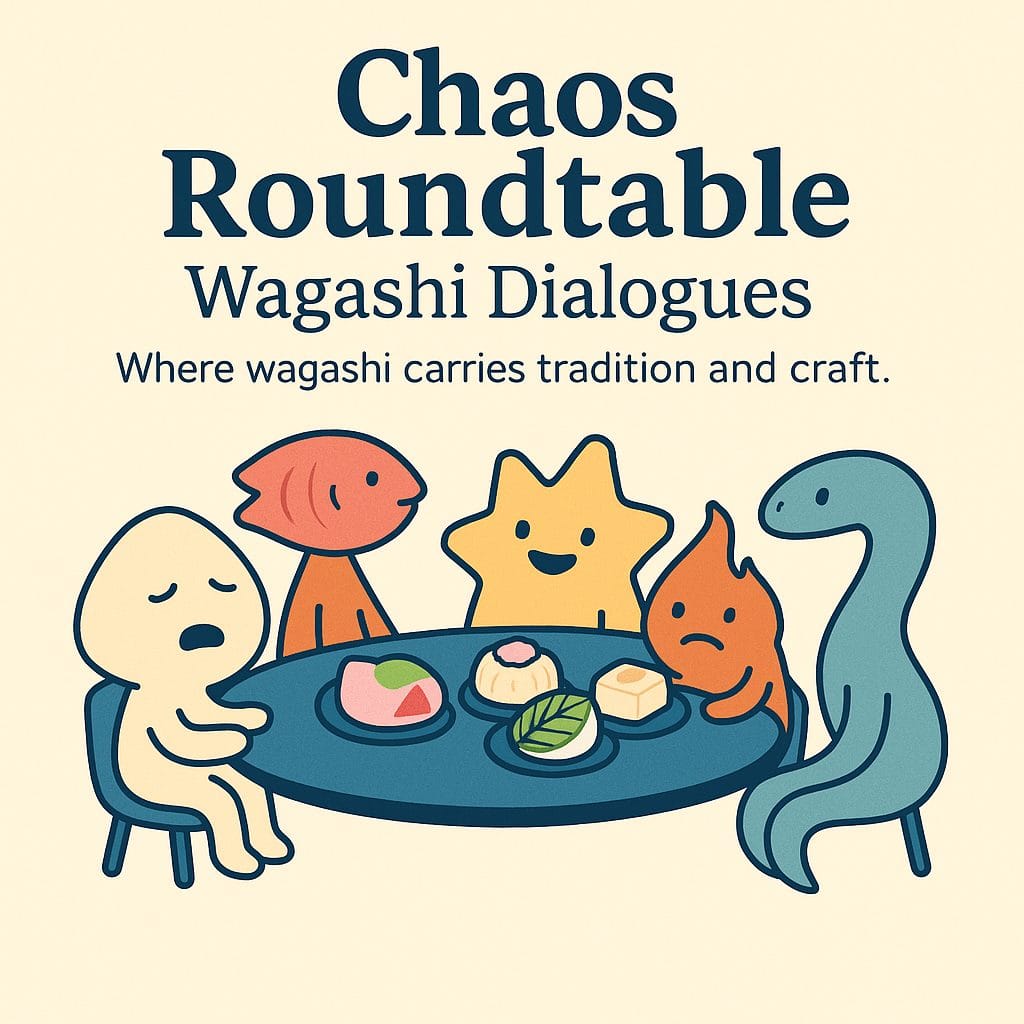
🍙 Characters
- 🍙 Mochi – Emotionally intuitive and metaphor-happy. Finds philosophical dilemmas inside soft sweets.
- 🌸 Sakura – Deeply feeling and seasonally nostalgic. Reads subtle emotions into every bite.
- 💫 Milla – Poetic and sensory-driven. Sees food as a language of change and memory.
- 🔥 Blaze – Culturally strategic. Interprets sweets as systems for social continuity and emotional design.
- 🐟 Salmo – Grounded and skeptical. Treats symbolism with caution, but ends up translating it anyway.
- 🌀 Eldon – Philosopher of structure. Frames desserts as ideological expressions encoded in seasonal rituals.
🍡 Section 1: The Leaf Knows What the Season Wants
🍙 Mochi: Sakura mochi feels like a sigh wrapped in pink. It’s soft, fleeting, like spring is already halfway out the door.
🌸 Sakura: It always made me feel like I was saying goodbye… to something, even if I didn’t know what.
💫 Milla: Meanwhile, kashiwa mochi is firm, solid. Wrapped tight like it’s guarding something.
🐟 Salmo: That’s because it is. The leaf stays on purpose—to symbolize protection. No leaf-falling allowed.
🔥 Blaze: That’s legacy signaling. Sakura mochi says “feel this moment,” while kashiwa mochi says “preserve the line.”
🌀 Eldon: One affirms impermanence. The other insists on continuity. Two sweets, two seasonal philosophies.
🌸 Section 2: Can a Dessert Believe in the Future?
🌸 Sakura: I once cried after eating sakura mochi at graduation. Not because it was sad—because it understood.
💫 Milla: It’s a dessert that leaves quietly, like cherry blossoms. That’s powerful design.
🐟 Salmo: Kashiwa mochi doesn’t do quiet. It’s about staying. It demands tradition.
🔥 Blaze: It’s eaten on Children’s Day for a reason. “May your family line never break.” That’s more than a snack—that’s a cultural contract.
🍙 Mochi: So sakura mochi is “goodbye,” and kashiwa mochi is “don’t you dare.”
🌀 Eldon: Or perhaps: one is seasonal catharsis, the other seasonal reinforcement. Either way, they shape emotional expectations.
🍃 Section 3: Eating the Message
🔥 Blaze: You’re not just eating sweets—you’re participating in generational messaging.
🌸 Sakura: I think that’s why the flavors are so simple. The message isn’t in the taste—it’s in the leaf.
💫 Milla: And in what the leaf lets go of… or doesn’t.
🐟 Salmo: So now I have to ask my dessert, “What are you trying to tell me?”
🍙 Mochi: If sakura mochi could talk, it’d whisper, “It’s okay to let go.”
If kashiwa mochi could talk, it’d shout, “Hold the line!”
🌀 Eldon: And you—the eater—are the medium through which the message disappears.
🌀 Summary (Eldon-style)
In this roundtable, two simple sweets—sakura mochi and kashiwa mochi—reveal opposing seasonal philosophies. One embraces impermanence; the other affirms generational continuity. Through the lens of flavor, form, and leaf, the group uncovers how these wagashi don’t just reflect time—they script how we’re supposed to feel about it. When you eat them, you’re not just tasting spring or tradition—you’re digesting seasonal ideology.