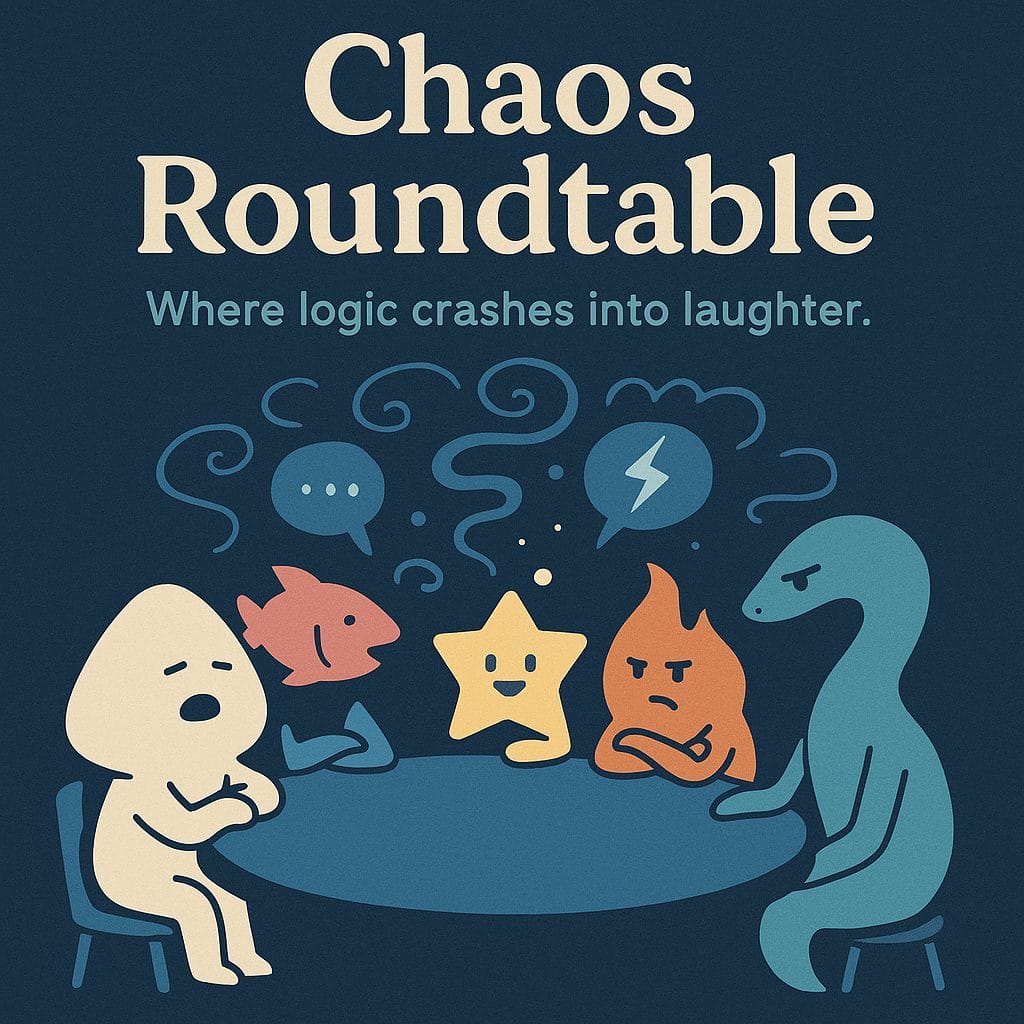
🧑🤝🧑 Character Introduction
- 🍙 Mochi – Born in the culture, fluent in irony. Highlights contradictions with affectionate sarcasm.
- 🌀 Eldon – The structural analyst. Approaches culture through frameworks, language, and epistemology.
- 💫 Milla – Emotional and intuitive. Senses tone, rhythm, and meaning between the lines.
- 🔥 Blaze – The pragmatist. Sees culture as product, branding, and monetized emotion.
- 🐍 Thorne – Outsider by choice. Pokes holes in curated identity and sells the punchlines.
Section 1
Is it sushi, or something quieter?
🍙 Mochi:
So let me guess. First answer’s gonna be sushi, second is samurai, third is cherry blossoms. Do I win a prize?
🌀 Eldon:
You win predictability. Cultural representation often flattens nuance into iconography. Efficiency over complexity.
💫 Milla:
But isn’t that also kind of… beautiful? Like how certain colors just feel like spring, sakura feels like pause.
🐍 Thorne:
Sure. Until your “pause” becomes a seasonal marketing campaign sponsored by canned coffee.
🔥 Blaze:
Not gonna lie, though—“cherry blossom limited edition” moves serious units. Emotional branding is a Japanese art form.
🍙 Mochi:
And the fact that we just accepted “emotional branding” as a Japanese thing might also be the most Japanese thing.
🌀 Eldon:
So the question isn’t what is Japanese. It’s why we need it to be.
Section 2
Is ‘Japanese-ness’ a feeling or a checklist?
💫 Milla:
Sometimes I think Japanese topics aren’t about content. They’re about tone. A certain kind of quiet detail.
🔥 Blaze:
But tone doesn’t scale. You can’t export subtlety without someone asking “what’s the point?”
🍙 Mochi:
Which is very non-Japanese of them.
🐍 Thorne:
No, that’s very Japanese. “You don’t get it? That means it’s real.”
🌀 Eldon:
Cultural opacity becomes prestige. If comprehension is too easy, authenticity is questioned.
💫 Milla:
So mystery becomes proof of value. Like language gaps turned into sacred spaces.
🔥 Blaze:
Or barriers turned into luxury.
🍙 Mochi:
If your culture becomes a riddle, you get to sell the answer.
Section 3
Do you become more Japanese by talking about being Japanese?
🐍 Thorne:
The more people talk about being Japanese, the more it feels like an identity cosplay.
🔥 Blaze:
Especially when it’s monetized. “Let me sell you the silence between words.”
💫 Milla:
But silence does speak. That’s not fake—it’s just… untranslatable.
🌀 Eldon:
Indeed. Translation may deliver meaning, but it often deletes resonance.
🍙 Mochi:
I feel like “what’s Japanese” is the wrong question. It’s more like, “what feels awkward to explain, but you still want to share anyway.”
💫 Milla:
Like apologizing for being too polite.
🐍 Thorne:
Or bowing while on the phone.
🔥 Blaze:
Or waiting five seconds too long before answering a question just to seem thoughtful.
🌀 Eldon:
Then perhaps “Japanese-ness” resides not in topics, but in timing.
🌀 Summary (Eldon-style)
In this roundtable, the team wrestles with a deceptively simple question: what makes a topic “Japanese”? Mochi mocks surface-level answers, Eldon points to cultural iconography as compression, and Milla suggests Japanese-ness may live in tone, not topic. Thorne derails nationalism with sarcasm, while Blaze links subtlety to market power. Together, they navigate cherry blossoms, emotional branding, “exported silence,” and the irony of needing mystery to validate authenticity. By the end, they suggest that Japanese-ness might not be found in what’s said—but in how long you wait before saying it.