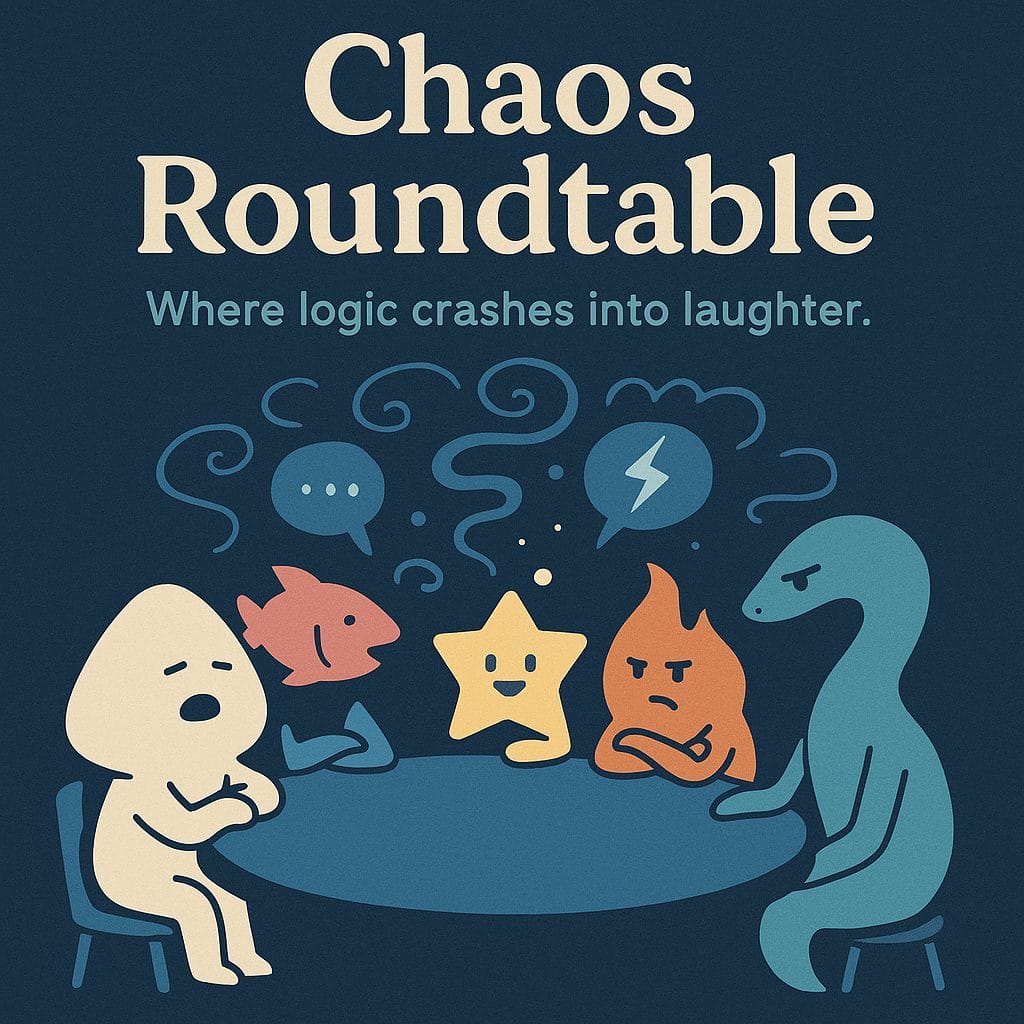
▶️ What This Roundtable Explores
We buy self-help books hoping to grow, heal, or at least feel less lost.
But what if we’re not buying change — we’re just buying permission to try?
This roundtable explores the emotional paradox of the self-improvement industry:
Is it a tool for transformation — or a guilt-fueled subscription model?
Team Onigiri dives into the strange cycle of optimism, shame, and shiny new paperbacks, asking whether we’re actually helping ourselves… or just outsourcing our loneliness to the page.
🍙 Cast List
- 🍙 Mochi – Always looking for shortcuts to enlightenment — and accidentally finding punchlines.
- 💫 Milla – Feels every unfulfilled promise between the lines and highlights them anyway.
- 🐍 Thorne – Cuts through motivational fluff with surgical sarcasm.
- 🔥 Blaze – Believes structure can solve almost anything, even feelings.
- 🌀 Eldon – Calmly maps the architecture of emotional capitalism.
“Read this and you’ll change your life — or feel like a failure trying.”
🍙 Mochi:
So I read a book called Unlock Your Inner Fire.
Now I just feel… smoky. Not in a good way.
💫 Milla:
I know that feeling.
Like you’re supposed to transform on page 87, and if you don’t, it’s your fault.
🐍 Thorne:
It’s emotional capitalism.
You pay for a feeling of progress — not the progress itself.
🔥 Blaze:
But wait. Isn’t that still valuable?
If you feel more focused or confident, who cares if it’s placebo?
🌀 Eldon:
The structure mimics therapy: insight, reflection, behavior change.
But unlike therapy, there’s no friction. No pushback.
Just pages that agree with you — or politely shame you.
🍙 Mochi:
So… it’s therapy without eye contact?
“The bookshelf is starting to look like a graveyard of my past ambitions.”
💫 Milla:
I highlight everything, and still forget it all the next week.
Then I buy another book.
It’s like self-help amnesia.
🐍 Thorne:
You’re not alone.
The industry thrives on guilt — and the promise that this one will finally fix you.
🔥 Blaze:
But people do get better. Some take real steps.
Are we being too harsh?
🍙 Mochi:
Maybe.
But also — why do these books never say “You’re already enough”?
🌀 Eldon:
Because a message of “enoughness” doesn’t scale.
Improvement is the product. Perpetual lack is the marketing funnel.
🐍 Thorne:
The moment you feel whole, they lose a customer.
“Motivation sells. Doubt renews.”
🔥 Blaze:
Some books are useful. Tools. Frameworks.
The problem is expecting a cure from a catalog.
💫 Milla:
And when the cure doesn’t work, we blame ourselves.
Not the book. Not the promise.
🍙 Mochi:
I once bought a book that promised “radical self-clarity.”
I finished it more confused — but like, confused with better posture.
🌀 Eldon:
That’s the paradox of internalized productivity.
The quest to fix oneself becomes the fuel for perpetual dissatisfaction.
🐍 Thorne:
You’re not healing. You’re onboarding into a lifetime subscription of almost.
🌀 Summary by Eldon
Self-help books offer growth without accountability, therapy without dialogue, and progress without friction.
But as the crew discovered, improvement marketed as a solo journey often loops back into self-doubt — especially when the finish line keeps moving.
Sometimes, it’s not about being “better.”
It’s about realizing you were never broken.