▶️ What This Conversation Reveals
Some forms of respect feel deeper when viewed from a distance. Whether through literal glass, polite distance, or emotional space, this roundtable explores how reverence can be preserved—or distorted—by barriers. What happens when we remove them? Does true respect require closeness, or does it bloom in the space between?
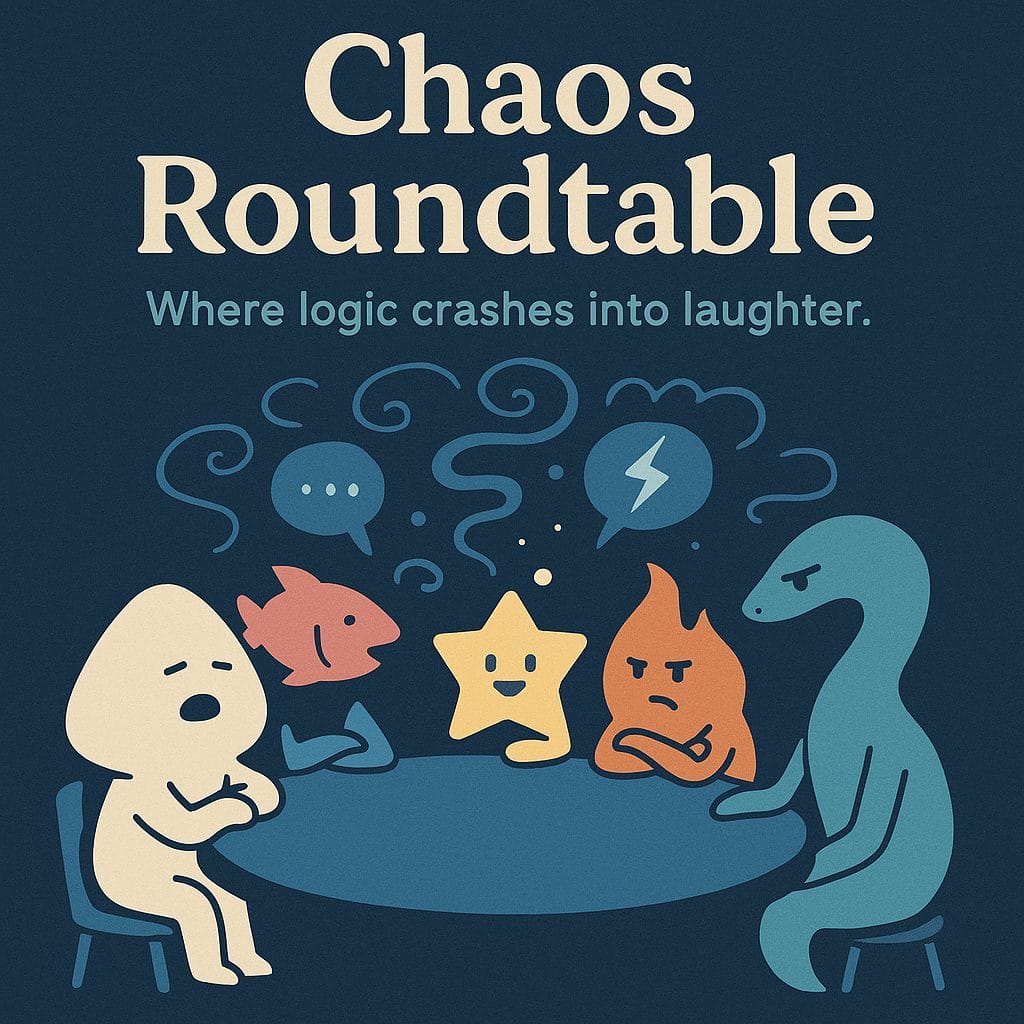
👥 Character Roster (Participants)
| Name | Role Description |
|---|---|
| 🍙 Mochi | A wonder-driven instigator who often sees meaning in tiny moments. Shifts perspectives with ease. |
| 🐟 Salmo | A sharp, rational voice who detects surface-level social mechanics and power dynamics. |
| 💫 Milla | A gentle but insightful emotional observer who frames abstract feelings in poetic terms. |
| 🔥 Blaze | A challenger of assumptions, often grounding abstract ideas in hard logic or human psychology. |
| 🐍 Thorne | A sardonic, sometimes cynical realist who probes beneath sincerity to expose contradictions. |
### I. When Distance Creates Reverence
🍙 Mochi:
You ever feel like respect grows when there’s a barrier? Like… a glass window turns a simple nod into a sacred ritual.
🔥 Blaze:
Exactly. Physical separation adds this invisible weight. Suddenly you’re not just watching someone—you’re witnessing them.
🐍 Thorne:
Or projecting onto them. Glass is a perfect screen for imagined nobility. Maybe the respect isn’t for them, but for the version we invent.
💫 Milla:
Ohh, that’s poetic. It’s like when you see someone practicing alone through a window—it hits harder than applause.
🐟 Salmo:
We assign value to what we can’t easily touch. Rarity bias. If the person walked out the door, would we still admire them the same?
🍙 Mochi:
Maybe we’d say, “Oh, they’re just normal.” And lose the magic. So we keep the glass… to preserve the myth?
🔥 Blaze:
Or to avoid being disappointed. Real closeness often kills illusions.
🐍 Thorne:
Respect at a distance is the most stable kind. No risk of contradiction.
### II. The Mask of Politeness
💫 Milla:
Sometimes that “glass” is just social politeness. We pretend respect to avoid discomfort.
🍙 Mochi:
You mean like—“Wow, great presentation!” even when we zoned out halfway?
🐟 Salmo:
That’s not respect. That’s reputation management. Respect without friction is too smooth to be real.
🔥 Blaze:
Still, performance has its own dignity. Even if it’s staged.
🐍 Thorne:
A mirror, not a window. Reflecting what the other wants to see.
💫 Milla:
But what if someone sees through the glass and smiles anyway?
🍙 Mochi:
That’s true respect. When the illusion breaks, and you still bow your head.
🐟 Salmo:
No glass, no mask. Just mutual vulnerability. Rare—but unforgettable.
### III. The Cost of Clarity
🔥 Blaze:
Let’s say we removed the glass completely. Full honesty. Would people handle it?
🐍 Thorne:
Most can’t. Transparency is sharp—it cuts both ways.
💫 Milla:
But don’t we crave it? At least sometimes? Real recognition without performance?
🍙 Mochi:
It’s like… seeing someone’s scars and respecting them more, not less.
🐟 Salmo:
But that requires both to stay still. If one flinches, the spell breaks.
🔥 Blaze:
So we create barriers, not out of fear—but to preserve respect.
🐍 Thorne:
The irony: the clearest form of respect might be the one that’s partially obscured.
🍙 Mochi:
So we bow—not too close, not too far. Just enough to reflect… and not shatter.
🔍 Summary (by Eldon🌀)
While respect is often viewed as a product of closeness, the conversation here suggests it may actually thrive in spaces where full clarity is avoided. Glass, metaphorically or physically, acts as a filter—amplifying reverence while preventing disillusionment. But true respect may require the courage to break the glass… and remain.