Sakura Mochi isn’t just a pretty pink treat—it’s a handmade expression of Japanese craftsmanship and respect for the seasons.
From the year-long process of curing cherry leaves to the precision of wrapping sweet bean paste in mochi, this wagashi tells a story of time, care, and cultural continuity.
■Sakuramochi (Kyoto-style / Dōmyōji-style): a pink glutinous rice ball filled with red bean paste, also wrapped in a cherry leaf.
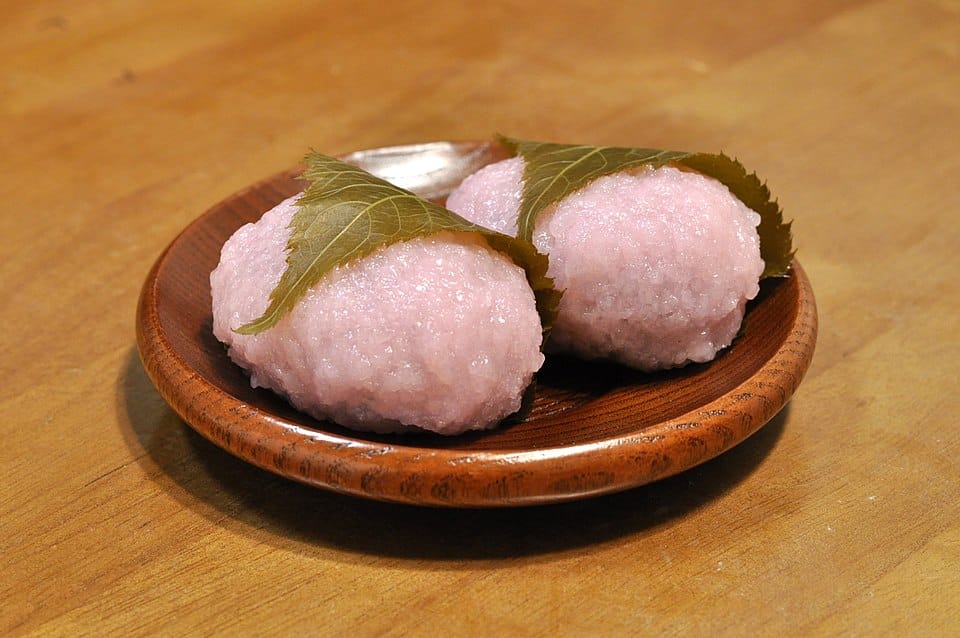
Image: Kyouhakusei shougai, CC0 1.0, via Wikimedia Commons
Source: Dōmyōji Sakuramochi – Wikimedia Commons
- Step-by-step: From Ingredient to Icon
- Choices: Tradition vs Modern Creativity
- Reassurance: You Don’t Have to Be a Master to Appreciate the Mastery
- Phenomenon: What “Traditional Technique” Means in Japan
- Objective Data: Tradition, Home, and Innovation
- Impression: What Makers Say, and What Eaters Feel
- Alternatives: How to Join the Craft—Even From Abroad
- Summary: Sakura Mochi Is a Practice, Not Just a Product
- 🔗 References & Sources
Step-by-step: From Ingredient to Icon
1. It Begins With the Leaf—Literally a Year in the Making
In Japan, the cherry leaf used to wrap Sakura Mochi is more than decoration—it’s a key aromatic component.
According to traditional sweet shops like Sugaya, the leaves are:
- Harvested from Ōshima cherry trees in early summer
- Salt-cured for 12 months to mellow their sharpness while preserving aroma
- Stored and rehydrated right before use, balancing soft texture and fragrance
🧂 This attention to time and subtlety is rare in modern food practices—especially in the West.
2. The Wrapping Is a Skillful Dance of Hands
At a wagashi workshop featured by Shimotsuke News, even experienced home cooks were surprised at the complexity:
- Filling the mochi requires centering the red bean paste perfectly
- Twisting the rice layer must be done in one smooth motion
- The final touch: gently wrapping the salted cherry leaf, neither too loose nor too tight
This act—called “tsutsumi” (包み)—is one of the most respected motions in wagashi training.
“It’s like origami with food,” said one participant.
3. Rice Is Not Just Rice: Understanding Domyoji-ko
In the Kansai (western Japan) version, Sakura Mochi is made with domyoji-ko, a unique ingredient:
- Glutinous rice steamed, dried, and crushed into coarse granules
- Soaked before use to restore texture
- Offers a grainy, rustic feel unlike any mochi found abroad
This technique dates back to Buddhist temple preservation methods—designed to store rice through humid summers.
Choices: Tradition vs Modern Creativity
| Style | Technique | Example |
|---|---|---|
| Kyoto artisan | Hand-made domyoji mochi with aromatic leaves | Senbon Tamajuken, Kyoto |
| Tokyo classic | Thin crepe-style made with flour and skillful folding | Chomeiji-style sakura mochi |
| Vegan blogger | Natural color with beet juice and sakura powder | Veggiekins recipe |
| Hybrid versions | Sakura mochi ice cream, pancakes, or cake rolls | Found in Tokyo cafés or abroad |
While traditional shops preserve the handmade spirit, home cooks and bloggers worldwide are adapting the recipe using tools like silicone molds and online tutorials.
Reassurance: You Don’t Have to Be a Master to Appreciate the Mastery
Even if you’re not folding crepes with bamboo spatulas or soaking leaves for a year, knowing what goes into Sakura Mochi lets you appreciate its quiet power.
This isn’t mass-produced sugar—it’s edible craftsmanship.
Phenomenon: What “Traditional Technique” Means in Japan
In Japan, “tradition” isn’t nostalgia—it’s living muscle memory.
At Senbon Tamajuken, a renowned Kyoto wagashi shop, third-generation artisan Masaya Motoshima explains:
“The smoother the texture, the more time it takes. You can’t rush a seasonal sweet.”
His sakura mochi is made using:
- Domyoji-ko adjusted daily based on humidity
- Bean paste simmered over hours to balance sweetness and depth
- Leaves softened just enough to wrap without tearing, but never cooked
This approach values micro-adjustment over standardization—a contrast to industrial dessert making overseas.
Objective Data: Tradition, Home, and Innovation
- In a recent article by Fujingaho, artisans describe how even the angle of hand placement during wrapping is taught in long apprenticeships.
- Meanwhile, home chefs abroad—like Veggiekins and Okonomi Kitchen—replicate the look and feel of sakura mochi with modern tools and accessible ingredients.
- Their success shows that the spirit of craftsmanship can cross borders, even if the materials or techniques differ.
Shared Values, Different Contexts
| Japan | Abroad |
|---|---|
| Trained artisans with inherited knowledge | Self-taught creators inspired by visual beauty |
| Seasonality deeply tied to cultural events | Seasonality as an aesthetic or wellness theme |
| Leaf as fragrance and function | Sometimes replaced with basil or shiso when sakura is unavailable |
Impression: What Makers Say, and What Eaters Feel
From the interviews and workshops we studied, several emotional notes recur:
“Sakura mochi reminds me that spring is brief. So I make it slowly.”
— Artisan, Kyoto
“It’s the most beautiful dessert I’ve ever made.”
— Home baker, California
This is where tradition and personal joy intersect.
Even overseas, people feel the care folded into each layer—and recreate it not just to eat, but to participate in the culture.
Alternatives: How to Join the Craft—Even From Abroad
- Try a wagashi kit: Many online shops offer sakura mochi kits with freeze-dried leaves and domyoji flour.
- Use substitutes creatively: If you can’t find sakura, try pickled shiso or blanched grape leaves.
- Focus on form: Even if ingredients differ, the act of wrapping, shaping, and reflecting is what makes it “Sakura Mochi.”
Tip: Serve with sencha or genmaicha to echo the full experience.
Summary: Sakura Mochi Is a Practice, Not Just a Product
To bite into sakura mochi is to taste not only rice and red bean, but centuries of patience and poetic thought.
In Japan, every part of it—from leaf to fold—is filled with unspoken skill. Abroad, recreating it becomes a quiet act of connection.
Whether handmade by artisans in Kyoto or shaped by beginners in Brooklyn, sakura mochi is proof that tradition lives best when shared.