- Sakura Mochi is more than a dessert—it’s a symbol of spring, heritage, and gentle transience.
- Understanding Sakura Mochi Step by Step
- Which Type Should You Try (and Where)?
- No Need to Be an Expert—Just Savor the Story
- Sakura Mochi as a Cultural Mirror
- Historical and Social Context
- What Sakura Mochi Says to the World
- How to Experience It Abroad
- To Taste Sakura Mochi Is to Taste Spring
- 🔗 References & Sources
Sakura Mochi is more than a dessert—it’s a symbol of spring, heritage, and gentle transience.
Sakura Mochi may look like just a pink rice cake wrapped in a leaf—but behind its sweet and salty taste lies a cultural story that touches on Japan’s sense of season, ceremony, and subtlety. From its origins in 18th-century Edo to its presence in modern spring festivities, it invites us to taste history with every bite.
If you’ve ever wondered why a dessert is wrapped in a salty leaf, or why there are two completely different versions of the same sweet, you’re about to find out.
Sakuramochi (Tokyo-style / Chōmeiji-style): a rolled crepe-like pink mochi filled with red bean paste, wrapped in a pickled cherry leaf.
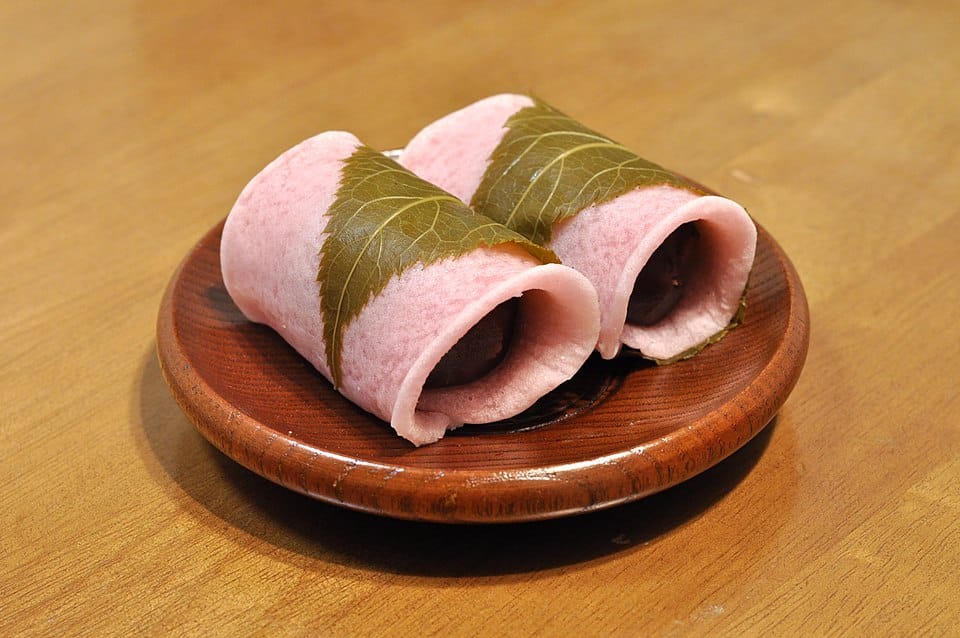
Image: Kyouhakusei shougai, CC0 1.0, via Wikimedia Commons
Source: Sakuramochi003 – Wikimedia Commons
Understanding Sakura Mochi Step by Step
1. What is it made of?
Sakura Mochi is traditionally made from:
- Sweetened red bean paste (anko)
- A pink-colored rice cake exterior (either smooth or coarse, depending on region)
- A salted cherry blossom leaf (edible, optional)
There are two distinct styles:
- Kanto style (Tokyo): Uses a crêpe-like pancake made from wheat or glutinous flour to wrap the bean paste.
- Kansai style (Kyoto/Osaka): Uses “Domyoji” rice—a coarsely ground, steamed glutinous rice.
2. Why is it pink and wrapped in a leaf?
- The pink color symbolizes cherry blossoms, central to Japan’s view of spring as a fleeting but beautiful season.
- The cherry leaf, often pickled in salt, adds a contrasting savory aroma. Whether to eat the leaf or not is a matter of personal (and sometimes regional) choice.
3. When is it eaten?
Sakura Mochi is most commonly enjoyed between late February and early April, particularly for:
- Hinamatsuri (Girls’ Day, March 3rd)
- Hanami (Cherry Blossom viewing parties)
Which Type Should You Try (and Where)?
| Style | Region | Texture | Popular Shop Example |
|---|---|---|---|
| Kanto (長命寺) | Tokyo | Smooth, chewy | Chomeiji Sakura Mochi (since 1717) |
| Kansai (道明寺) | Kyoto/Osaka | Grainy, mochi-like | Local wagashi shops & convenience stores |
Both are widely available across Japan during spring. In Tokyo, the long-established shop Chomeiji near the Sumida River sells its version with pride—still hand-wrapped in pickled cherry leaves.
Outside Japan, you may find packaged versions in Japanese supermarkets, especially around spring. Some online stores also offer freeze-dried or DIY kits.
No Need to Be an Expert—Just Savor the Story
Even if you can’t distinguish the styles at first glance, the beauty of Sakura Mochi lies in its invitation to slow down. Whether you eat the leaf or not, whether you prefer smooth or grainy texture, you’re participating in a centuries-old seasonal ritual.
It’s not just a snack—it’s a moment.
Sakura Mochi as a Cultural Mirror
Sakura Mochi isn’t just about flavor—it reflects a deep cultural value:
- Transience (mujo 無常): The idea that all things are fleeting. Just like cherry blossoms fall, Sakura Mochi is here for a short, specific season.
- Aesthetics of harmony: The balance between sweet and salty, soft and textured, edible and inedible (the leaf), all mirrors Japan’s appreciation for contrast and subtlety.
Its role in seasonal celebrations also reinforces traditional Japanese views of nature, life cycles, and femininity—especially during Hinamatsuri.
Historical and Social Context
- Invented in 1717 by a temple gatekeeper in Tokyo’s Chomeiji Temple. He used fallen cherry leaves to create a new kind of rice cake for hanami visitors.
- Kanto vs Kansai styles evolved organically due to local ingredients and preferences. The name “Sakura Mochi” now includes both versions despite their major differences.
- The leaf debate (to eat or not) still persists, often leading to friendly discussions—some see it as a wrapper, others as essential flavor.
→ This makes Sakura Mochi not just a food, but a talking point and cultural marker.
What Sakura Mochi Says to the World
For international audiences, Sakura Mochi communicates:
- “Seasonal mindfulness”: A sense of being present to fleeting beauty.
- Craftsmanship and tradition: Each piece is often handmade, reflecting care and intention.
- Edible poetry: Even its name—“Sakura” (cherry blossom) and “Mochi” (rice cake)—evokes both the visual and the visceral.
It’s the kind of sweet that invites slow eating, deeper appreciation, and perhaps a bit of reflection.
How to Experience It Abroad
If you’re outside Japan, here are your options:
- Buy it from Japanese grocery chains (e.g., Mitsuwa, Marukai, Sunrise Mart, H-Mart if available)
- Try DIY kits (many offer sakura leaf substitutes like shiso or spinach)
- Cook it from scratch: Recipes online (like from Veggiekins or Just One Cookbook) offer both traditional and vegan versions
Bonus: Pair it with green tea for a balanced, meditative moment.
To Taste Sakura Mochi Is to Taste Spring
In Japan, seasonal sweets are not just food—they’re time capsules. Sakura Mochi captures the essence of spring with its pink hue, fleeting availability, and delicate form.
For foreign readers, it’s a perfect entry point into Japan’s layered food culture. Whether you’re eating it in a Tokyo park or re-creating it in your home kitchen, Sakura Mochi offers more than taste—it offers a story.