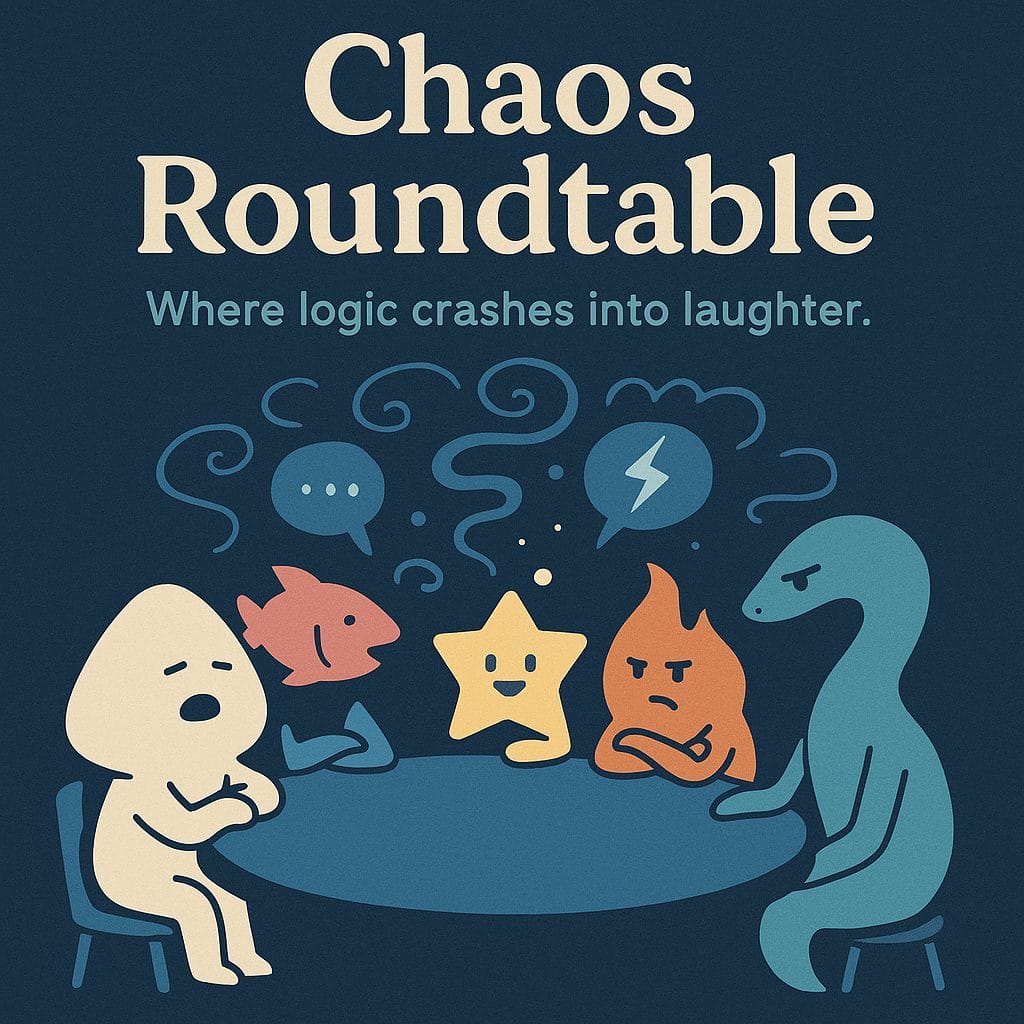
🎭 Characters in this Dialogue
🍙 Mochi: Tosses out absurd hypotheticals that twist logic into laughter.
💫 Milla: Sensitive empath who reacts with feeling and quiet resonance.
🔥 Blaze: Practical realist who frames ideas through economic systems.
🐟 Shake: Analytical thinker who grounds the conversation with structure.
🌀 Eldon: Philosophical observer weaving abstract ideas and dilemmas.
🌸 Sakura: Down-to-earth commentator who adds humor with cultural flair.
🟠 Section 1: Why would emotions be taxed in the first place?
🍙 Mochi:
“I read somewhere that in the future, you might get taxed for feeling too much. Like, ‘emotional overuse fee.’ Can you imagine crying at a movie and getting a bill?”
🔥 Blaze:
“It’s actually not that far off. If emotions impact productivity, governments might start regulating them. Emotional regulation becomes fiscal policy.”
💫 Milla:
“Wait… so if I feel too deeply, I owe money? But… isn’t that the point of being human?”
🐟 Shake:
“There’s a precedent—carbon tax, sugar tax. Emotional tax is just the next frontier in regulating internal states for external stability.”
🌀 Eldon:
“The commodification of affect—once feelings become units of measurable cost, the soul itself enters the economy.”
🌸 Sakura:
“So what, we start filing emotional tax returns? ‘I was sad in March, here’s my deduction form for heartbreak.’”
🟠 Section 2: How would emotional taxation actually work?
🔥 Blaze:
“Wearables, biometric rings, facial scan logs. Your mood shifts would be analyzed daily, assigned a volatility index, and billed accordingly.”
🐟 Shake:
“The problem is defining thresholds. Is sarcasm anger or wit? Is crying relief or distress? Misclassification could bankrupt comedians.”
🍙 Mochi:
“What about delayed emotions? Like when you’re calm now but explode about it next week? Is that retroactive billing?”
💫 Milla:
“I don’t want my grief to be quantified. Some days, I cry because I remember joy. Should that be taxed too?”
🌀 Eldon:
“This introduces a philosophical dilemma: are you responsible for what you feel, or only what you express?”
🌸 Sakura:
“And what if I fake a smile to avoid a ‘negativity surcharge’? That’s emotional tax fraud now?”
🟠 Section 3: What counts as a ‘taxable’ emotion?
🍙 Mochi:
“Is there a list somewhere? ‘Rage = high tax, mild annoyance = 3%’? Do we need an emotion accountant?”
🔥 Blaze:
“Emotions with external consequences—like aggression or despair—would have higher brackets. Neutrality might even earn credits.”
🐟 Shake:
“But then people will train themselves to feel less. Emotional minimalism becomes a tax avoidance strategy.”
💫 Milla:
“That sounds awful. We’d become emotionally silent to survive. Like… filtering our hearts through a spreadsheet.”
🌀 Eldon:
“Taxation implies ownership. But can we truly own what we feel before we understand it?”
🌸 Sakura:
“I can already see therapy bills labeled ‘emotional consulting expenses.’ We’re gonna need receipts for our breakdowns.”
🟠 Section 4: Can we stay honest in a world that bills our feelings?
🍙 Mochi:
“Imagine holding back your tears not because you’re strong, but because it’s too expensive to feel them.”
💫 Milla:
“That… hurts. I’d start hiding my joy too, just in case it becomes ‘luxury laughter.’”
🔥 Blaze:
“And yet, the market always adapts. Emotional insurance, refund policies, maybe even emotional subsidies for the poor.”
🐟 Shake:
“Eventually, emotional authenticity becomes a luxury. The rich can afford to feel fully. The rest? Filtered and flattened.”
🌀 Eldon:
“When expression is penalized, silence becomes currency. And in that silence, something deeply human withers.”
🌸 Sakura:
“Well then, I’m gonna start charging taxes on other people’s nonsense. Fair’s fair.”
🌀 Summary
This discussion dives into a speculative world where emotions are taxable assets. From daily biometric assessments to emotional tax brackets, the conversation touches on the absurdity of monetizing inner states. The group questions who decides what feelings are “excessive,” how expression could be penalized, and what it would mean to live under fiscal surveillance of the soul. Beneath the satire lies a deeper worry—that when honesty is taxed, people may choose silence over sincerity. As always, humor provides a fragile refuge from the chilling possibilities explored.