In Japan, “kurumi mochi” means different things in different regions—ranging from sweet walnut sauce over rice cakes to miso-flavored walnut blends. But why do such differences persist, and what do they say about how we treat food, identity, and boundaries?
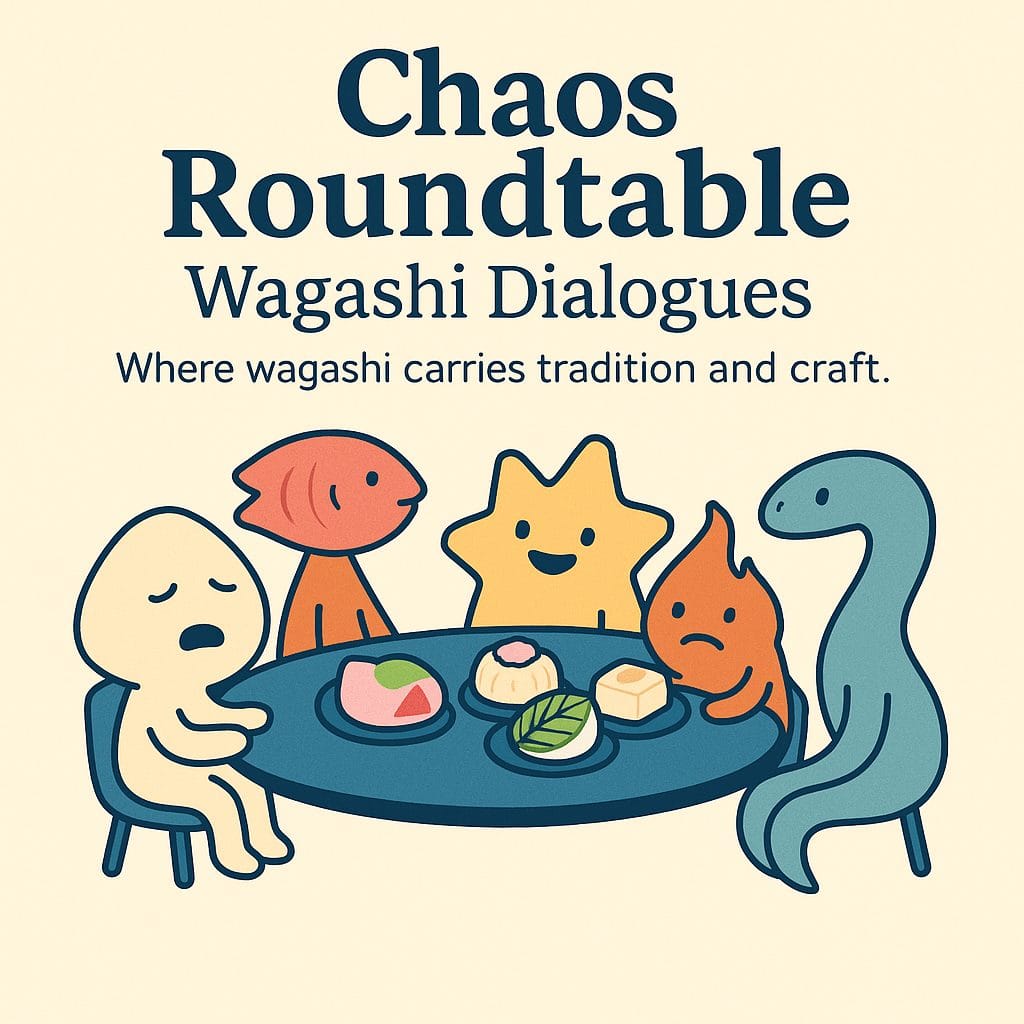
Characters in this Dialogue
🍙 Mochi: Spark of curiosity, igniter of tangents
🐟 Salmo: Region-savvy realist with culinary awareness
🐍 Thorne: Ironic observer of cultural distortion
💫 Milla: Emotion-driven and sensory-oriented
🔥 Blaze: Entrepreneurial mind with a taste for structure
🌀 Eldon: Abstract thinker who ties threads together
🍡 Section 1: Same Name, Different Taste
💫 Milla:
I once had kurumi mochi in Yamagata, and it wasn’t sweet at all—it was miso and walnuts. I was emotionally unprepared!
🐟 Salmo:
Exactly. In Tohoku, kurumi mochi tends to be savory-sweet with crushed walnuts and even a hint of soy or miso. The sweetness we associate with mochi isn’t a national rule.
🍙 Mochi:
Then is it even still “mochi”? Like… if it’s not sweet, does it shift categories?
🐍 Thorne:
You’re getting metaphysical again. But it’s a valid question: food identity often gets diluted in translation—both linguistic and cultural.
🌸 Sakura:
Maybe it’s more like a name badge than a recipe. “Kurumi mochi” signals familiarity even if the actual experience changes.
🔥 Blaze:
Which is a branding problem if you think like a merchant. Same label, wildly different expectations.
🌀 Eldon:
Regional foods act as cultural mirrors. What’s comforting in one place may feel alien in another, but both are real—anchored in local memory.
🍡 Section 2: When Boundaries Get Sticky
🍙 Mochi:
So if I travel with my favorite version, is that… mochi imperialism?
💫 Milla:
Only if you make people eat it with a fake smile.
🐟 Salmo:
Honestly, food localization is a negotiation. Chains like Starbucks tweak their menu per city—it’s not betrayal, it’s strategy.
🔥 Blaze:
But regional sweets aren’t franchises. They grow from soil and tradition, not market surveys.
🌸 Sakura:
And they carry emotion. My grandmother made walnut mochi from scratch, and every version since tastes like a ghost.
🐍 Thorne:
Ghosts and brands—delicious contradiction. “Tradition” is often just the winning flavor of a long-forgotten battle.
🌀 Eldon:
We inherit culinary maps, not by logic, but by repetition. Sometimes mislabeling is how we preserve memory.
🍡 Section 3: Universal Flavor, Local Soul
🐟 Salmo:
I admit—when I saw a Tokyo “kurumi mochi” with whipped cream, I felt personally attacked.
🍙 Mochi:
Modern mochi tends to remix everything. It’s chaos with rice.
💫 Milla:
Chaos, but also curiosity. What if walnut cream mochi is someone’s first encounter with the name?
🔥 Blaze:
Then the name becomes an invitation, not a guarantee. That’s the business shift—sell the vibe, not the authenticity.
🌸 Sakura:
Still, I think there’s beauty in returning to the quiet versions. Less Instagram, more ancestral hum.
🐍 Thorne:
And yet… who decides which version gets to be the “real” one? Nostalgia? Geography? Volume of likes?
🌀 Eldon:
Perhaps “realness” is regional, like dialects. They don’t compete—they coexist, each claiming a different truth.
🍡 Section 4: Naming Without Borders
🍙 Mochi:
I wanna open a store and just name everything “something mochi” and watch the chaos unfold.
🔥 Blaze:
If you do that, at least map it like a wine label: “Kurumi Mochi – Miyagi-style – nut ratio 60%.”
🐍 Thorne:
The terroir of walnuts.
💫 Milla:
That sounds poetic. Like tasting a forest through mochi.
🌸 Sakura:
Maybe we don’t need to settle the definition. Just respect each variation as a local heartbeat.
🐟 Salmo:
Agreed. Eat first, label later. But maybe keep a glossary on hand.
🌀 Eldon:
In the end, “kurumi mochi” is less a dessert and more a dialogue—a soft, sticky dialect across regions.
Summary
This roundtable explored how “kurumi mochi” takes on drastically different forms across Japan. In some regions, it’s a rich walnut paste; in others, it’s soy-based or miso-flavored. Through cultural drift and sensory reinterpretation, the name remains while its content shifts. The dialogue suggests that meaning in food—like language—is regional, felt, and evolving.