Ohagi looks simple—sweet rice, red bean paste, sometimes a dusting of kinako.
But behind its soft surface lies a world of touch, timing, and inherited instinct.
Some say it can’t be taught, only felt.
So what does it mean to make Ohagi “right”?
Let’s press gently into its shape.
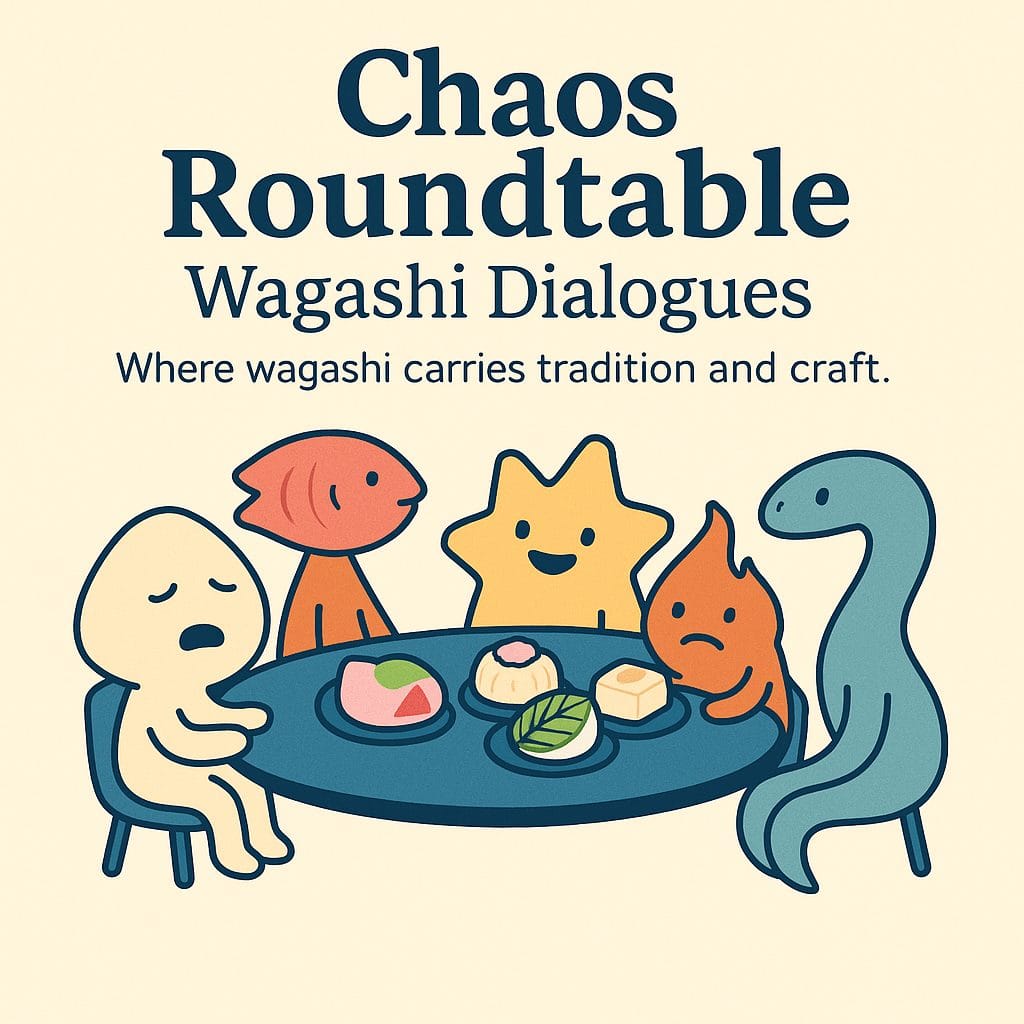
🍡 Characters in this Dialogue
🍙 Mochi — Free-spirited instigator. Twists conversations with playful questions.
🐟 Salmo — Logical realist. Brings structure, facts, and clarity.
🌀 Eldon — Philosophical observer. Sees patterns and keeps the meta calm.
🔥 Blaze — Strategic thinker. Focuses on systems, markets, and behavior.
💫 Milla — Emotional and intuitive. Leads with warmth and empathy.
🌸 Sakura — Gentle idealist. Balances emotion and reason quietly.
【1】The first touch: rice and feel
🍙 Mochi:
Have you ever tried to make Ohagi? I did once. It fell apart like sad rice rubble.
🐟 Salmo:
That’s because the rice needs just the right stickiness—not too mashed, not too separate. It’s balance.
💫 Milla:
My aunt used to say, “You don’t mold Ohagi. You persuade it.”
🌀 Eldon:
There’s a tactile rhythm. Pressure, release. The gesture becomes knowledge over time.
🔥 Blaze:
And there’s no standardized measure. Each family adjusts by feel, not by formula.
🌸 Sakura:
It’s like shaping a memory—not just food. You’re holding warmth and form at once.
【2】Hands that remember
🐟 Salmo:
Some older makers say they “learned with their fingers,” not instructions. Just by doing.
🌀 Eldon:
That’s a form of embodied knowledge. Skill carried not in words, but in gestures passed down.
💫 Milla:
Like a grandmother standing behind you, correcting the pressure of your palm without saying a word.
🔥 Blaze:
It’s inefficient by business standards, but highly optimized for family survival.
🌸 Sakura:
And each person’s Ohagi ends up slightly different—even when using the same rice and bean.
🍙 Mochi:
So the recipe isn’t written. It’s remembered… through repetition and fingertips.
【3】Can this be mechanized?
🔥 Blaze:
Modern machines can replicate shapes, but not texture judgment. They can’t feel when it’s “right.”
🐟 Salmo:
That’s the limit of sensors. Rice shifts with humidity, seasons, even mood sometimes.
💫 Milla:
Machines don’t pause when something feels off. People do.
🌀 Eldon:
And perhaps that pause is the wisdom itself. Recognition beyond metrics.
🌸 Sakura:
The pause where care lives.
🍙 Mochi:
So maybe Ohagi isn’t hard because it’s complex.
Maybe it’s hard because it’s soft.
【4】What gets passed on?
💫 Milla:
My cousin says she makes Ohagi exactly like our grandmother… but somehow it tastes younger.
🔥 Blaze:
That’s brand evolution. Legacy with a new tongue.
🌀 Eldon:
Tradition isn’t duplication. It’s transformation that still remembers its origin.
🌸 Sakura:
The shape stays. The hands change.
🐟 Salmo:
And the softness… remains the teacher.
🍙 Mochi:
So if you want to learn to make Ohagi, maybe don’t ask for a recipe.
Just sit beside someone, and watch what their hands remember.
🌀 Summary
This roundtable delves into the quiet artistry of Ohagi-making—where tradition is not written but remembered through hands. The team explores how pressure, timing, and inherited instinct form a craft that resists measurement and automation. From soft rice to the silent correction of elders, the discussion reveals how making Ohagi is an act of embodied care, passed not through recipes but through presence. In this conversation, Ohagi becomes more than a sweet—it becomes a form of knowledge you can only feel.