Ohagi is soft, sweet, and made with love—but its purpose goes beyond flavor.
It appears twice a year, during the equinoxes, when families gather, remember, and offer it to ancestors.
Is it comfort food for the living, or a quiet ritual for the departed?
Let’s uncover its layers.
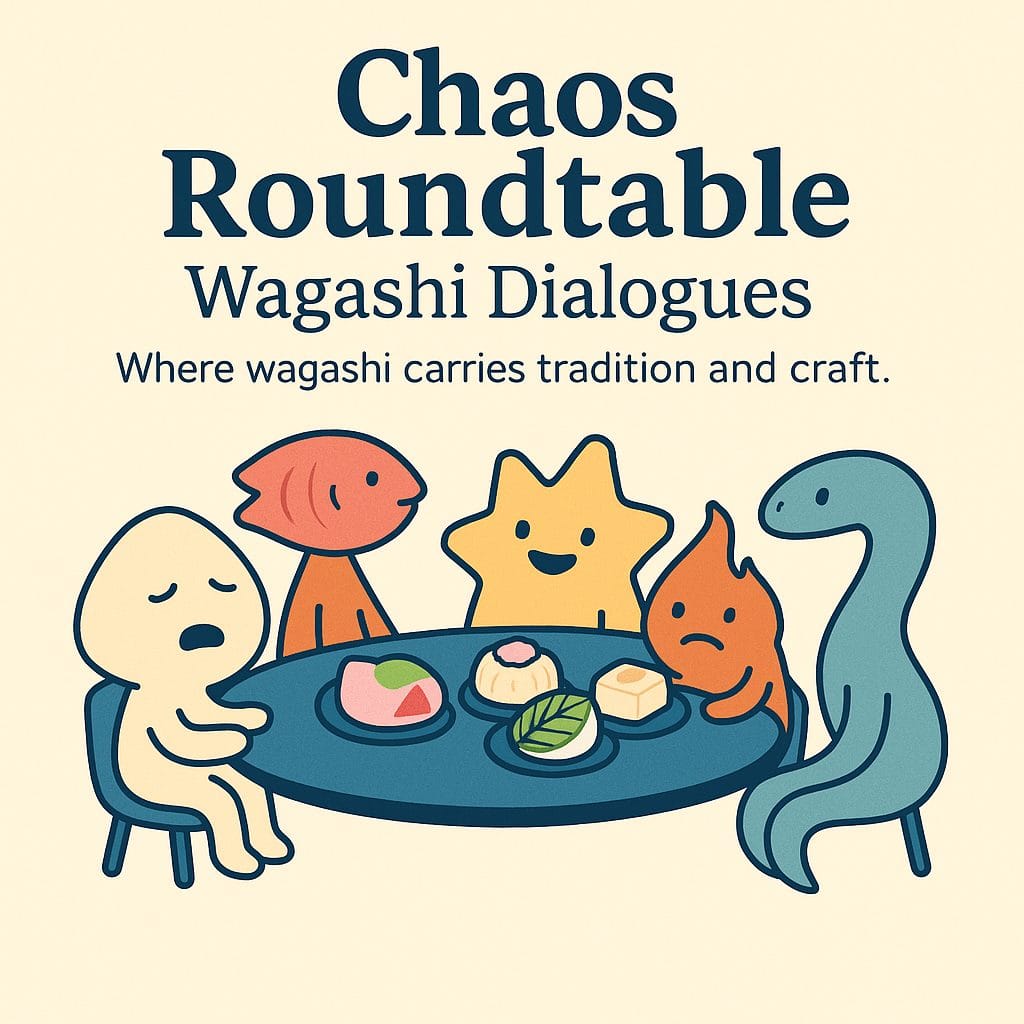
🍡 Characters in this Dialogue
🍙 Mochi — Free-spirited instigator. Twists conversations with playful questions.
🐟 Salmo — Logical realist. Brings structure, facts, and clarity.
🌀 Eldon — Philosophical observer. Sees patterns and keeps the meta calm.
💫 Milla — Emotional and intuitive. Leads with warmth and empathy.
🌸 Sakura — Gentle idealist. Balances emotion and reason quietly.
🐍 Thorne — Sharp and sarcastic. Cuts through sentiment with wit.
【1】What exactly is Ohagi?
🍙 Mochi:
So… is Ohagi a snack? Or a prayer you can eat?
🐟 Salmo:
Technically, it’s sweet rice with anko. But culturally, it’s tied to “higan” season—spring and autumn equinoxes.
💫 Milla:
My grandmother used to say, “It’s food for both worlds—the one we live in, and the one we came from.”
🌀 Eldon:
That duality defines it. It’s made with care, but not always for the self.
🌸 Sakura:
It’s the kind of thing you make, not for indulgence, but for presence. For being with those who aren’t here.
🐍 Thorne:
So it’s a dessert with ghost privileges. Sweet and slightly spooky.
【2】Names that change with seasons
🐟 Salmo:
In spring, it’s called “Botamochi”—named after peony flowers. In autumn, “Ohagi”—named after bush clover.
🌀 Eldon:
Even the name reflects a poetic connection to impermanence. Seasons pass, names shift, meanings layer.
💫 Milla:
That’s beautiful. It makes it feel alive in time—not frozen like a packaged snack.
🌸 Sakura:
And it’s always handmade. That act itself becomes part of the offering.
🍙 Mochi:
Like you’re shaping memory with your hands, not just rice and beans.
🐍 Thorne:
So basically, it’s edible poetry with a deadline.
【3】Not just for taste
💫 Milla:
I remember delivering Ohagi to neighbors as a child. It wasn’t about hunger—it was about care.
🌸 Sakura:
Right. It’s “giving” in the purest sense. You’re not showing off skill. You’re showing attention.
🌀 Eldon:
A non-verbal ritual. An emotional transaction without words.
🐍 Thorne:
Unless you drop it. Then it becomes a tragedy and a sticky mess.
🍙 Mochi:
Honestly, I love that food can carry feeling so quietly. No labels. Just layers.
🐟 Salmo:
And no preservatives. The expiration is part of the message.
【4】What stays behind
🌀 Eldon:
Perhaps Ohagi is not meant to be remembered—it is memory itself, dissolving on the tongue.
💫 Milla:
When I eat it, I don’t just taste sweet. I feel someone.
🌸 Sakura:
Maybe that’s why it’s seasonal. So we don’t forget to remember.
🐍 Thorne:
Or maybe because if we had it year-round, we’d forget it’s special.
🐟 Salmo:
Some traditions are beautiful because they disappear.
🍙 Mochi:
So next time someone gives you Ohagi, maybe don’t just eat it.
Maybe listen to what it’s trying to say.
🌀 Summary
This roundtable unwraps the layers of Ohagi—not just as a sweet, but as a quiet ritual of memory, care, and seasonal impermanence. The team explores its role during the equinoxes, where handmade offerings are shared with both the living and the departed. With names that change across seasons and emotions that stay behind, Ohagi becomes more than food—it becomes presence. Through laughter, tenderness, and thoughtful tension, the discussion reveals how this humble sweet is deeply rooted in both time and feeling.