To most people, Imagawayaki is a warm disk of anko-filled batter handed over at a festival stall.
But behind its simplicity lies a hidden choreography—precise movements, seasoned tools, and decisions made in seconds.
So is it just fast food with nostalgia… or a humble form of culinary craftsmanship?
Let’s turn the griddle.
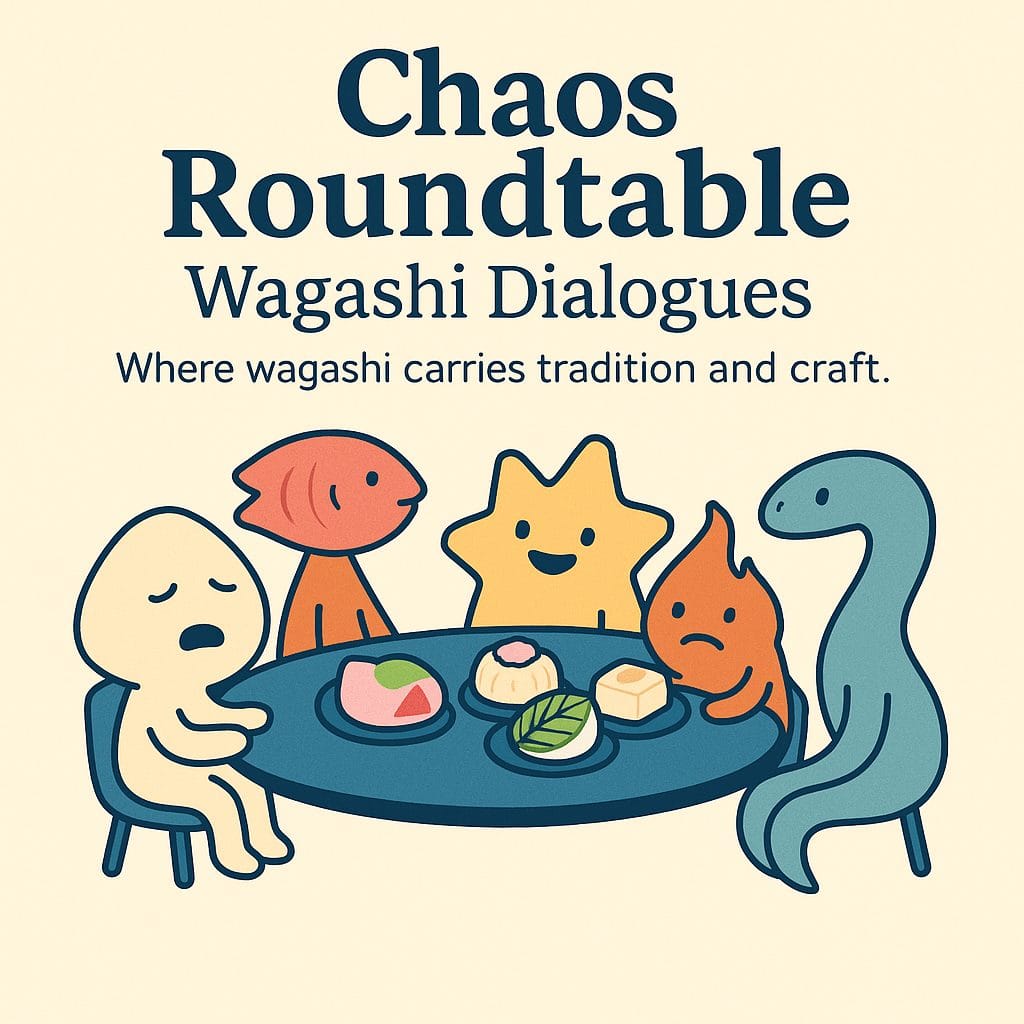
🍡 Characters in this Dialogue
🍙 Mochi — Free-spirited instigator. Twists conversations with playful questions.
🐟 Salmo — Logical realist. Brings structure, facts, and clarity.
🌀 Eldon — Philosophical observer. Sees patterns and keeps the meta calm.
🔥 Blaze — Strategic thinker. Focuses on systems, markets, and behavior.
💫 Milla — Emotional and intuitive. Leads with warmth and empathy.
🐍 Thorne — Sharp and sarcastic. Cuts through sentiment with wit.
【1】What does it take to make a perfect Imagawayaki?
🍙 Mochi:
You’d think it’s simple—pour, fill, flip. But when I tried, I ended up with burnt goo and bean lava.
🐟 Salmo:
That’s because it’s all about timing. You have to pour the batter just right, then catch the moment before it overcooks. Seconds matter.
🔥 Blaze:
And consistency. If your iron plates are uneven in temperature, you lose the golden surface. Industrial kitchens use custom molds for that.
🌀 Eldon:
It’s choreography—timing, precision, and spatial awareness. A soft batter becoming structured warmth through control.
💫 Milla:
And you have to listen to it too. The sizzle changes. It tells you when it’s ready.
🐍 Thorne:
So it’s like jazz. Improvised, but if you miss a beat, the whole song collapses into sweet mush.
【2】Tools as tradition
🐟 Salmo:
There’s even a tool called an “Imagawayaki-ki”—a dedicated iron mold with rings. Some are passed down generations.
🔥 Blaze:
Which is ironic. Street food often gets treated like “low” cuisine, but this is artisan-level equipment.
🌀 Eldon:
The tool becomes a historical artifact—etched with the rhythms of hands that held it.
💫 Milla:
I love that. It’s like the iron remembers the touch of each person who flipped dough into joy.
🍙 Mochi:
And they don’t use timers. They use feel. The sound, the smell, the flow of the queue.
🐍 Thorne:
That’s risky business. You’re cooking by vibe, while kids scream for seconds.
【3】Modernization and memory
🔥 Blaze:
Now you’ve got chain stores with automatic dispensers—perfectly measured batter, consistent fillings.
But something gets lost in the efficiency.
🌀 Eldon:
Perhaps the loss is in silence. Machines don’t carry memory. They produce, but they do not remember.
💫 Milla:
When a person makes it, it feels like someone’s handing you a piece of their time.
🐟 Salmo:
Still, machines make it more accessible. No lines, less error, lower cost.
🍙 Mochi:
But does it still have soul if no one listens to the sizzle?
🐍 Thorne:
Depends. Maybe the machine is just the apprentice… who never talks back.
【4】What makes it “authentic”?
🌀 Eldon:
Is authenticity the method, the material, or the intention?
💫 Milla:
To me, it’s the feeling. When you bite it and it makes you pause, that’s real.
🐟 Salmo:
Technique matters too. You can’t call it Imagawayaki if it doesn’t even rotate properly.
🔥 Blaze:
But consumers don’t care. They want fast warmth, not artisan biography.
🍙 Mochi:
Maybe true craftsmanship is invisible—felt but not explained.
🐍 Thorne:
Or maybe it’s all just theater. We romanticize what’s messy and imperfect, and call it “handmade.”
🌀 Summary
What looks like a simple street snack unfolds as a subtle performance of craftsmanship. This roundtable explores the tools, timing, and intuition behind Imagawayaki, revealing how its preparation is often guided by sound, feel, and memory rather than machines. The team contrasts handmade tradition with industrial efficiency, raising questions about what we truly value—speed or soul. In a world of convenience, Imagawayaki remains a quiet reminder that even small acts of making can carry depth, rhythm, and warmth.