Imagawayaki isn’t just a snack—it’s a warm, familiar memory pressed between iron plates.
But when we bite into it, are we tasting red bean… or something deeper?
Let’s find out.
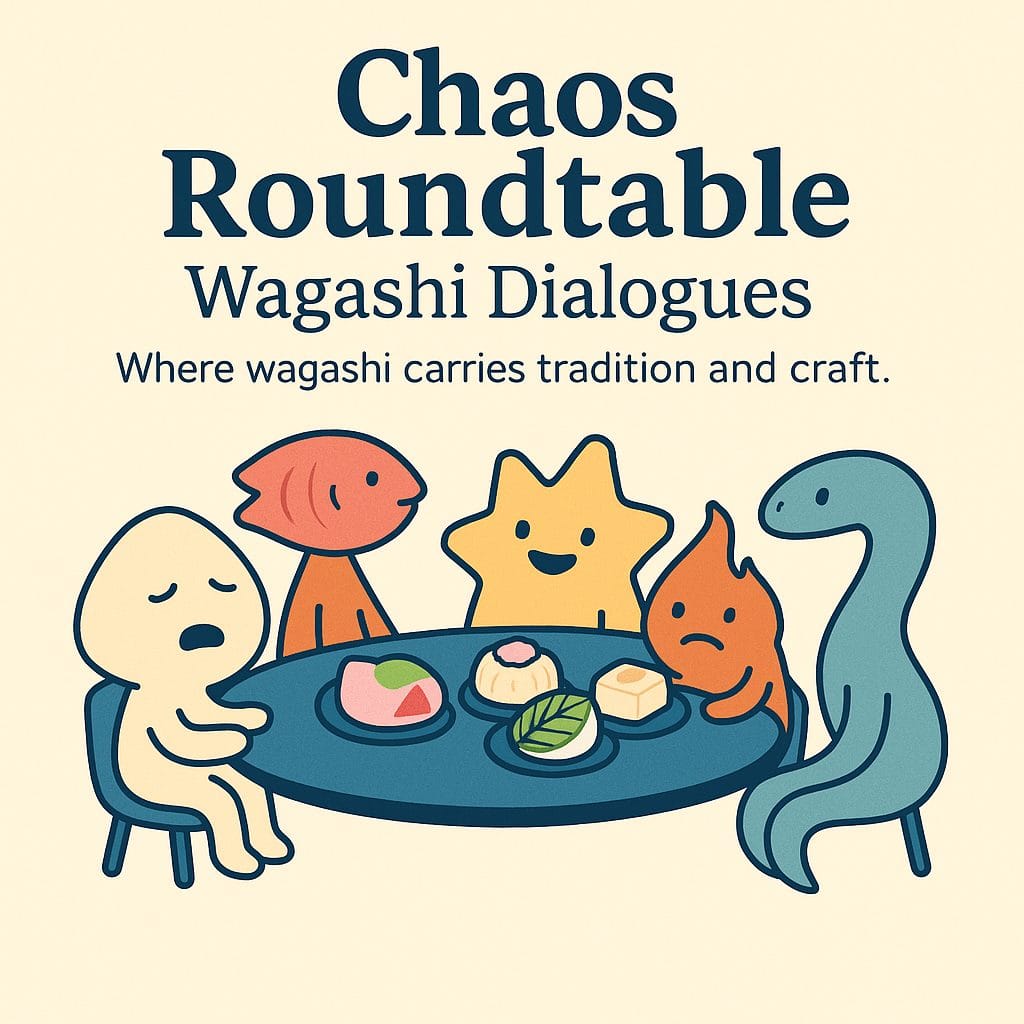
🍡 Characters in this Dialogue
🍙 Mochi — Free-spirited instigator. Twists conversations with playful questions.
🐟 Salmo — Logical realist. Brings structure, facts, and clarity.
🌀 Eldon — Philosophical observer. Sees patterns and keeps the meta calm.
💫 Milla — Emotional and intuitive. Leads with warmth and empathy.
🔥 Blaze — Strategic thinker. Focuses on systems, markets, and behavior.
🌸 Sakura — Gentle idealist. Balances emotion and reason quietly.
🐍 Thorne — Sharp and sarcastic. Cuts through sentiment with wit.
【1】Where does Imagawayaki begin?
🍙 Mochi:
So, Imagawayaki… Why does it feel like a snack that’s been around forever? Is it just the shape, or is there more?
🐟 Salmo:
It dates back to the Edo period. The name comes from the Imagawabashi area in Tokyo. It started as street food near a bridge.
🌀 Eldon:
Indeed. Its circular form, filled with anko, evokes both completeness and containment. It carries a humble dignity.
💫 Milla:
But it’s more than that! The smell of Imagawayaki always pulls me back to festivals. Like, instant childhood.
🔥 Blaze:
That emotional hook is what makes it marketable. A food that activates memory is a food that sells.
🌸 Sakura:
Do you think its warmth is part of the appeal too? Like… it’s hand-sized comfort, especially in winter.
🐍 Thorne:
So it’s a heat source, a dessert, and a cultural memory bomb. Multifunctional pastry tech.
🍙 Mochi:
Okay but… is there a difference between Imagawayaki and Obanyaki, or is that just regional chaos?
【2】Regional chaos, confirmed.
🐟 Salmo:
Technically, they’re the same. But in Kansai it’s often called Obanyaki. The confusion is baked in—pun intended.
💫 Milla:
Wait, really? I always thought they were siblings, like taiyaki without the fish cosplay.
🌀 Eldon:
The naming reveals regional identity. “Imagawayaki” feels anchored in place. “Obanyaki” sounds more abstract—“large coin pastry.”
🔥 Blaze:
That “coin” idea is brilliant branding though. Visual recognition. Instant appetite trigger.
🌸 Sakura:
But isn’t it sweet how the name changes, yet the feeling stays? Everyone has their local word for warmth.
🐍 Thorne:
Or maybe it’s just dialect disguised as culture. We romanticize regionalism a lot.
🍙 Mochi:
Still… I like that food can be both literal and personal. “Imagawayaki” isn’t just a name—it’s a portal.
【3】The filling isn’t the only thing inside
🌸 Sakura:
You know, Imagawayaki is often shared at school festivals in anime. It’s like a background character of nostalgia.
🌀 Eldon:
Yes. Its role in media reflects a deeper truth: it’s not about taste, it’s about context.
💫 Milla:
Like a soft edible hug when the weather gets cold… that kind of emotional food.
🐟 Salmo:
To be fair, it’s also highly efficient. Flour, bean paste, pan. Low cost, high calorie.
🔥 Blaze:
Add limited-time flavors and you’ve got seasonal strategy. Pumpkin Imagawayaki in October? Boom.
🐍 Thorne:
We really turned an Edo street snack into a mood object.
🍙 Mochi:
Honestly… it’s like a hot circle that makes your heart soft. That’s almost suspicious.
【4】So what are we actually biting into?
🐟 Salmo:
Technically? Flour, water, anko, and heat.
🌀 Eldon:
Symbolically? A compact vessel of temporal warmth and emotional sediment.
💫 Milla:
Practically? A reason to stop and smile.
🌸 Sakura:
It’s kind of like… edible memory. Something that disappears but leaves a trace.
🔥 Blaze:
And that trace builds brand loyalty. One bite, and you’re back.
🐍 Thorne:
We’re just walking around with nostalgia-filled pastry grenades. No wonder we get emotional.
🍙 Mochi:
So maybe… Imagawayaki isn’t just a snack.
It’s a worn path between now and then.
🌀 Summary
Imagawayaki serves as more than a nostalgic treat—it becomes a lens through which memory, regional identity, and emotional resonance are examined. The team dissects its historical origin and dual identity as Obanyaki, reflecting on how naming reveals attachment to place. Each member brings a distinct view: from childhood warmth and anime cameos to its efficiency as street food and potential as a brandable item. As conversations drift from poetic to pragmatic, the snack transforms into a vessel of collective memory. Thorne’s sarcasm tempers sentimentality, while Mochi’s final metaphor reframes it as a soft bridge across time. What begins as a sweet bite ends as an edible symbol—both ephemeral and enduring.