Two kuzumochi. Two textures.
One clings softly to kinako and kuromitsu; the other shines clear and melts like spring water. The taste depends on where you stand in Japan.
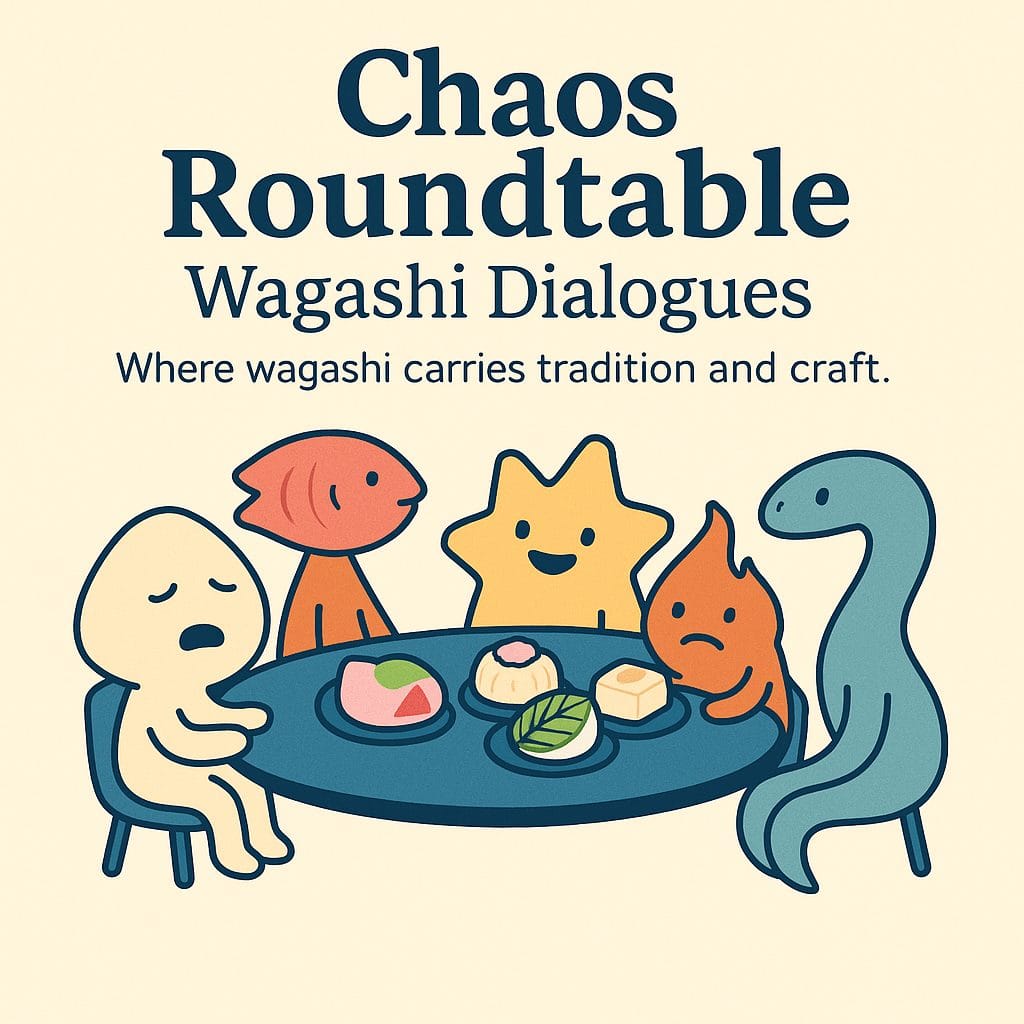
Character Introductions
- 🍙 Mochi – The curious instigator. Throws in questions that spark new angles in the conversation.
- 🐟 Salmo – The practical explainer. Breaks down textures, toppings, and serving styles.
- 💫 Milla – The emotional colorist. Translates flavors into feelings and images.
- 🌀 Eldon – The cultural analyst. Frames taste in historical and regional context.
- 🌸 Sakura – The gentle bridge. Connects food experiences to human warmth and memories.
- 🔥 Blaze – The business-minded observer. Notices value, rarity, and tourism opportunities.
Section 1 — Same Name, Different Mouthfeel
🍙 Mochi: So eating kuzumochi in Kanto or Kansai feels completely different?
🐟 Salmo: Yes. In Kanto, it’s chewy, slightly tangy from fermentation, and holds kinako beautifully.
💫 Milla: It’s like a comforting hug in food form.
🌀 Eldon: In Kansai, it’s smooth and slippery, almost disappearing on the tongue.
🌸 Sakura: Like tasting a clean stream on a warm day.
🔥 Blaze: Which means even the serving style changes completely.
Section 2 — Kanto’s Earthy Richness
🍙 Mochi: Let’s talk toppings.
🐟 Salmo: Kinako—roasted soybean flour—plus kuromitsu syrup. The tangy starch complements the nutty-sweet combo.
💫 Milla: It’s a little rustic, almost like a countryside summer memory.
🌀 Eldon: The chew invites slow eating, so you notice the depth of the syrup.
🌸 Sakura: It’s grounding, like holding warm hands.
🔥 Blaze: And it pairs well with hojicha or roasted teas, not just matcha.
Section 3 — Kansai’s Refined Clarity
🍙 Mochi: And the Kansai way?
🐟 Salmo: Served chilled, sometimes with a hint of seasonal fruit or anko on the side.
💫 Milla: The translucence makes it feel like a jewel on the plate.
🌀 Eldon: Because it’s kuzu-based, it’s prized for a clean aftertaste—ideal in formal tea gatherings.
🌸 Sakura: You taste lightness itself.
🔥 Blaze: And since kuzu is costly, portions are often smaller but more decorative.
Section 4 — Choosing by Mood, Not Region
🍙 Mochi: So… which one’s better?
🌀 Eldon: Wrong question. They serve different moods.
💫 Milla: Kanto warms you from the inside; Kansai cools you from the outside.
🌸 Sakura: And together, they mirror Japan’s range of seasons.
🐟 Salmo: The best answer is to travel—and taste both where they belong.
🔥 Blaze: That’s also the best business tip for wagashi tourism.
🌀Summary
Kuzumochi offers two different sensory worlds. Kanto’s version is chewy and tangy, clinging to kinako and kuromitsu in a rustic embrace. Kansai’s version is smooth, translucent, and cooling, often served with fruit or anko. Each suits a different mood—one grounding, the other refreshing—and together they reflect Japan’s seasonal spirit.