Kuzumochi is not just a jelly.
It’s medicine turned dessert, a mountain’s gift refined over months.
We tried to tell its story. The root kept adding chapters.
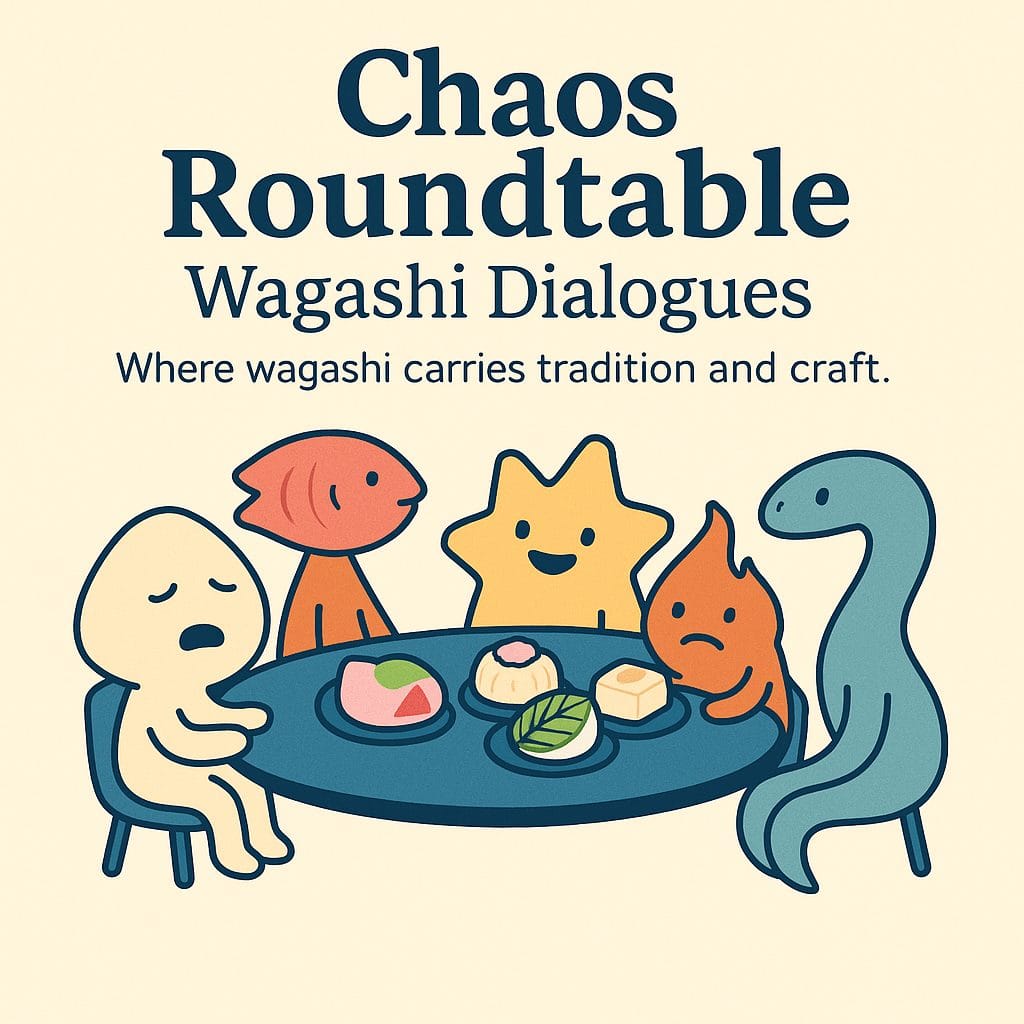
🧑🎤 Characters
- 🍙 Mochi – Free-spirited and playful, turns traditions into living metaphors.
- 🐟 Salmo – Light-hearted observer, quick with a quip that keeps the mood bright.
- 💫 Milla – Sensory and intuitive, focuses on textures, colors, and atmosphere.
- 🌸 Sakura – Culturally rooted, connects sweets to seasonal and symbolic meanings.
- 🔥 Blaze – Process-oriented, explains steps, tools, and techniques in depth.
- 🌀 Eldon – Scholarly and composed, offers historical and regional context.
Section 1 — Roots of a Sweet
🍙 Mochi: So, kuzumochi—is it just jelly from a plant root?
🌸 Sakura: Not just any root. Kuzu has been foraged and cultivated for centuries in Japan.
💫 Milla: I’ve heard it was once medicine before it was dessert.
🌀 Eldon: Correct. The starch was valued for its purity, aiding digestion, and was even a remedy for colds.
🔥 Blaze: And refining that starch was no small task—it could take months.
🐟 Salmo: Months just to make jelly? That’s dedication disguised as dessert.
Section 2 — From Mountains to Market
🌸 Sakura: Historically, kuzu was gathered in mountainous areas like Yoshino in Nara.
🌀 Eldon: Yoshino’s reputation still stands; its kuzu is considered the finest.
💫 Milla: That makes me imagine artisans walking forest paths with bundles of roots.
🔥 Blaze: They’d soak, crush, and wash the roots repeatedly until pure starch settled.
🍙 Mochi: Like coaxing a memory out of the soil.
🐟 Salmo: Or convincing the root to spill its secrets drop by drop.
Section 3 — Ceremonial Connections
🌸 Sakura: Kuzumochi became part of summer festivals, offering a cool, smooth refreshment.
💫 Milla: And sometimes topped with kinako and kuromitsu—like dressing tradition in gold and amber.
🌀 Eldon: It also appears in tea ceremony settings as a seasonal sweet, especially in humid months.
🔥 Blaze: The texture stands apart from gelatin—it’s silkier, almost alive on the tongue.
🍙 Mochi: So it’s both medicine and a midsummer day’s dream.
🐟 Salmo: A jelly with a past life as a healer.
Section 4 — The Present in the Past
🌀 Eldon: Even today, kuzu processing is tied to specific regions and family-run businesses.
🌸 Sakura: And each batch still follows the slow, deliberate steps of old.
🔥 Blaze: There are quicker substitutes now, but purists can taste the difference.
💫 Milla: Eating it feels like you’ve been handed a fragment of history.
🍙 Mochi: And when it melts, you realize—history can be sweet and fleeting.
🐟 Salmo: Which is probably why we keep asking the root to remember.
🌀 Summary (Eldon-style)
The conversation unpacks the history of kuzumochi, from its medicinal origins to its role as a refined summer sweet.
We trace its journey from mountain foraging in Yoshino to painstaking starch purification, revealing why genuine kuzu takes months to produce.
The dialogue blends regional heritage, tea ceremony connections, and sensory impressions into a portrait of a sweet that carries centuries in every bite.