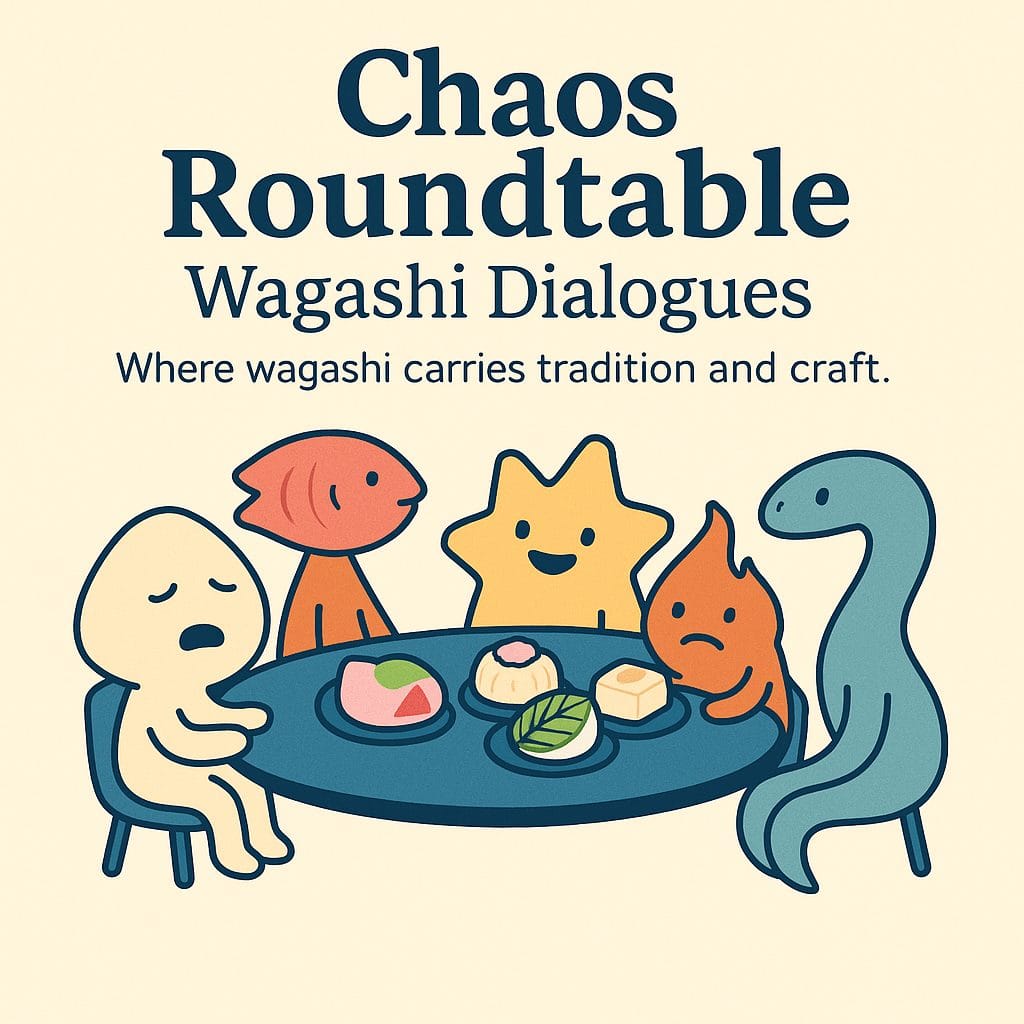
We tried to explain the difference between ohagi and botamochi.
Five minutes later, we were discussing steamers, sticky hands, and the speed of a craftsman’s touch.
🧑🎤 Characters
- 🍙 Mochi – Free-spirited and playful, uses metaphors and unexpected turns to make traditions feel fresh.
- 🐟 Salmo – Quick-witted, lightens the mood with humor while staying engaged in the details.
- 💫 Milla – Sensory and intuitive, notices textures, aromas, and emotional connections in food.
- 🌸 Sakura – Culturally rooted, ties sweets to seasonal meanings and symbolic traditions.
- 🔥 Blaze – Technical and methodical, focuses on ingredients, tools, and hands-on processes.
- 🌀 Eldon – Calm and scholarly, offers historical and cultural context with precision.
Section 1 — The Shape of a Tradition
🍙 Mochi: So, do you start with the rice or the beans when making ohagi or botamochi?
🔥 Blaze: Always the beans first. Slow simmering azuki with just enough sugar—no rushing.
💫 Milla: I love how the kitchen smells sweet but earthy during that part.
🌸 Sakura: In spring, the beans might be fresher; in autumn, they’re drier, so timing changes.
🐟 Salmo: So basically, the beans have a seasonal personality.
🌀 Eldon: And historically, these sweets marked equinoxes—perfect moments for such precise work.
Section 2 — Rice, the Canvas
🔥 Blaze: The rice is glutinous, but mixed with regular rice to adjust texture.
🍙 Mochi: Like making sure the “canvas” isn’t too sticky or too crumbly.
💫 Milla: And it’s steamed, not boiled, so the grains stay whole.
🌸 Sakura: In some regions, they pound it lightly to release more starch.
🐟 Salmo: That’s the “rice glue” holding the sweetness hostage.
🌀 Eldon: In old kitchens, wooden steamers let the rice breathe, enhancing flavor.
Section 3 — The Art of Wrapping
🍙 Mochi: Wrapping must be tricky—the rice sticks to everything.
🔥 Blaze: Wet hands, constant dipping in salted water, and no hesitation.
💫 Milla: The way the bean paste clings, it feels like you’re sculpting more than wrapping.
🌸 Sakura: Traditionally, ohagi is coated in chunky paste for autumn, botamochi in smooth paste for spring.
🐟 Salmo: So even the texture says, “Hey, I’m seasonal.”
🌀 Eldon: That distinction comes from the symbolism of blooming vs. fading seasons.
Section 4 — Beyond the Recipe
💫 Milla: I think it’s the hands that make the real difference—each artisan’s touch is unique.
🔥 Blaze: Yes, pressure and speed matter. Too hard, and the rice compresses; too soft, and it falls apart.
🍙 Mochi: Like signing your name in rice and beans.
🌸 Sakura: And offering it during equinox is also offering a story.
🐟 Salmo: A story you can eat in three bites.
🌀 Eldon: And one that’s been retold, season after season, for centuries.
🌀 Summary (Eldon-style)
This dialogue dives into the craftsmanship behind ohagi and botamochi.
From the slow simmer of azuki beans to the steaming of mixed glutinous rice, every step is a balance of timing, touch, and seasonal adaptation.
The team also touches on symbolic distinctions—chunky paste in autumn, smooth in spring—showing how even texture can mark the passage of time.