We thought sakura mochi was one thing.
Then Kanto and Kansai showed up like rival bands.
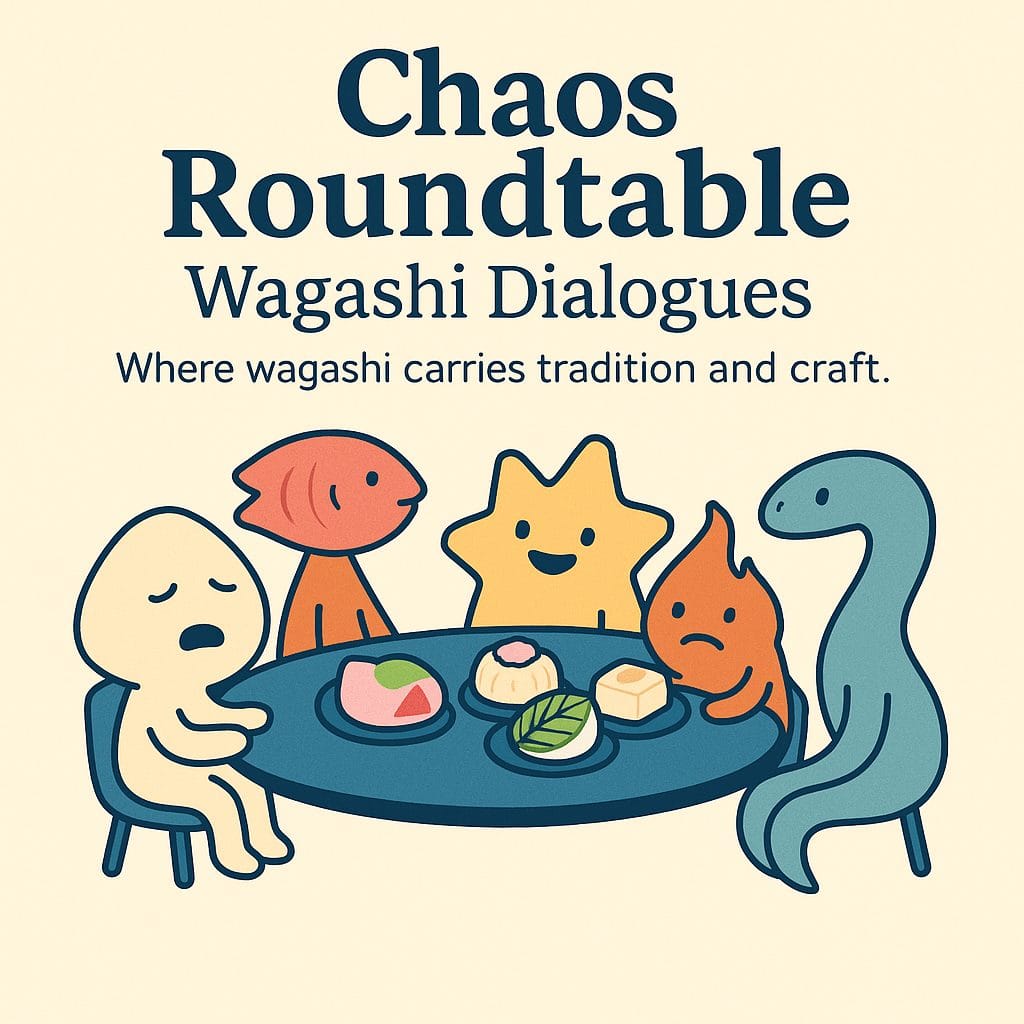
🧑🎤 Characters
- 🍙 Mochi – Free-spirited and whimsical, turns cultural facts into light-hearted twists.
- 🐟 Salmo – Wry humor and quick punchlines, keeps the conversation playful.
- 💫 Milla – Sensory-driven, focuses on aroma, texture, and emotional tone.
- 🌸 Sakura – Deeply rooted in tradition, connects sweets to seasonal and symbolic meanings.
- 🔥 Blaze – Practical, knowledgeable about ingredients, preparation methods, and craftsmanship.
- 🌀 Eldon – Calm and scholarly, explains historical and cultural context.
🌀 Section 1: Two Styles, One Name
🌀 Eldon: In Kanto, sakura mochi usually means Chomeiji style—thin, crêpe-like pink dough wrapped around red bean paste, folded neatly.
🌸 Sakura: In Kansai, it’s Domyoji style—coarse, steamed glutinous rice grains surrounding the filling, rounded and plump.
💫 Milla: Same name, completely different texture.
🔥 Blaze: It’s like calling both a latte and an espresso just “coffee.”
🍙 Mochi: Or calling both a haiku and a tanka just “poems.”
🐟 Salmo: But at least both are edible.
🌀 Section 2: The Role of the Leaf
🔥 Blaze: Both styles are wrapped in pickled cherry leaves, but the aroma infusion differs.
🌀 Eldon: Chomeiji’s thinner dough absorbs leaf fragrance more evenly.
🌸 Sakura: Domyoji’s chunkier rice traps the scent in pockets, releasing it slowly as you chew.
💫 Milla: So one is like perfume sprayed before you enter, the other like incense lingering after.
🍙 Mochi: Leaf mood lighting.
🐟 Salmo: Romantic, until you get one stuck in your teeth.
🌀 Section 3: History and Geography
🌀 Eldon: The Chomeiji style originated in Edo, linked to the Chomeiji temple area along the Sumida River.
🌸 Sakura: Domyoji style traces back to Osaka’s Domyoji Temple, using preserved rice from winter to make spring sweets.
🔥 Blaze: Geography shaped method—Kanto’s wheat flour was abundant, Kansai had a tradition of preserved rice.
💫 Milla: It’s like the sweets are edible maps of supply chains.
🍙 Mochi: And edible history textbooks.
🐟 Salmo: The kind of textbooks I’d actually finish.
🌀 Section 4: Identity in a Bite
💫 Milla: I think the texture defines the mood—Chomeiji feels refined, Domyoji feels hearty.
🌸 Sakura: Both carry the season’s symbol, yet speak in different dialects.
🌀 Eldon: Which raises the question—are they two sweets, or one in two voices?
🔥 Blaze: Depends if you’re a “form defines identity” or “spirit defines identity” person.
🍙 Mochi: Or just hungry.
🐟 Salmo: In which case, identity is whoever’s on the plate.
🌀 Summary (Eldon-style)
This dialogue explores the regional divide in sakura mochi.
Kanto’s Chomeiji style uses a thin, crêpe-like dough, while Kansai’s Domyoji style is made from coarse, steamed glutinous rice.
Both are wrapped in pickled cherry leaves, but differences in texture, aroma absorption, and history reflect local resources and traditions.
From Edo’s riverbanks to Osaka’s temple kitchens, these sweets carry both the form and spirit of spring.