We thought all kashiwa mochi were wrapped in oak leaves.
Then someone from Kansai showed up with something that looked… not oak.
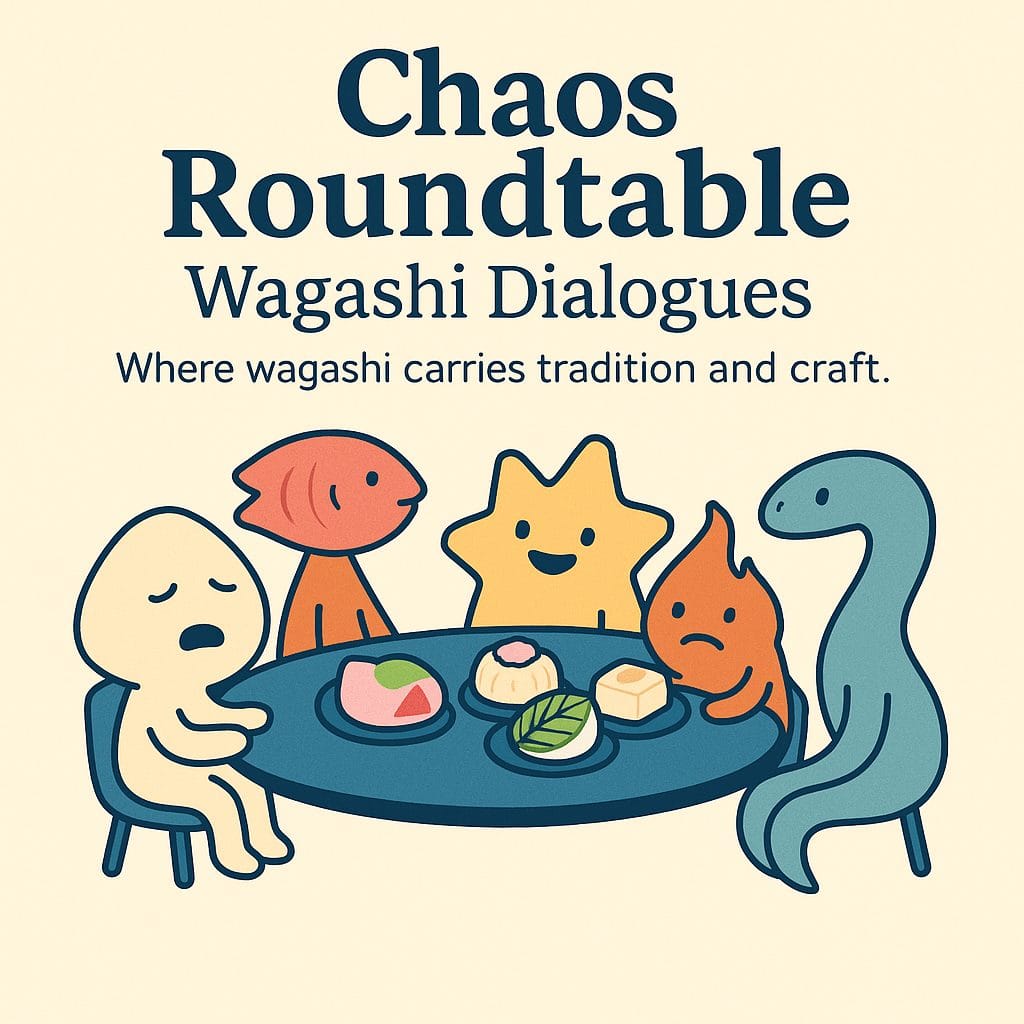
🧑🎤 Characters
- 🍙 Mochi – Free-spirited and playful, twists cultural facts into whimsical metaphors.
- 🐟 Salmo – Quick-witted with dry humor, often undercuts tension with a joke.
- 💫 Milla – Sensory-driven, focuses on aroma, texture, and the emotional resonance of taste.
- 🌸 Sakura – Rooted in tradition, connects sweets to seasonal and symbolic meanings.
- 🔥 Blaze – Practical and detail-oriented, brings in knowledge of ingredients and craftsmanship.
- 🌀 Eldon – Scholarly and calm, explains regional history and cultural background.
🌀 Section 1: Leaves as Clues
🌀 Eldon: In Kanto, kashiwa mochi is almost always wrapped in true oak leaves—kashiwa.
🌸 Sakura: But in Kansai and western Japan, you might find sarutori-ibara leaves instead.
💫 Milla: The texture’s different—oak leaves are broad and leathery, while sarutori-ibara has a sheen and firmer grip.
🍙 Mochi: So the leaf’s like an accent you can’t fake.
🔥 Blaze: And like accents, people can tell where you’re from in one bite.
🐟 Salmo: Unless you eat too fast to notice.
🌀 Section 2: Taste Beyond the Leaf
🔥 Blaze: The leaf isn’t just decoration—it affects aroma as you hold and eat the mochi.
🌀 Eldon: True, though the leaves aren’t eaten, their oils subtly season the rice.
🌸 Sakura: In some regions, families debate which aroma feels more “festive.”
💫 Milla: I’d call it more like background music for the mouth.
🍙 Mochi: A leaf DJ.
🐟 Salmo: Spinning tracks for your tongue.
🌀 Section 3: Filling Variations
🌀 Eldon: In Kanto, red bean paste—usually koshi-an—is standard.
🌸 Sakura: Kansai often prefers tsubu-an, and some rural areas use miso paste.
💫 Milla: Miso? That’s like a savory plot twist.
🔥 Blaze: It’s balanced—sweet white miso gives a mellow depth.
🍙 Mochi: So even the inside tells your postcode.
🐟 Salmo: Unless you move and change it for witness protection.
🌀 Section 4: Festivals and Identity
💫 Milla: Kashiwa mochi is tied to Children’s Day, but the leaf choice changes the story.
🌀 Eldon: Oak leaves symbolize family continuity, as they don’t fall until new buds sprout.
🌸 Sakura: Sarutori-ibara carries a local pride—using what grows nearby.
🔥 Blaze: Either way, it’s a seasonal signature.
🍙 Mochi: Like a regional handshake, but edible.
🐟 Salmo: And much tastier than shaking hands.
🌀 Summary (Eldon-style)
This roundtable explores the regional differences in kashiwa mochi.
While Kanto typically uses true oak leaves (kashiwa), Kansai often opts for sarutori-ibara.
The choice of leaf affects aroma and presentation, while fillings—from smooth koshi-an to coarse tsubu-an or even sweet miso—reveal local tastes.
Both styles tie back to Children’s Day traditions, reflecting regional pride and seasonal identity.