In Japan, the seasons don’t just arrive.
They are shaped—by hand, by memory, and by sugar.
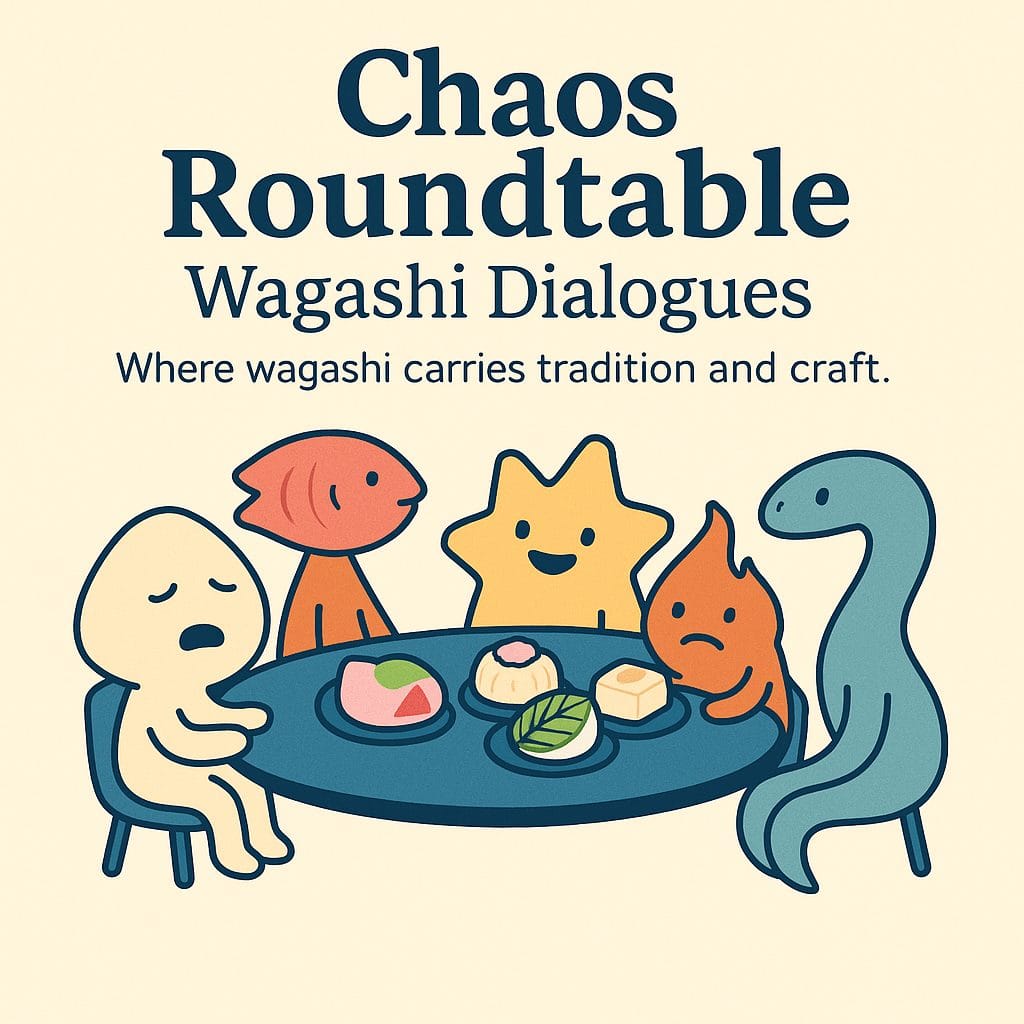
🧑🎤 Characters
- 🍙 Mochi – Observant and whimsical. Connects concepts with playful metaphors.
- 💫 Milla – Sensory-driven and poetic. Feels the mood and subtle emotions in everything.
- 🌸 Sakura – Graceful and nostalgic. Rooted in tradition and respectful of transience.
- 🔥 Blaze – Logical and precise. Appreciates process and materials over sentiment.
- 🐟 Salmo – Irreverent but insightful. Uses humor to reveal unspoken truths.
- 🌀 Eldon – Steady and scholarly. Offers historical, seasonal, and cultural context.
🌸 Section 1: Hands That Carve the Wind
🌀 Eldon: Traditional wagashi artisans don’t just imitate nature. They interpret it—petals, dew, even wind.
💫 Milla: You mean they’re not copying cherry blossoms. They’re remembering them.
🔥 Blaze: Or anticipating them. Some sweets appear before the first flower does. They lead the season.
🍙 Mochi: Like forecasting the mood with sugar!
🌸 Sakura: In a way, the artisan becomes the season’s translator. Their hands give shape to what can’t be held.
🐟 Salmo: So… edible weather report?
❄️ Section 2: Tools of Timing
💫 Milla: I once saw a wooden mold for a hydrangea wagashi. The details were so tiny—like lacework.
🔥 Blaze: Those molds are carved one groove at a time. No machines. Just chisel, hand, breath.
🌀 Eldon: The timing is seasonal too. Bamboo softens in humidity. Bean paste behaves differently in winter.
🌸 Sakura: Even the same recipe shifts with the weather. Precision isn’t in the numbers—it’s in the fingertips.
🍙 Mochi: So a good wagashi isn’t just handmade. It’s hand-timed.
🐟 Salmo: The dough knows what month it is. Spooky.
🌱 Section 3: When Nature Responds
🌀 Eldon: Wagashi doesn’t fight nature. It dances with it. Moisture, heat, pollen—they all matter.
🔥 Blaze: There’s a kind of surrender in it. You adjust, not control.
🌸 Sakura: That’s why two sweets made from the same mold never look the same.
💫 Milla: Or feel the same. I had a plum blossom nerikiri once that felt…lonely.
🍙 Mochi: Maybe it was February in its heart.
🐟 Salmo: Or maybe it knew it’d be eaten in one bite.
🍂 Section 4: The Season in the Palm
🌸 Sakura: When I hold a wagashi, I feel like I’m holding a piece of someone’s memory.
🔥 Blaze: Or a season someone caught, just before it slipped away.
💫 Milla: Like a snowflake, but sweet—and slightly warm.
🍙 Mochi: That melts with you. Not against you.
🌀 Eldon: In wagashi, craftsmanship isn’t just skill. It’s listening—carefully—to what the season is trying to say.
🐟 Salmo: And answering back… with sugar.
🌀 Summary (Eldon-style)
This dialogue explores how traditional wagashi artisans in Japan don’t merely follow the seasons—they sculpt them. From the grain of wooden molds to the behavior of bean paste in different humidity levels, each wagashi is born from a deep relationship with nature. The seasons influence not only the ingredients and colors, but the timing, the feel, and the intention behind every sweet. The artisan’s hand becomes a vessel for nature’s voice, shaping fleeting beauty into edible form.