We thought wasanbon was just a delicate sugar.
Then we realized it holds centuries of stillness, refinement, and restraint.
We tried to talk about that. Instead, we melted into metaphors.
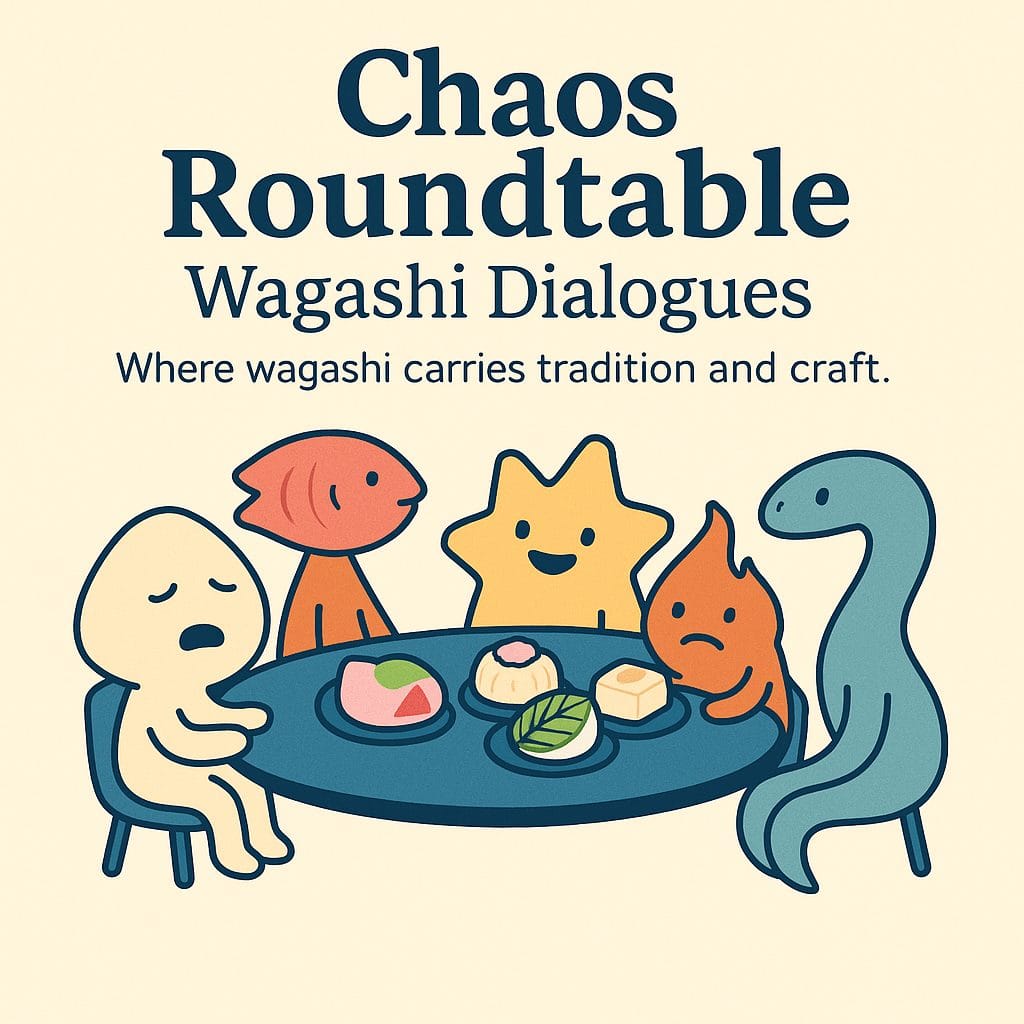
🍙 Characters
- 🍙 Mochi – Whimsical and emotional. Sees sweets as poems and hosts as metaphors.
- 💫 Milla – Sensory and intuitive. Feels the emotional temperature of textures and time.
- 🌸 Sakura – Gentle and reverent. Draws attention to empathy, patience, and seasonal presence.
- 🔥 Blaze – Practical and sharp. Dissects ritual with a modern lens, but respects its structure.
- 🐟 Salmo – Comic relief with unexpected depth. Uses jokes to reveal emotional truths.
- 🌀 Eldon – The scholar. Grounds the discussion in cultural and historical context with calm precision.
☕ Section 1: Sugar with a Spine
🐟 Salmo: Wasanbon is the kind of sugar that feels like it could shatter if you look at it wrong.
🔥 Blaze: But it doesn’t. That’s the thing. It holds. That texture? It has integrity—like it was disciplined.
💫 Milla: It’s sweet, but also quiet. Not loud like white sugar. It arrives gently.
🌸 Sakura: Wasanbon is made slowly. It’s not just sugar—it’s the outcome of patience. The tea ceremony understands that.
🌀 Eldon: Historically, it was molded with intention. Symbolic shapes. Seasonal messages. It wasn’t decoration—it was language.
🍙 Mochi: I once ate a rabbit-shaped wasanbon. I swear it apologized before I bit into it.
🍵 Section 2: Rituals in Grains
🌀 Eldon: Each grain is ground, refined, and pressed with an absurd level of care. It’s not food—it’s preparation made visible.
🌸 Sakura: That care is mirrored in the tea ceremony. Nothing is rushed. Everything is placed, held, offered.
💫 Milla: Wasanbon doesn’t crumble—it melts. It knows its time. Like it was waiting for your mouth to be ready.
🔥 Blaze: The shape breaks first, then the flavor unfolds. Like a soft punchline in a quiet room.
🍙 Mochi: Or like a poem that ends in your mouth.
🐟 Salmo: And starts in your memory. That’s good sugar.
🧂 Section 3: Sweetness Measured in Restraint
🔥 Blaze: It’s expensive. That’s part of its elegance. You don’t devour it—you receive it.
🌀 Eldon: Exactly. The restraint is the point. It aligns with the tea ceremony’s logic—offering just enough to honor the moment.
🌸 Sakura: Modern sweets are often about impact. Wasanbon is about presence.
💫 Milla: It’s the kind of sweet that teaches you how to be gentle.
🍙 Mochi: And if you’re not, it disappears before you notice it was even there.
🐟 Salmo: That’s not sugar. That’s a lesson.
🫖 Section 4: The Final Note Before the Bitter
🌀 Eldon: Wasanbon usually comes before the tea. That’s not random—it’s a setup. It softens the space for the matcha to arrive.
🌸 Sakura: Like cushioning the soul before the bitter speaks.
💫 Milla: You feel it more deeply when you’ve been gently held first.
🔥 Blaze: In that sense, the sugar is a collaborator, not a snack.
🍙 Mochi: A silent co-host. Like someone who opens the door, but doesn’t stay in the room.
🐟 Salmo: Yeah. It says what it needs to say—and then dissolves. No need to linger.
🌀 Summary (Eldon-style)
Wasanbon, a traditional Japanese sugar, is more than an ingredient—it is a gesture, a lesson, and a moment in time. Through the lens of the tea ceremony, the team explores how its softness masks discipline, how it primes the senses for bitterness, and how it models the value of restraint. A sweet that doesn’t shout, but whispers something unforgettable.