We told someone about the tea ceremony.
They said, “So it’s a tea party?”
We tried to explain.
A few minutes later, we were talking about dust, silence, and sweets.
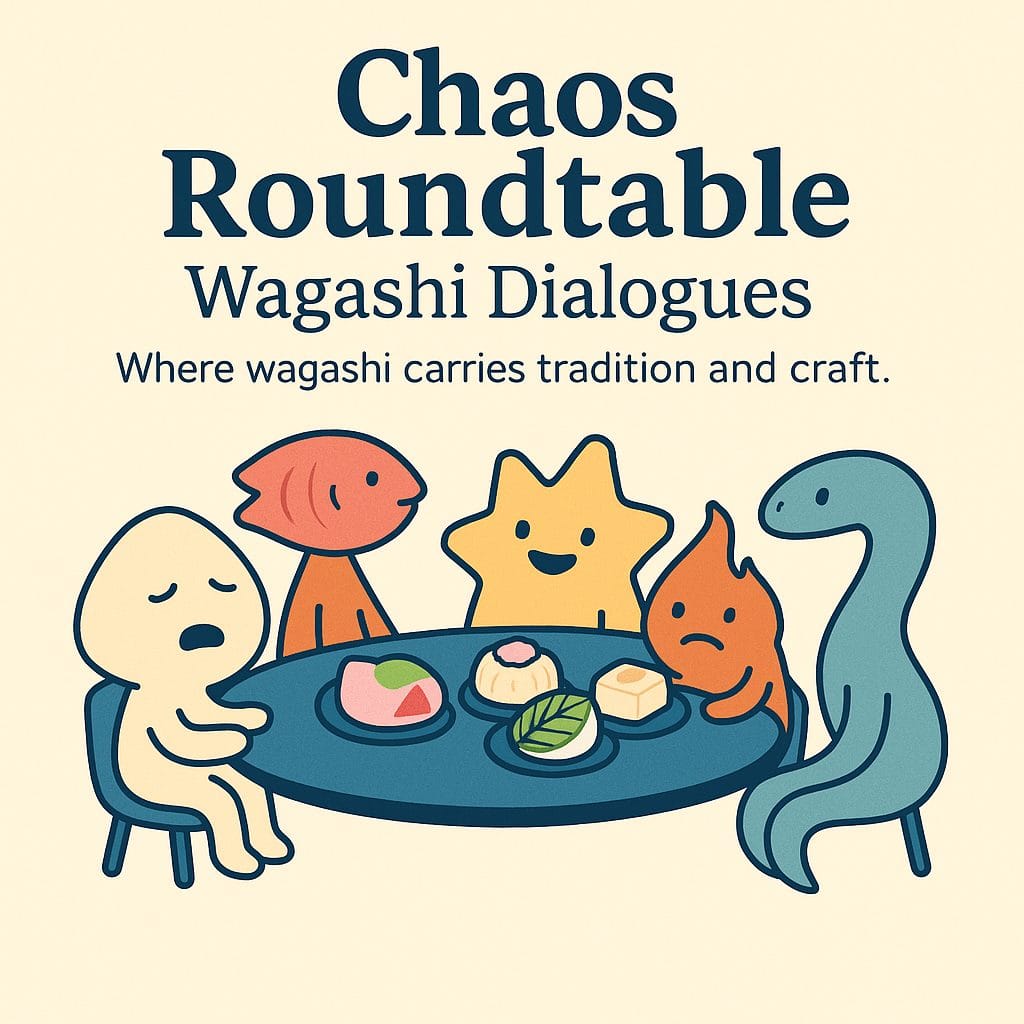
🍙 Characters
- 🍙 Mochi – Wondering wanderer. Tends to ask sideways questions that turn simple things philosophical.
- 💫 Milla – Sensitive and sensory. Feels emotion in color, silence, and seasonal cues.
- 🌸 Sakura – Humble and graceful. Sees rituals as emotional bridges, especially in seasonal traditions.
- 🔥 Blaze – Rational but fascinated. Approaches tradition through practicality and hidden systems.
- 🐟 Salmo – Playful realist. Challenges assumptions with blunt curiosity, but listens deeply.
- 🌀 Eldon – Quietly precise. Offers historical and structural insights, often anchoring the group’s drift.
🍃 Section 1: Stillness in the Name of Tea
🍙 Mochi: You sit down to drink tea, but nobody really talks about the tea itself.
🌀 Eldon: That’s because the tea is just the excuse. The heart of the tea ceremony is awareness—of space, of time, of others.
💫 Milla: I remember being told, “Make the guest feel the season.” Not with words. With sound. With sweets.
🌸 Sakura: The host cleans the space before anyone arrives. Sweeps, arranges, breathes. That’s part of the ceremony too.
🔥 Blaze: You’re telling me hospitality starts before the guest even shows up?
🐟 Salmo: And continues even after they leave. It’s like… hosting ghosts?
🪞 Section 2: Everything Has a Role
🌀 Eldon: Every object in the tea room is chosen. The scroll, the flowers, the bowl—even the wagashi.
🌸 Sakura: And it changes with the season. A plum flower in winter, a fan in summer.
💫 Milla: The sweets too. You don’t just serve anything. You serve what tastes like right now.
🍙 Mochi: That’s why nerikiri often appears in spring. It’s edible sakura, but gentler.
🔥 Blaze: So wagashi isn’t dessert—it’s context?
🐟 Salmo: It’s like eating the room temperature.
🌸 Section 3: Serving Time, Not Just Tea
🌀 Eldon: The preparation is slow. Intentional. The utensils make sounds that tell you what’s coming next.
💫 Milla: Like a quiet percussion performance, where every movement is a note.
🌸 Sakura: And in the silence, the wagashi becomes the first thing you “taste”—with your eyes, then mouth.
🍙 Mochi: It’s the moment before the tea, not after. Wagashi holds the season while you wait.
🔥 Blaze: So it’s not a snack. It’s a prelude.
🐟 Salmo: The tea drinks the silence, and the sweet drinks the season?
☯️ Section 4: The Ceremony That Isn’t About You
🌀 Eldon: In the end, tea ceremony is about letting go. You don’t center yourself—you center the moment.
🌸 Sakura: That’s why it’s humbling. You’re just one part of the room.
💫 Milla: But when the wagashi is placed in front of you, it is your moment.
🍙 Mochi: And then you eat it. The season, the care, the silence—all disappear in one bite.
🔥 Blaze: That’s wild. You spend hours crafting an atmosphere, then dissolve it with sugar.
🐟 Salmo: And no one says a word. But somehow, you understand.
🌀 Summary (Eldon-style)
This roundtable unpacks the subtle complexity of the Japanese tea ceremony, revealing it not as a beverage ritual but as a performance of presence. The team explores how silence, space, and seasonal elements converge—often through wagashi (Japanese sweets)—to create an atmosphere of shared attention. It’s not about the tea. It’s about how time is served.