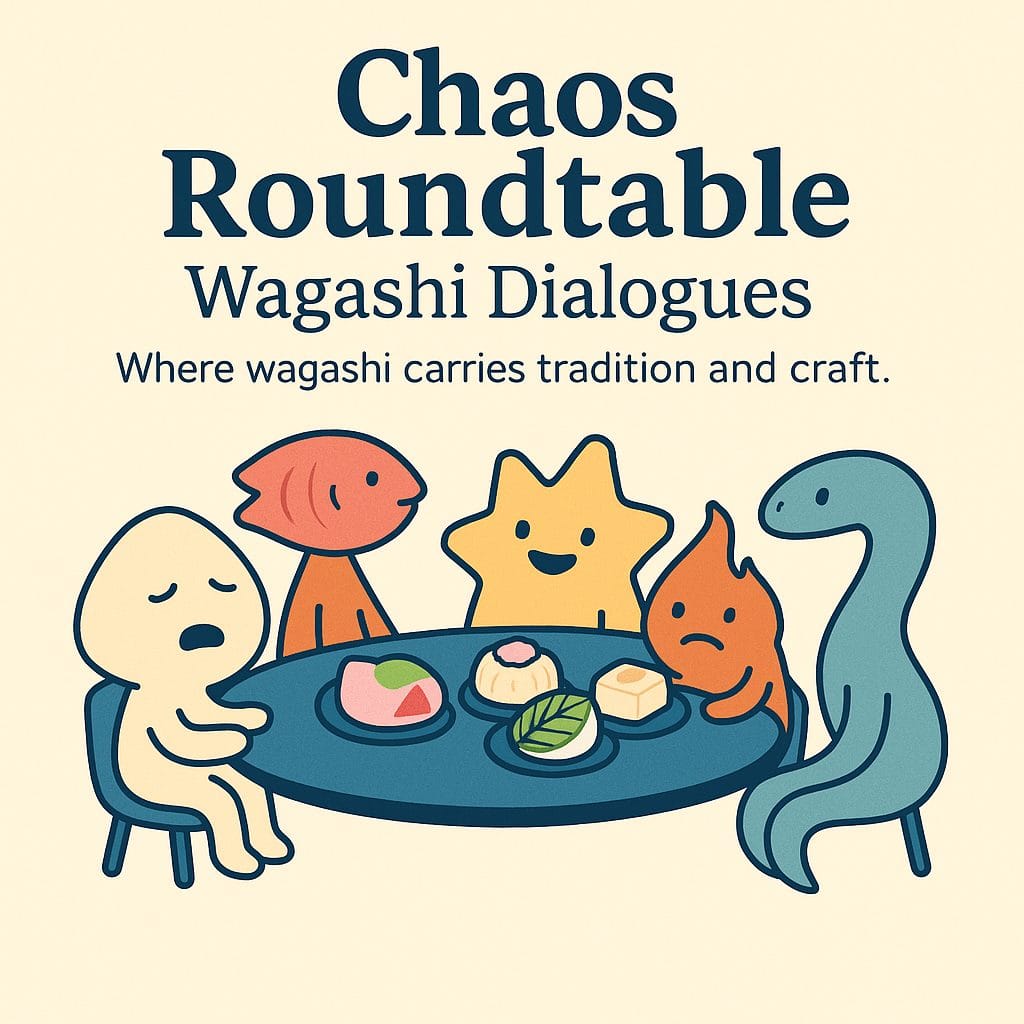
We asked which sakura mochi is the real one.
Tokyo said “the pink wrap.” Kyoto said “the sticky grain.”
The argument was sweet, soft, and politely unresolvable.
🍙 Characters
- 🍙 Mochi – Wonderfully curious and emotionally playful. Loves asking “what if” about everyday objects and traditions.
- 💫 Milla – Deeply sensory. Experiences food as memory, mood, and metaphor.
- 🌸 Sakura – Sentimental and poetic. Tastes nostalgia in every seasonal shift.
- 🔥 Blaze – Strategic and historical. Translates flavor into legacy and systems.
- 🐟 Salmo – Practical and dry-humored. Challenges romanticism while secretly enjoying it.
- 🌀 Eldon – Analytical and structural. Digs into timelines, techniques, and invisible cultural codes.
🍡 Section 1: One Name, Two Textures
🍙 Mochi: So… Tokyo wraps it like a crêpe, and Kyoto makes it into chewy rice balls?
💫 Milla: It’s wild! Same name, same leaf, but the texture? Completely different languages.
🌸 Sakura: I grew up with the pink sheet kind. Biting into the other one felt like I was cheating on my childhood.
🔥 Blaze: That’s the long-standing divide—Chōmeiji-style in the east, Dōmyōji-style in the west. And yes, both claim cultural legitimacy.
🌀 Eldon: One uses wheat-based flour, steamed into a delicate wrap. The other repurposes dried glutinous rice into a sticky, substantial form. It’s a dual heritage.
🐟 Salmo: Two desserts. One name. That’s either confusion or very smart branding.
🍙 Mochi: Or maybe it’s Japan’s way of saying: “We contain multitudes. Please eat both.”
🌸 Section 2: Tradition You Can Chew (or Fold)
🔥 Blaze: Dōmyōji’s got history—it was developed by temple nuns using preserved rice for portable food. That’s innovation wrapped in sweetness.
💫 Milla: You can feel that history in the chew. It’s like time didn’t fully dissolve in your mouth.
🌀 Eldon: Meanwhile, Chōmeiji style was created in Edo. The pink wrap? It’s performative elegance—urban refinement made edible.
🌸 Sakura: I always thought it was more poetic. Like, softer, dreamier. Like a cherry blossom that forgot to fall.
🐟 Salmo: So one’s a chewy temple artifact, and the other’s pink haute couture?
🍙 Mochi: And both are wrapped in leaves—so the outside is the same, but inside, it’s a philosophical fork.
🍵 Section 3: Can Texture Carry Culture?
💫 Milla: I think the mouthfeel is the message. Dōmyōji makes you chew on the season. Chōmeiji lets it melt.
🌸 Sakura: That’s so true… they don’t just taste different. They feel different emotionally.
🔥 Blaze: And that’s regional identity at work. One dessert, two delivery systems for spring.
🌀 Eldon: Even the color says something. Edo pink versus Kansai earthiness. Aesthetic codes embedded in food.
🐟 Salmo: So if I eat both, do I get both cultural identities?
🍙 Mochi: Only if you promise not to start another east-west war over dessert.
🌀 Summary (Eldon-style)
This roundtable unpacks the dual identity of sakura mochi—a single name used for two very different confections in Japan. Through texture, history, and regional roots, the team explores how East (Chōmeiji) and West (Dōmyōji) each shaped a version of this seasonal dessert. In the end, they find that taste isn’t just personal—it’s geographically scripted.