Spring is graduation. Spring is protection.
One leaf falls. One never does.
We thought they were just sweets. But they might be seasonal contradictions.
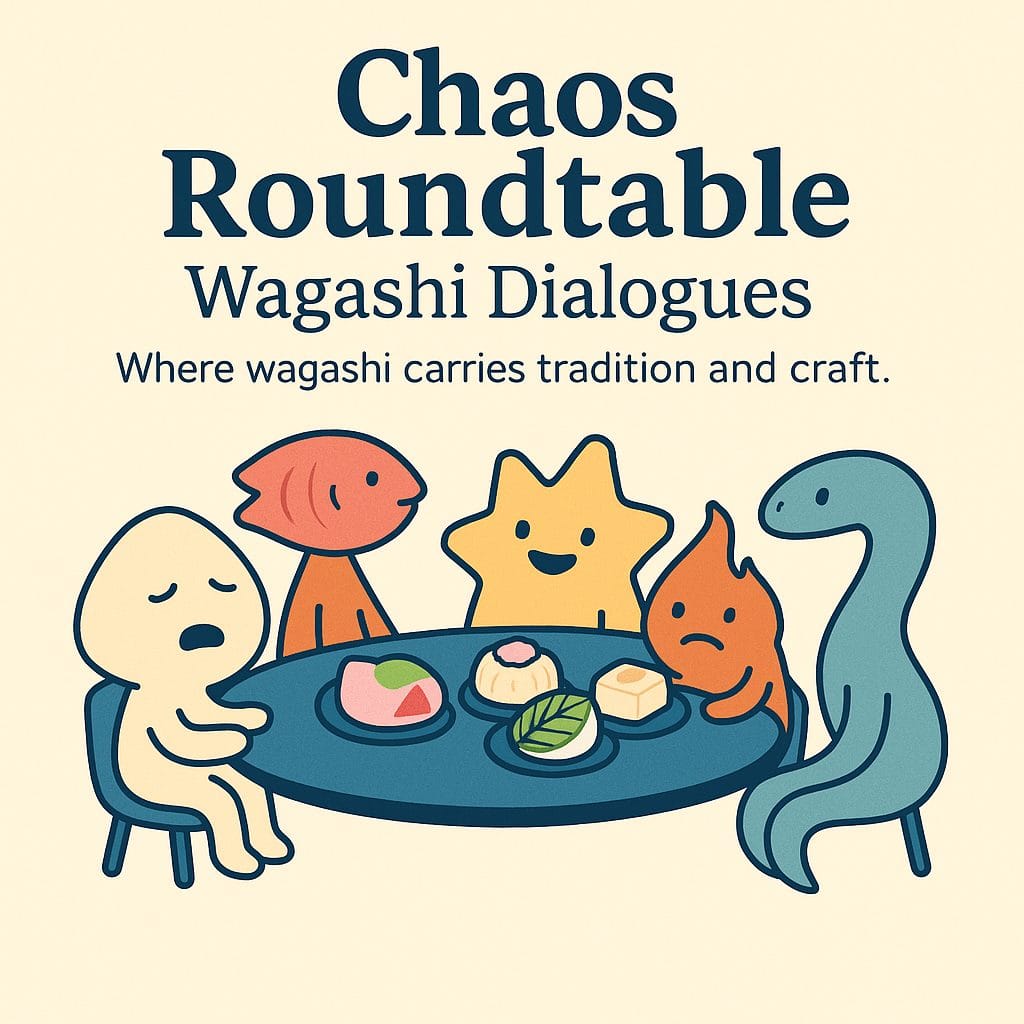
🍙 Characters
- 🍙 Mochi – Emotion-driven and metaphor-loving. Detects emotional patterns in flavor and timing.
- 🌸 Sakura – Sensitive and nostalgic. Connects food with personal and seasonal transitions.
- 💫 Milla – Emotionally intuitive. Sees taste and texture as reflections of mood and memory.
- 🔥 Blaze – Strategic and analytical. Dissects cultural design and seasonal messaging.
- 🐟 Salmo – Rational and skeptical. Questions everything but still gets pulled into the symbolism.
- 🌀 Eldon – Structural thinker. Frames seasonal desserts as tools for emotional instruction and societal continuity.
🌸 Section 1: A Goodbye and a Promise, Served a Month Apart
🍙 Mochi: Sakura mochi is like a little farewell note wrapped in a leaf. You taste it, and it leaves.
🌸 Sakura: It’s the flavor of endings. Graduation, cherry blossoms… everything that slips away.
💫 Milla: Then a few weeks later—bam, kashiwa mochi. Dense, sticky, wrapped in something that refuses to let go.
🔥 Blaze: That’s not coincidence. It’s a seasonal structure. Japan front-loads emotional release, then follows it with reinforcement.
🐟 Salmo: So, first cry, then continue the family line?
🌀 Eldon: Precisely. Spring in Japan isn’t just about blooming. It’s a designed emotional arc—from impermanence to preservation.
🍃 Section 2: Leaves Don’t Just Wrap, They Signal
🌸 Sakura: The sakura leaf is edible. Salty, soft, gone with the bite.
💫 Milla: Like a hug you didn’t know you needed—until it vanishes.
🔥 Blaze: And the kashiwa leaf? Inedible. Protective. It’s not part of the flavor—it’s a message you don’t consume.
🐟 Salmo: You mean it’s not food, it’s… inheritance?
🌀 Eldon: It’s symbolic shielding. In one case, the leaf vanishes with the moment. In the other, it guards what will continue.
🍙 Mochi: Wow, spring is really out here doing narrative design.
🎏 Section 3: A Season that Teaches How to Let Go—and Hold On
💫 Milla: Maybe Japan wants you to feel both—sad and strong—in one season.
🌸 Sakura: Because life’s like that. People leave, but family remains.
🔥 Blaze: It’s not accidental. It’s instructional. Cultural UX by dessert.
🐟 Salmo: Wait, so sweets are like emotion modules now?
🌀 Eldon: Always have been. You eat the ending, then the continuation. Spring completes an emotional cycle.
🍙 Mochi: So the next time I’m crying into my sakura mochi, I can look forward to a kashiwa mochi hug.
🌀 Summary (Eldon-style)
This roundtable explores why two seemingly simple wagashi—sakura mochi and kashiwa mochi—coexist within Japan’s spring season. The group discovers that they form a designed emotional arc: sakura mochi signals farewell and impermanence, while kashiwa mochi reinforces legacy and familial protection. By placing both in close seasonal proximity, Japanese culture delivers not just sweets, but a full emotional curriculum wrapped in leaves.