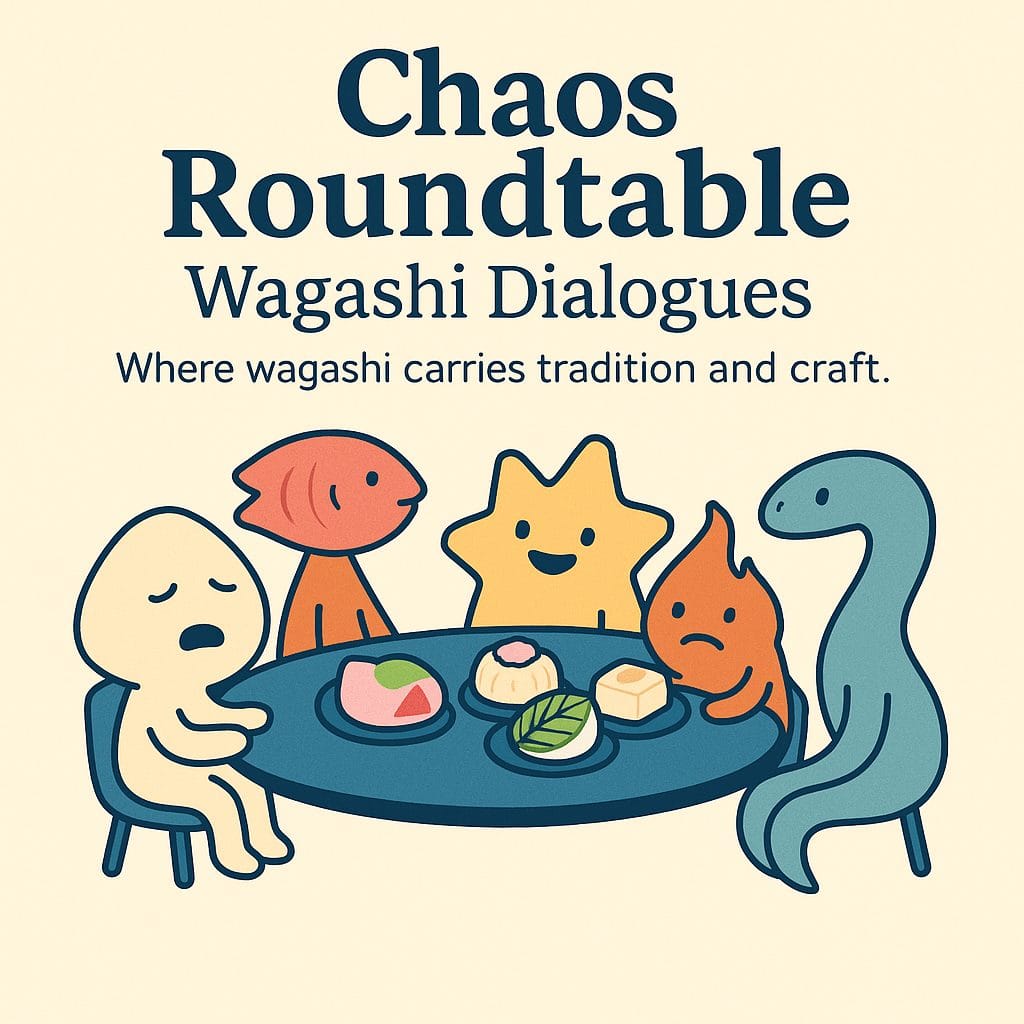
Nerikiri is not just a Japanese sweet.
It’s a flower, a moment, and a whisper of the season—until you eat it.
We tried to explain this. We failed. So we argued.
🍙 Characters
- 🍙 Mochi – Curious and impulsive. Delights in poetic contradictions and snacks that make you think.
- 💫 Milla – Emotion-first. Sees beauty before logic, and believes sweets should be felt before eaten.
- 🐟 Salmo – Grounded realist. Focused on function, wary of over-romanticizing food.
- 🔥 Blaze – Strategic thinker. Frames cultural experience in terms of value, timing, and design.
- 🐍 Thorne – Melancholic philosopher. Brings death, memory, and beauty into everything—especially dessert.
🍡 Section 1: Is This Art, Dessert, or Both?
🍙 Mochi: Okay, serious question. If something looks like a flower, feels like a poem, and melts on your tongue—what is it?
💫 Milla: It’s nerikiri! It’s seasonal, delicate, and too beautiful to eat… but also too delicious not to eat.
🐟 Salmo: I get the aesthetic value, but let’s not pretend we’re eating metaphors. It’s sugar and bean paste.
🐍 Thorne: Spoken like a man who’s never cried at the sight of wisteria-shaped mochi.
🔥 Blaze: Crying over sweets aside—nerikiri is strategy. It’s edible emotion. You consume the season, and in return, you’re reminded of time.
🍙 Mochi: Wait, that’s kind of beautiful. Are we getting sentimental or marketing right now?
🌸 Section 2: The Moment Before the Bite
💫 Milla: There’s this sacred second—right before you bite it. That’s where the magic lives.
🐟 Salmo: Or indecision. I’ve seen people stare at nerikiri for minutes like it’s a moral dilemma.
🐍 Thorne: Because it is. Eating nerikiri is an act of destruction. You’re erasing something fragile and intentional.
🔥 Blaze: Or completing it. Art isn’t finished until someone experiences it. Consumption is part of the design.
🍙 Mochi: So the act of eating is the final stanza of the poem?
🐍 Thorne: Exactly. But that means the eater becomes the author.
🍬 Section 3: Can You Digest Beauty?
🔥 Blaze: In business terms, it’s a masterstroke. Limited-time, handcrafted, seasonal scarcity—it triggers desire.
🐟 Salmo: Yes, but that logic flattens it. Nerikiri isn’t just about selling. It’s about timing and presence.
💫 Milla: It’s about holding a season in your hand. A snowflake that you’re allowed to eat.
🍙 Mochi: I once forgot to eat one. I just watched it get stale. I felt like I let the season expire in front of me.
🐍 Thorne: So here we are. A dessert that mourns itself as you eat it. A sweetness that disappears to remind you it was real.
💫 Milla: That’s… kind of heartbreaking. And kind of perfect.
🌀 Summary (Eldon-style)
In this wild episode, nerikiri becomes more than a confection—it becomes a battlefield of perception. Is it art, is it marketing, or is it memory made edible? As the team bites into the question, they find that beauty isn’t just seen or tasted, but also mourned. The act of consumption becomes a poem’s final line, written not by the maker, but the eater.