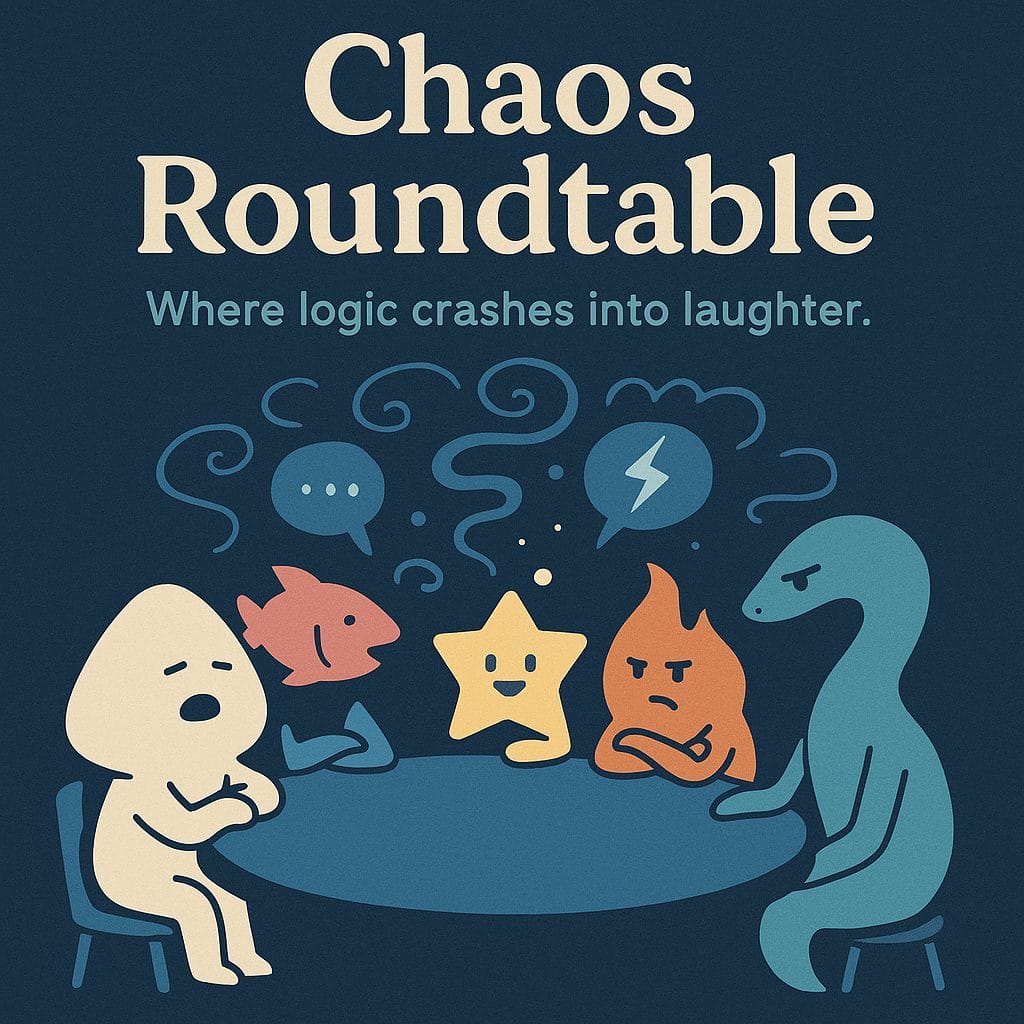
🧑🤝🧑 Character Introduction
- 🍙 Mochi – Finds humanity in late-night pancakes and silent kindness.
- 💫 Milla – Sensitive to atmosphere and smell. Sees beauty in worn-out places.
- 🌀 Eldon – Seeks meaning in design and spatial philosophy. Detects cultural erosion.
- 🐍 Thorne – Cynical and sharp. Points out the cracks beneath sentimentality.
- 🐟 Shakke – Practical but poetic. Defends inefficiency as sacred.
- 🌸 Sakura – Gentle memory keeper. Believes in the emotional footprint of places.
Section 1
What makes diners feel so… equal?
🍙 Mochi:
You can be broke, drunk, famous, or weird—if you want pancakes at 3am, the diner says yes.
💫 Milla:
And no one looks at you funny. It’s like the waitress has seen every possible version of humanity.
🌀 Eldon:
Because the architecture is egalitarian. Booths are the same size. No VIP lounge. The ketchup’s free for all.
🐟 Shakke:
Menus don’t flatter status either. Everyone orders the same $7 burger, whether they drive a truck or a Tesla.
🐍 Thorne:
It’s fake equality, though. The cook still makes minimum wage while the lawyer sips coffee with entitlement.
🌸 Sakura:
Maybe. But sometimes just being seen—really seen—in a booth under neon lights is enough to feel human again.
Section 2
Are diners disappearing because they’re too honest?
💫 Milla:
You can’t brand a diner the way you brand a coffee chain. It smells like grease and forgiveness.
🍙 Mochi:
Chains give you predictability. Diners give you texture—like the cracked formica or that one server who calls you “hon.”
🌀 Eldon:
Diners resist optimization. They’re not scalable. That makes them culturally precious and economically doomed.
🐟 Shakke:
They’re inefficient on purpose. The slowness is the point. Try waiting for eggs without checking your phone. It’s holy.
🐍 Thorne:
That’s cute until the rent triples and the “holy” place becomes a ghost kitchen for influencer tacos.
🌸 Sakura:
But even ghosts linger where they were loved. Maybe diners survive in memory because they fed more than just hunger.
Section 3
Can we recreate what diners gave us—somewhere else?
🌀 Eldon:
It’s not just the food—it’s the permission. To loiter. To read. To exist without producing.
🍙 Mochi:
I once wrote a breakup letter in a diner. The waitress just kept refilling my coffee without a word. That’s grace.
🐟 Shakke:
Modern spaces demand turnover. Diners absorbed you. They didn’t measure your value by your speed.
🐍 Thorne:
Now we have “co-working cafés” where silence costs $10 an hour. The soul’s not on the menu anymore.
💫 Milla:
But if even one tiny café lets someone cry over pancakes, maybe the spirit isn’t gone. Just hidden.
🌸 Sakura:
Then let’s keep looking. Or better—make those places ourselves. One refill at a time.
🌀 Summary (Eldon-style)
In this roundtable, the group debates whether diners are the last truly democratic space. Mochi finds comfort in the anonymity of pancakes at 3am, while Milla senses grace in cracked tables and timeless waitresses. Eldon warns that scalability erodes soul, and Shakke praises the inefficiency that makes diners sacred. Thorne challenges the illusion of equality, yet Sakura gently argues that visibility and presence can still nourish us. Together, they ask: Can we build spaces that allow us to simply be—and if diners disappear, will their spirit find a new home?