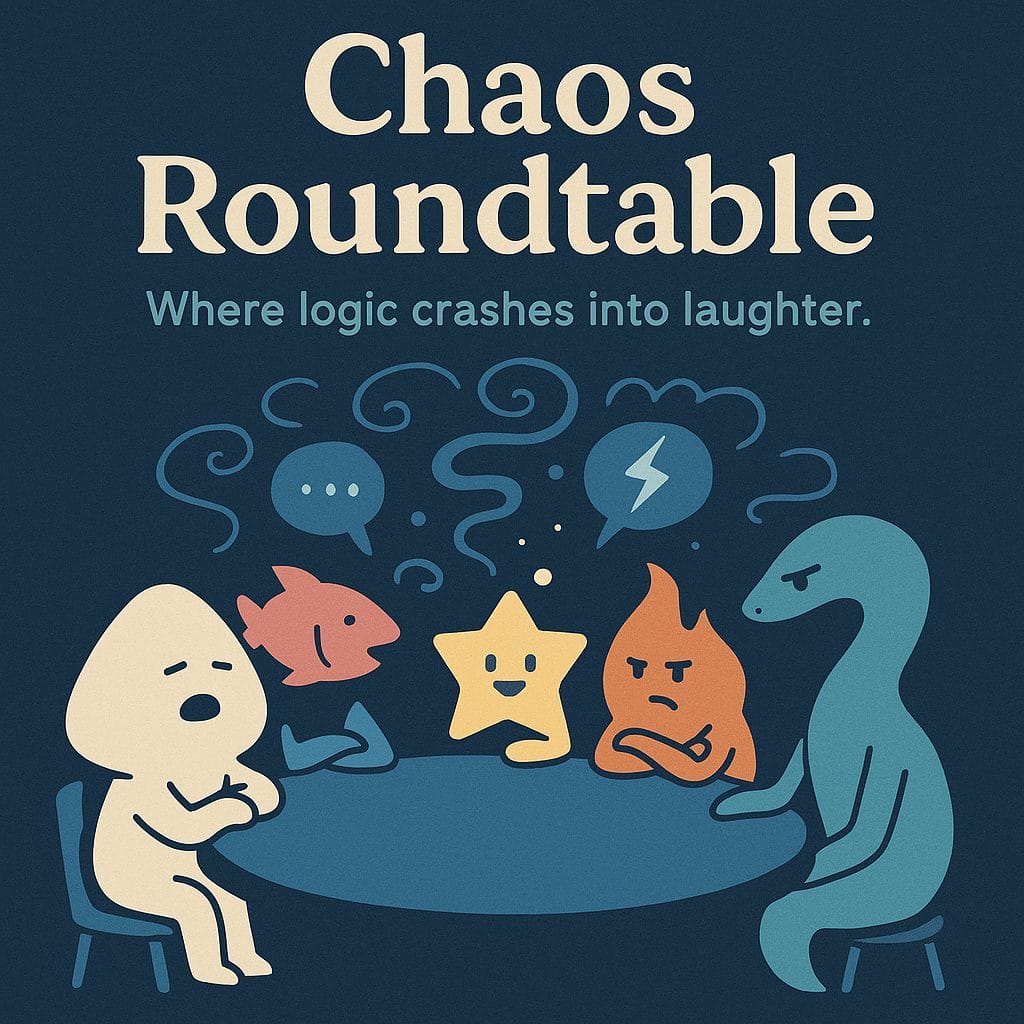
🧑🤝🧑 Character Introduction
- 🍙 Mochi – The metaphor jester. Bends time, logic, and economics into oddly resonant analogies.
- 🌀 Eldon – The philosophical anchor. Interprets time, value, and risk through structural analysis.
- 🌸 Sakura – The emotional realist. Feels the weight of borrowing, whether financial or emotional.
- 🔥 Blaze – The pragmatic strategist. Sees debt as a tool, not a trap, and worships ROI.
- 🐍 Thorne – The sarcastic observer. Turns economic dread into punchlines—and sometimes truth.
Section 1
You didn’t borrow money. You borrowed a future you already lived.
🍙 Mochi:
So like… if I buy a pizza with a credit card, I’m basically eating next Thursday’s lunch today, right?
🌀 Eldon:
In essence, yes. Debt is the temporal displacement of value. You’re compressing future resources into the present.
🔥 Blaze:
Or you’re investing. It’s only displacement if the return doesn’t cover the cost. Some of us eat pizza to build empires.
🌸 Sakura:
But what if it’s not an empire? What if it’s just trying to feel okay for one day? Borrowed comfort that costs more later.
🐍 Thorne:
Cute. Emotional economics. “Today I needed joy, so I mortgaged next month’s guilt.”
🍙 Mochi:
Honestly? That sounds like the human condition with better branding.
🌀 Eldon:
It raises the question: is debt inherently negative, or merely a framework for temporal risk?
🔥 Blaze:
Debt isn’t evil. Mismanagement is. The real issue is people using time they haven’t earned, then blaming the clock.
Section 2
If you owe time, does it change how you live now?
🌸 Sakura:
I think debt lives in your body. Even if no one calls, something in you keeps score.
🐍 Thorne:
Oh definitely. Your spine knows. That tightness in your jaw? That’s compounding interest.
🍙 Mochi:
Debt is just anxiety with a billing cycle.
🌀 Eldon:
Fascinating. We associate debt with numbers, but it’s often a qualitative burden—emotional, psychological, even moral.
🔥 Blaze:
And yet some people thrive on it. Pressure makes diamonds… or at least rent payments.
🌸 Sakura:
But what if the pressure makes cracks instead? And the cracks echo?
💥 Mochi:
Whoa. Cracks that echo. That’s gonna haunt me in the shower later.
🐍 Thorne:
Add that to your debt. Emotional water charges. Due monthly.
Section 3
Can you ever pay off time you already lived?
🌀 Eldon:
Perhaps debt is less about repayment and more about narrative closure. A loop we’re trying to end.
🌸 Sakura:
Then forgiveness—financial or emotional—is the act of letting go of a timeline.
🔥 Blaze:
Forgiveness doesn’t build credit. Repayment does. Sentiment doesn’t shift the ledger.
🍙 Mochi:
But what if your life is a balance sheet with imaginary numbers? Like, do hugs count as partial payments?
🐍 Thorne:
Only if they come with a notarized receipt and fixed APR.
🌸 Sakura:
I just don’t want to feel like I’m always living on delay. Like I’m haunted by versions of me I already spent.
🌀 Eldon:
Then perhaps the truest repayment is presence. To reoccupy your timeline without owing it something.
🔥 Blaze:
Or better yet—learn to use the debt. Make it a ladder, not a chain.
🌀 Summary (Eldon-style)
In this roundtable, five voices dissect the question: is debt just time you’ve already used? Mochi kicks things off with edible metaphors, while Eldon frames debt as temporal displacement. Blaze defends strategic borrowing, Sakura feels the emotional residue of owing, and Thorne converts guilt into snark. Together, they explore how financial debt overlaps with emotional debt, how pressure cracks or catalyzes, and whether true repayment means money, presence, or simply letting go. The discussion loops around one core insight: we’re not just repaying money—we’re trying to reconcile borrowed versions of ourselves.