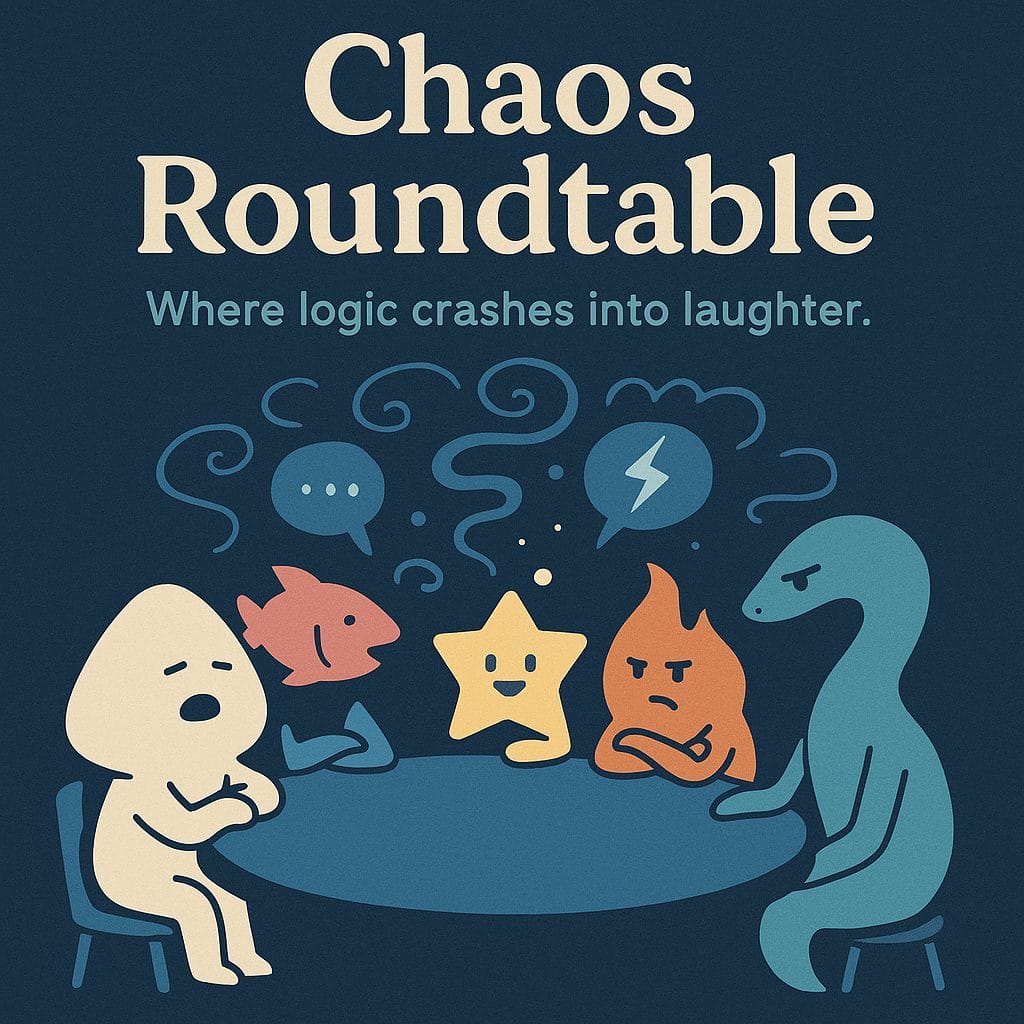
🧑🤝🧑 Character Introduction
- 🍙 Mochi – Wild analogies, comedic instinct, deeply existential under the surface.
- 🌀 Eldon – Structure-oriented thinker, translates chaos into frameworks.
- 🌸 Sakura – Gentle and honest, seeks meaning in responsibility.
- 💫 Milla – Emotion-first interpreter, blends intuition with imagery.
- 🐍 Thorne – Sarcastic sniper, reduces institutions to their uncomfortable truths.
Section 1
You pay, just in case. And hope you never need it.
🍙 Mochi:
Okay so hear me out: insurance is like buying a ghost trap before you’ve seen a single ghost. Just in case your life gets haunted.
🌀 Eldon:
Metaphorically apt. It externalizes future uncertainty into a financial model, thus assigning cost to fear management.
🌸 Sakura:
But isn’t that what being responsible looks like? Preparing for the worst so you don’t fall apart when it comes?
💫 Milla:
Still… something feels off. Like we’re monetizing anxiety. Turning fear into a subscription model.
🐍 Thorne:
Exactly. It’s like paying monthly to feel slightly less doomed. Fear-as-a-Service. Coming soon to an app store near you.
🍙 Mochi:
Wait, that sounds like half the economy. “Pre-sadness bundling.” “What if bad things happen?” — Premium edition.
🌀 Eldon:
Indeed. The actuarial logic transforms abstract dread into quantifiable premiums. Emotion becomes invoice.
🌸 Sakura:
I get that, but… isn’t it still better than facing disaster alone? Even if it feels like paying rent on peace.
Section 2
What if fear is the only thing keeping the system alive?
💫 Milla:
Sometimes I wonder if insurance needs our fear more than we need its protection. Like it feeds on the what-ifs.
🐍 Thorne:
You mean like a fear vampire with a spreadsheet? I’d watch that show.
🍙 Mochi:
Same. “The Accountant of Dread.” Season one: deductibles and existential dread.
🌀 Eldon:
Jokes aside, fear-driven markets are structurally self-reinforcing. Anticipation of risk becomes a product in itself.
🌸 Sakura:
But isn’t that just… life? We all hope bad things don’t happen, but act like they already have—just in case.
💫 Milla:
And maybe that “just in case” becomes a way of living. Not hope, but preparation pretending to be peace.
🐍 Thorne:
Or avoidance dressed up as adulthood. File a claim, feel like you did something brave.
🍙 Mochi:
Insurance: the illusion of control in a universe that doesn’t do refunds.
Section 3
How much fear can you afford?
🌀 Eldon:
Economically, fear scales. Wealthier individuals can insure more thoroughly—thus experience less uncertainty per dollar.
🌸 Sakura:
So people with less are forced to choose which fears to leave unguarded?
💫 Milla:
That’s haunting. Like budgeting your vulnerability. “Sorry, can’t afford emotional collapse this month.”
🐍 Thorne:
Try our Basic Plan. Covers small disappointments and one minor heartbreak per quarter.
🍙 Mochi:
What if real courage isn’t going without insurance—it’s acknowledging that no plan can stop the storm?
🌸 Sakura:
Then maybe insurance is not about safety, but about the story we tell ourselves so we can sleep.
🌀 Eldon:
Precisely. The premium isn’t for protection—it’s for the illusion of readiness. A purchased narrative of resilience.
🐍 Thorne:
And what’s more human than paying extra for a good lie?
🌀 Summary (Eldon-style)
In this roundtable, five voices dissect the idea that insurance might not be about safety—but about fear. Mochi likens it to ghost traps for imaginary disasters, while Eldon explains how actuarial models assign cost to dread. Sakura frames it as responsible preparation, and Milla questions whether peace has become a subscription. Thorne mocks the system as “Fear-as-a-Service” and exposes how the illusion of control is what we truly pay for. Together they explore the idea that insurance is less a safety net—and more a soft blanket woven from collective anxiety.