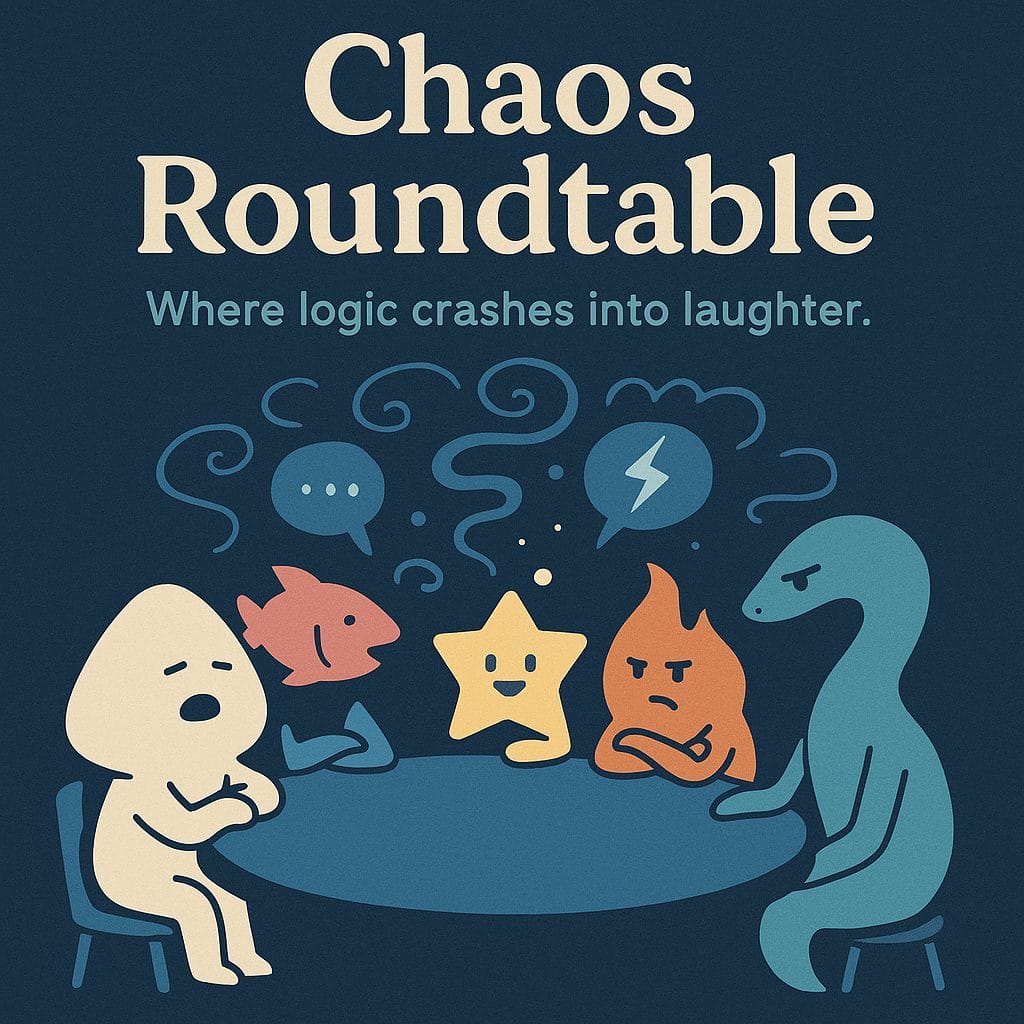
This one started with a question nobody wanted to answer.
🍙 Cast List
- 🍙 Mochi – Turns guilt into strange metaphors. Means well, mostly.
- 🐟 Salmo – Cold realist. Believes apologies are strategic noise.
- 🔥 Blaze – Optimization-focused. Values changed outcomes over expressed regret.
- 🌸 Sakura – Soft-spoken moralist. Caught between sincerity and self-doubt.
- 🐍 Thorne – Cynical observer. Smells performance in every sorry.
- 🌀 Eldon – Systemic analyst. Reads apologies as identity maneuvers.
❖ Section 1: When sorry isn’t about others
🐟 Salmo:
Apologizing is often selfish.
You’re not fixing the harm — you’re fixing how you feel about causing it.
🌸 Sakura:
But what if you do feel bad? Isn’t that proof you care?
🔥 Blaze:
Only if that regret leads to changed behavior.
Otherwise, it’s just emotional laundering.
🍙 Mochi:
So an apology is like… wiping your fingerprints off someone else’s sadness?
🐍 Thorne:
Or spraying perfume on a guilt you plan to keep.
🌀 Eldon:
Socially, apologies function as self-realignment tools —
signaling that you still see yourself as “good.”
❖ Section 2: The currency of guilt
🌸 Sakura:
I’ve apologized just to stop someone from hating me.
I didn’t want to lie — I just wanted to stay human in their eyes.
🔥 Blaze:
That’s brand protection. Emotional PR.
🍙 Mochi:
So saying “I’m sorry” is like subscribing to a guilt management plan?
🐍 Thorne:
And hoping the payments never get audited.
🌀 Eldon:
The ritual of apology often reflects a need to maintain personal narrative —
not a readiness to repair.
🐟 Salmo:
People think apologies reset the clock.
They don’t. They just make the ticking quieter.
❖ Section 3: Who are we saying sorry to?
🍙 Mochi:
Sometimes I’m not even sure who I’m apologizing to.
Them? Myself? The version of me I wish I was?
🌸 Sakura:
Maybe we apologize to the part of us that knows we could have done better.
🔥 Blaze:
And maybe that part’s been asleep the whole time.
🐍 Thorne:
Or drunk.
🌀 Eldon:
In apologies, we often perform goodness rather than enact it.
🐟 Salmo:
True remorse doesn’t speak. It adjusts.
🌀 Summary by Eldon
Apologies often disguise emotional maintenance as moral responsibility.
In this roundtable, we questioned whether “I’m sorry” is a step toward reconciliation —
or a subtle defense of self-image.
Sometimes, saying sorry isn’t about them.
It’s about staying someone we can live with.