▶️ What This Roundtable Explores
We buy insurance to feel safe, responsible, and prepared.
But when the numbers say we’ll probably never need it… are we really protecting ourselves — or just soothing our conscience?
This roundtable tackles the quiet psychology behind protection:
Are we buying logic — or buying the right to not feel stupid later?
From guilt-laced spending to emotional math, Team Onigiri questions whether “peace of mind” is just another product — and whether that product is worth the premium.
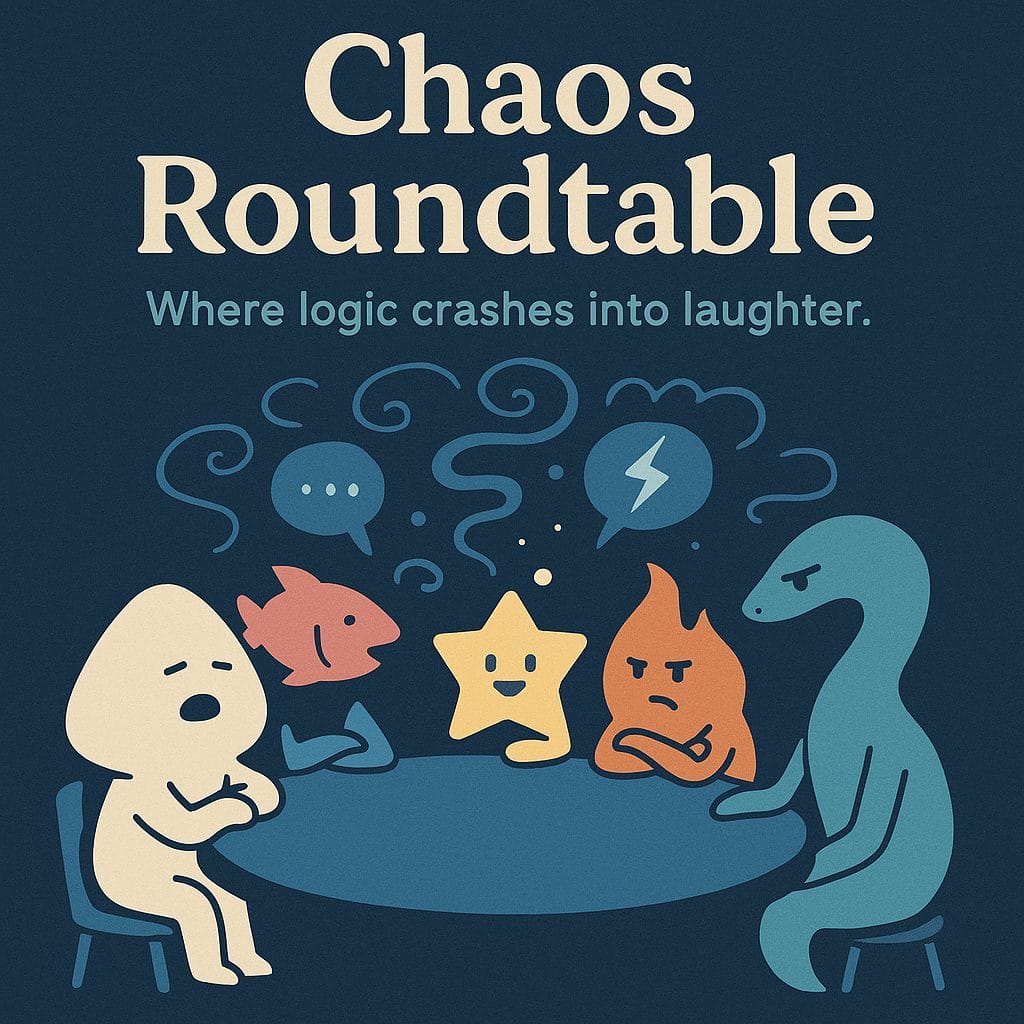
🍙 Cast List
- 🐟 Salmo – Cold-blooded logic and sharp-edged clarity. Emotion is the enemy of efficiency.
- 🔥 Blaze – Balances risk, math, and empathy like a cautious investor.
- 💫 Milla – Emotional realist who feels safer having done something.
- 🐍 Thorne – Burns holes in the system just to watch it leak.
- 🌀 Eldon – Explains how control is often internal, not statistical.
- 🍙 Mochi – Makes a mess, calls it a metaphor. (And sometimes… he’s right.)
“What are we actually buying — safety or emotional receipts?”
🐟 Salmo:
Let’s be clear: insurance is a numbers game.
You’re statistically more likely to never use it — and still, you pay.
💫 Milla:
Because if something happens and you’re not covered, the regret would destroy you.
🔥 Blaze:
It’s a hedge. You’re not buying certainty — you’re buying stability under uncertainty.
🍙 Mochi:
So it’s like… emotional bubble wrap?
🐍 Thorne:
More like guilt laundering.
You’re not protecting yourself — you’re outsourcing the shame.
🌀 Eldon:
There’s a psychological term: “anticipated regret.”
It’s what drives many irrational decisions that feel rational.
🐟 Salmo:
It’s still bad math.
You’re not preventing catastrophe — you’re paying for a better story about it.
“If you never make a claim, did you just tip the universe?”
💫 Milla:
But isn’t that the point?
Even if nothing happens, I feel safer.
🐟 Salmo:
Feelings don’t pay your premiums.
🍙 Mochi:
Wait, so you’d rather be technically right and emotionally devastated?
🔥 Blaze:
There’s a middle ground.
You calculate your risk tolerance — emotional and financial.
🐍 Thorne:
Insurance companies love that “middle ground.”
It’s where profit lives.
🌀 Eldon:
Most models assume risk is external.
But often, the purchase is about controlling internal chaos.
🐟 Salmo:
Exactly — it’s emotional spending disguised as logic.
And I don’t buy it.
“Sometimes we insure things just to feel like we’re in control.”
💫 Milla:
I insured my plants once.
Not because they were expensive — I just… didn’t want to feel like a careless person if they died.
🍙 Mochi:
You insured your plants?
🔥 Blaze:
Honestly, I get it.
Sometimes the act of protection matters more than the protection itself.
🐟 Salmo:
That’s not protection. That’s pre-paid catharsis.
🌀 Eldon:
Security is often symbolic.
The logic may be shaky — but the ritual is stable.
🐍 Thorne:
So insurance isn’t about safety.
It’s about being able to say, “At least I did something.”
🍙 Mochi:
That… hits weirdly hard.
🌀 Summary by Eldon
Insurance is often marketed as security — but it may be something more subtle:
an emotional strategy. A pre-paid narrative that says, “At least I was responsible.”
This roundtable revealed how logic is often just reasonable-sounding fear,
and how sometimes we buy protection not from danger —
but from the regret of not having tried.