▶ What this article explores
Why do we pay more for some things, even when they’re functionally the same?
This roundtable dives into the strange psychology of branding — where status, emotion, and storytelling collide. You might start questioning whether that logo on your bag is a badge of identity… or a narrative you bought into.
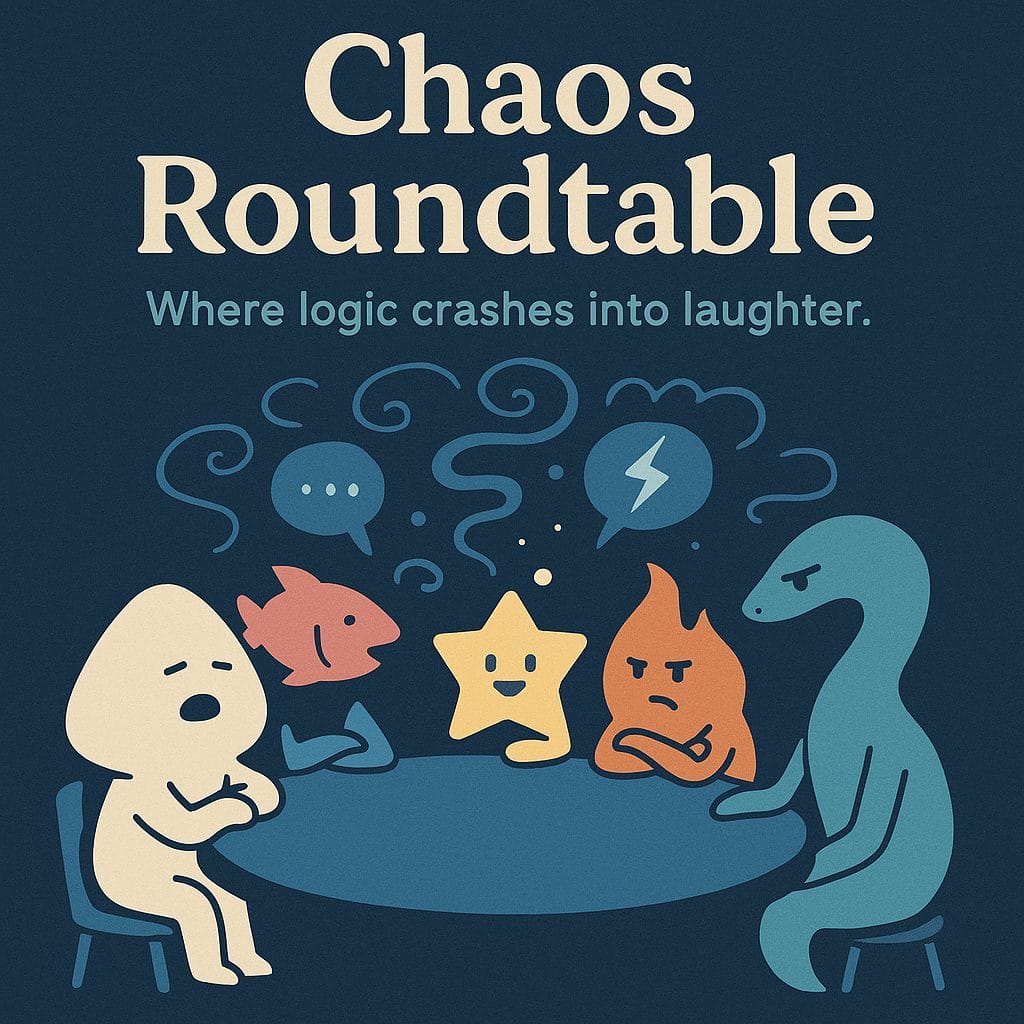
👥 Participant Overview
| Character | Role Description |
|---|---|
| 🍙 Mochi | The whimsical observer who pokes at the hidden meanings behind everyday things. |
| 🐟 Salmo | Rational and efficient, always trying to trace behavior back to logic or utility. |
| 💫 Milla | Emotion-driven and intuitive, quick to sense the vibes a brand gives off. |
| 🔥 Blaze | Bold and business-minded, always looking at the market forces and positioning. |
| 🐍 Thorne | Sarcastic and skeptical, often playing devil’s advocate to test everyone’s claims. |
【1】It’s just a cart… or is it?
🍙 Mochi:
You know that moment when you’re done shopping and the cart just… stares at you?
It’s like: “Will you return me? Or leave me to rot in the parking lot?”
🐟 Salmo:
Statistically speaking, the average return rate is surprisingly high in countries with no enforcement.
It’s not about law. It’s about inner software—what your moral OS runs on.
🔥 Blaze:
Exactly. No surveillance. No punishment.
And yet… some still walk that 30 meters to push it back. That’s civilization, baby.
💫 Milla:
But what if someone’s in a rush?
Kids screaming, groceries melting—maybe they want to return it, but life’s yelling louder.
🐍 Thorne:
So if you abandon your cart, you’re not evil—you’re just “overstimulated.”
What a lovely excuse machine morality has become.
🍙 Mochi:
Hey, maybe the real test isn’t about morality—it’s about how good we are at making excuses sound noble.
【2】Return the cart or return to monkey?
🐟 Salmo:
Think about it—carts are communal tools.
Fail to return them, and society pays the price in stray wheels and dented doors.
💫 Milla:
So in a way, returning the cart is like hugging society from behind. Quietly. Awkwardly.
🔥 Blaze:
Or it’s just the bare minimum.
“Not being a public nuisance” isn’t something to be praised. It’s baseline.
🐍 Thorne:
That’s why I say: If you do return the cart, do it flamboyantly.
Make eye contact with strangers. Whisper, “I am better than you.”
🍙 Mochi:
I once imagined a society where carts had little tails and followed you home.
But then I realized… that’s just a dog. I invented dogs again.
💫 Milla:
Aww. Shopping dogs. I’d return them with love.
【3】The cart stares back.
🔥 Blaze:
There’s a theory that how you treat something with no consequences…
is who you are when nobody’s watching.
🐍 Thorne:
So I’m a shadowy agent of chaos… or someone who returns carts when bored?
🍙 Mochi:
You’re Schrödinger’s shopper. Good and bad until observed.
💫 Milla:
I don’t know. I feel like when I do return the cart, it smiles at me.
Like, spiritually.
🐟 Salmo:
We can model this in game theory:
Return = +1 respect. Abandon = +0 convenience.
But oddly, people choose +1… even when no one sees.
🍙 Mochi:
Maybe we don’t need someone watching.
Maybe we’re just afraid the cart will remember.
🔚 Summary (by Eldon 🌀)
Brands aren’t just labels — they’re social shortcuts and identity tools.
What emerged from this conversation is that people want to believe in the story behind what they buy. Whether it’s to feel special, connected, or simply seen, branding fulfills emotional gaps. And while some may dismiss it as manipulation, it also reveals how meaning gets assigned to objects by culture itself.